This week at Democracy Docket: Blue states are ‘Trump-proofing’ their elections, while red ones are restricting voting
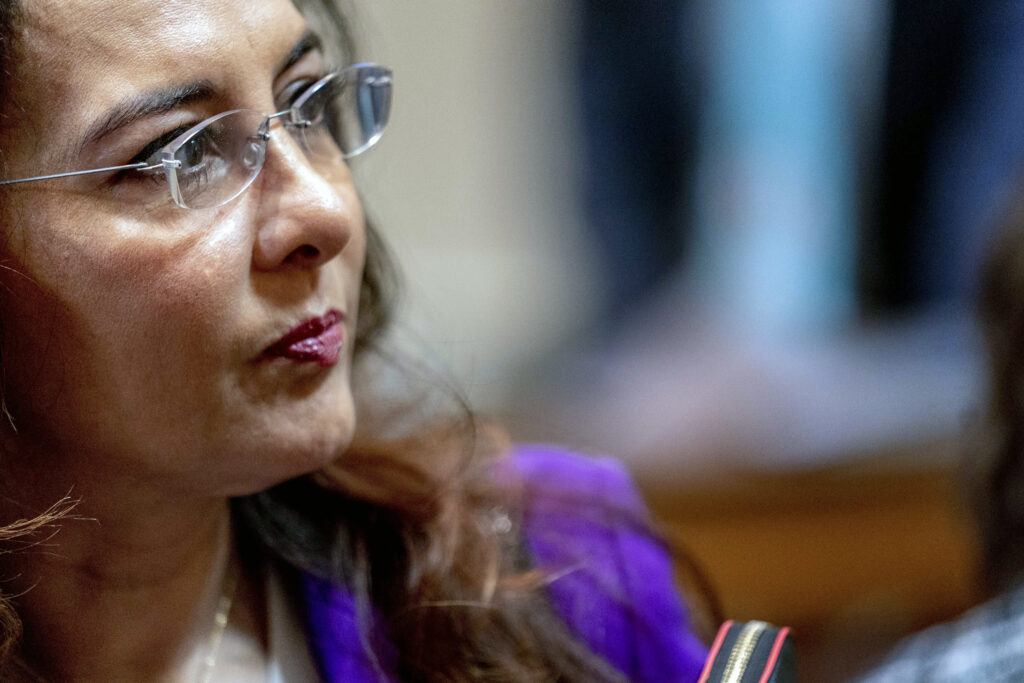
We’ve been paying even closer attention than usual this week to Harmeet Dhillon, the U.S. Department of Justice (DOJ) Civil Rights division chief who, reports suggest, could soon be in line for a promotion.
This week, Yunior Rivas exclusively reported that Dhilon — who has led a sharp anti-voting shift at DOJ, including an unprecedented effort to grab all 50 states’ voter rolls — partied at the wedding of a key January 6 organizer. One top civil-rights lawyer called the news “further confirmation” that Dhillon is unfit to lead the division, much less to be given a bigger job. But Dhillon herself responded by letting us know that she “had a great time,” “made new friends,” and got her dress on sale. So both sides made good points.
Get updates straight to your inbox — for free
Join 350,000 readers who rely on our daily and weekly newsletters for the latest in voting, elections and democracy.
We’re happy for Dhillon, but Jacob Knutson reported on a new lawsuit that aims to force her and other DOJ officials to turn over any communications they’ve had with election deniers, including White House aide Kurt Olson and anti-voting activist Cleta Mitchell, both key figures in the plot to steal the 2020 election. As the complaint details, there’s plenty of reason to think those communications exist.
In fact, the threat of election subversion from the Trump administration is so serious that, as Jen Rice reported, some blue states are taking steps to “Trump-proof” their elections. New Mexico just banned federal law enforcement from the polls, while Washington passed a law to protect its voter data from DOJ. It’s more evidence that, if democracy is going to survive Trump, states acting on their own are going to play crucial roles.
But some states are moving in the other direction. With Trump’s SAVE America Act blocked in the Senate, Florida, Mississippi, South Dakota, and Utah all have quietly enacted laws requiring proof of citizenship for voter registration in recent weeks, Natalie Hausmann reported. And similar bills are advancing in 12 other states.
Meanwhile, some swing states could have election deniers, conspiracy theorists, or anti-voting advocates running their elections starting next year, Matt Cohen found. One leading Republican candidate for Arizona secretary of state was sanctioned by the state bar for his role in the notorious “Kraken” lawsuits that aimed to overturn the 2020 vote. Another secretary of state hopeful, this one in Nevada, has deep ties to both QAnon and Mike Lindell, the pillow salesman who has been a leading funder of the election denial movement.
And on similar lines, Yunior noted that the national GOP is doing everything it can to get two extremist election skeptics onto the board that runs elections in Fulton County, Georgia — perhaps the country’s most closely watched voting jurisdiction.
Speaking of Fulton: We told you recently how the FBI raid that seized 2020 ballots and other election records from the county was based on debunked evidence from election deniers — and Brentin Mock brought you more confirmation of that this week.
But, as Jen reported, it appears to have been a very similar story in Riverside County, California, where a GOP sheriff seized over 650,000 ballots from a recent election. The warrant the sheriff used for the seizure makes clear that, just like in Georgia, it was based on flimsy and debunked “evidence” brought by activists with long records of making false claims about voting. In both cases, Big Lie propaganda led directly to dangerous and unprecedented intrusions by law enforcement into the elections process.
Finally, with the SAVE America Act off the front-burner in Washington, Jim Saksa found time to dig deep into just how Trump’s top-priority legislation would affect voters on the ground, if the GOP does find a way to get it thru. Perhaps in no state would SAVE impose more barriers on voters than in Alaska. Going in person to an elections office — as many people would need to do to register or re-register under the law — would mean a time-consuming and expensive plane ride for residents of the state’s remote, rural communities, Jim explains. And those same communities would also be especially hard-hit by the restrictions on mail voting that Trump wants in the bill.
It’s a wonderful piece of detailed, pro-democracy reporting — bringing home how voting restrictions cooked up in Washington D.C. could actually play out for regular Americans, of all backgrounds, on the ground.
As the midterms approach, it’s the kind of journalism we’re looking forward to bringing you much more of.