National GOP goes to the mat to get anti-voting extremists on election board in key Georgia county
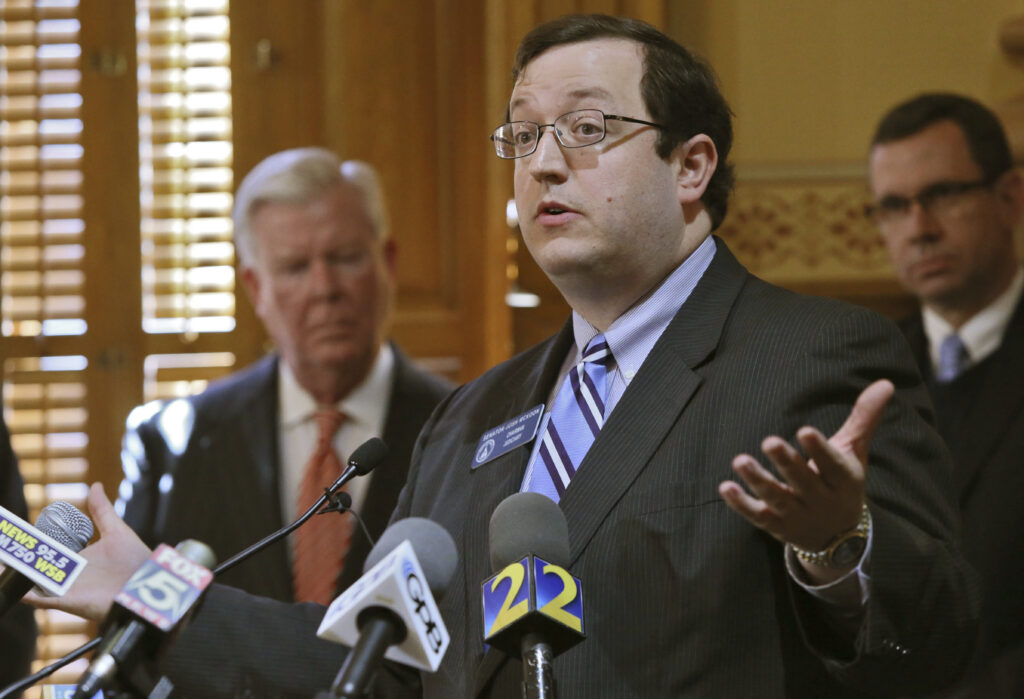
The Fulton County Republican Party asked the Georgia Supreme Court to step in after a lower court ruled local officials can reject its election-denying nominees.
The petition, filed Thursday, asks the state’s highest court to overturn a March ruling that allowed the Fulton County Board of Commissioners (BOC) to refuse to appoint two GOP-backed nominees — both of whom have challenged 2020 election results — to the county’s Board of Registration and Elections.
“Democrats in Fulton County can ignore the law and stall all they want, but we’re not going anywhere,” Republican National Committee chairman Joe Gruters and Georgia Republican Party chairman Josh McKoon said in a joint statement. “We will keep fighting until they are held accountable and forced to follow the law, and we will not stop until Republican nominees are given the equal representation they are entitled to under Georgia law.”
The Fulton County elections board oversees voter registration, absentee ballots and certification of election results in Georgia’s most populous county.
Get updates straight to your inbox — for free
Join 350,000 readers who rely on our daily and weekly newsletters for the latest in voting, elections and democracy.
In its petition, the Republican Party argues that state law leaves commissioners no choice but to appoint its nominees.
“The statutory text is unequivocal: two members of the Election Board ‘shall be appointed’ by the Fulton County Board of Commissioners … from nominations made by the chairperson of each of the two major political parties,” the petition states. “This Court should grant certiorari because the Court of Appeals’ Opinion eviscerates this bipartisan structure and cedes the composition of the Election Board to the partisan discretion of the BOC.”
At the center of the dispute are Julie Adams and Jason Frazier, two Republican nominees who have promoted false or misleading claims about election fraud. Adams previously refused to certify a 2024 primary election, while Frazier has challenged thousands of voter registrations in the county.
Democratic commissioners refused to appoint them last year, arguing they were unfit to oversee elections.
A trial court initially sided with Republicans, issuing a writ of mandamus — a court order requiring officials to perform a legal duty — forcing the commissioners to make the appointments. When commissioners refused, the judge held them in contempt and temporarily imposed steep daily fines.
But last month, the Georgia Court of Appeals reversed that ruling, finding that commissioners have discretion over appointments — even when nominees are submitted by political parties.
That decision wiped out both the appointment order and the contempt penalties.
Now, Republicans are asking the state Supreme Court to overturn the appeals court’s reversal.
The petition also takes aim at the appeals court’s reasoning, accusing it of creating a new constitutional theory that could weaken legislative control over elections.
“The Opinion permits the BOC to refuse to appoint any nominee who does not meet its political litmus test,” the petition argues. “Beyond Fulton County, the Court of Appeals’ reasoning is broad enough to threaten the bipartisan design of other county election boards, as well as the statewide election board.”
For voting rights advocates, the case underscores a growing national effort to place election skeptics in positions of power over voting systems — particularly in competitive states like Georgia.
Fulton County, which includes most of Atlanta, has been a frequent target of election conspiracy theories since 2020.
In January, FBI agents raided a Fulton County elections facility, seizing ballots and records from the 2020 election as part of a federal investigation tied to widely debunked fraud claims.
If the Georgia Supreme Court takes the case, the outcome could determine not only who sits on Fulton’s elections board, but also how much control political parties have over election administration statewide.