Search warrants show California ballot seizure echoed Fulton County election raid
 Prefer us on Google
to see more of our voting rights news coverage when you search.
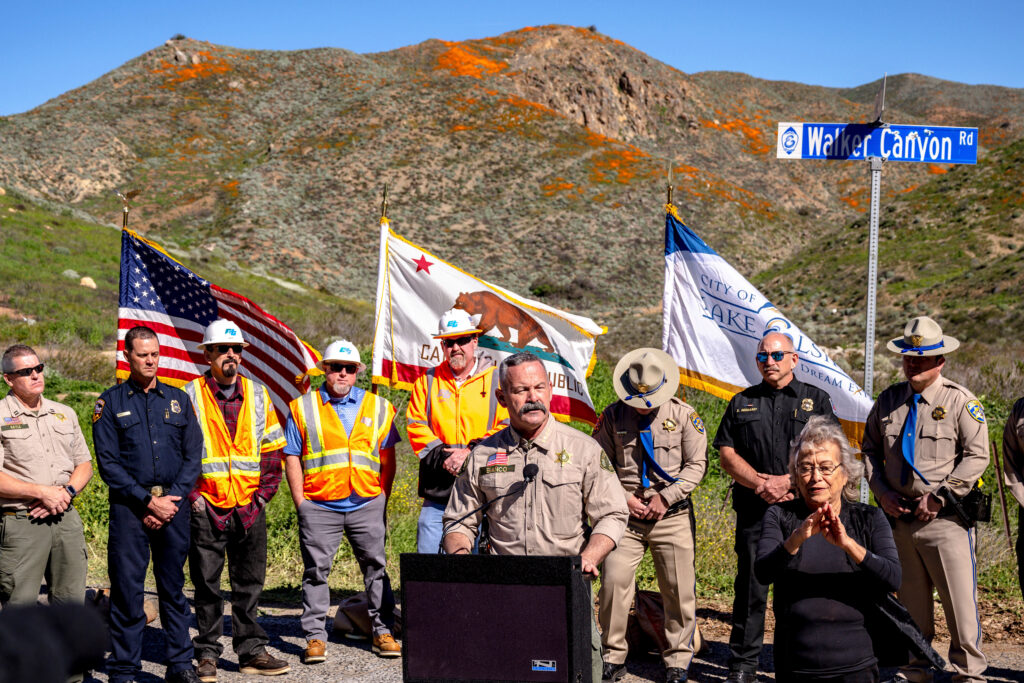
Newly unsealed search warrants in the California ballot seizure case paint a chilling picture of how the types of anti-voting conspiracy theories weaponized by the White House to investigate the 2020 presidential election can be used to target elections on a state and local level.
They also show that the local sheriff’s department took up election fraud claims pushed by anti-voting activists, including one woman involved in a movement to secede from California.
Get updates straight to your inbox — for free
Join 350,000 readers who rely on our daily and weekly newsletters for the latest in voting, elections and democracy.
In February, Riverside County Sheriff Chad Bianco seized 650,000 ballots from the state’s 2025 redistricting election following reports of a large discrepancy between ballots cast and counted. The county registrar said that figure stems from anti-voting activists misunderstanding raw election data.
In March, Bianco announced the seizure and his intent to conduct a recount of the ballots. But how the sheriff legally justified taking the ballots remained unclear until Wednesday, when a judge ordered the search warrants unsealed.
The three warrants — dated Feb. 9, Feb. 23 and March 19 — show that the Riverside County Sheriff’s Department relied on fraud claims from Greg Langworthy, a member of the Riverside County Election Integrity Team (REIT) conservative activist group, to assert probable cause.
REIT is a small, volunteer-run group that has repeatedly raised claims of large discrepancies in ballot counts across multiple elections.
Democracy Docket was unable to reach Langworthy for comment.
The sheriff’s department likely shouldn’t have been able to obtain the warrants: Bianco’s office did not appear to identify a specific individual who had allegedly committed a crime — or provide facts suggesting a crime had been committed.
“Due to the timeframe regarding the ballots being destroyed and the large discrepancy between the numbers from the REIT audit and the official [Registrar of Voters] count, I am requesting to seize and search the ballots from the 2025 Special Election,” sheriff’s department investigator Robert Castellanos wrote in the Feb. 9 warrant. “I believe that in doing so it is the only way to prove or disprove fraud.”
In a lawsuit challenging the ballot seizure, Attorney General Rob Bonta’s (D) office argued that the three warrants signed by Judge Jay Kiel “suffer from serious legal deficiencies.”
The warrants also indicate that Bianco’s office followed roughly the same script as the Federal Bureau of Investigation (FBI) when it raided the main elections hub in Fulton County, Georgia, to seize election materials from the 2020 presidential race.
Like in Riverside County, the FBI’s search warrant application showed that the raid was largely predicated on disinformation and debunked voter fraud claims pushed by private individuals since Trump’s loss in the 2020 election, including some who now work in the administration. Critics have suggested that affidavit also failed to establish probable cause.
A little over a week after the FBI’s Fulton County warrant was signed and executed, Bianco was asking a judge to sign a very similar request.
Beyond the alleged discrepancy in the vote count from the 2025 redistricting election, the Riverside warrants cite and build off previous, apparently less expansive warrants seeking election information and audit logs in 2023 and 2024.
The 2024 warrant affidavit, which is quoted in full, describes allegations of voter fraud from Shelby Bunch and Yvette Anthony. Bunch is a member of REIT who reportedly served the Riverside County Board of Supervisors with a cease and desist order in a bid to stop the 2024 election.
She’s also listed as the Riverside County chair and senator of the New California State, a movement that advocates for inland and rural (read: conservative) parts of the state to secede from California.
Calls to Bunch’s phone number went unanswered. Anthony, another conservative activist, died in 2024.
The newly unsealed warrants also raise questions about why law enforcement officers were able to seize ballots unchecked by either the courts or the officials responsible for protecting them.
In a lawsuit filed last month, Riverside County voters accused Bianco of violating a state law that prohibits ballots from being taken from the custody of election officials, even during a criminal investigation. Riverside County Registrar of Voters Art Tinoco is also named as a defendant for facilitating the transfer of ballots into Bianco’s custody “without exhausting legal remedies against the warrants.”
Tinoco stated in court filings that his office arranged with the sheriff’s office to seize the voted ballots, and the sheriff’s office provided Tinoco with access to a “live video feed of the location where the ballots were stored.” Tinoco said that, on March 5, his staff observed as sheriff’s office personnel unsealed and counted 22 boxes of ballots.
“Shortly thereafter, the investigator left my office with the laptop containing access to the live feed,” Tinoco stated.
Only after handling and counting 12,000 ballots did the sheriff’s office ask the court to appoint a special master to oversee the count “(i)n an effort to avoid any potential appearance of impropriety,” Castellanos wrote in the March 19 warrant.
Bianco has shrugged off criticism — including from Attorney General Bonta — that his staff is not qualified to conduct a recount.
“I cannot speak for him, or for [the] California DOJ, but I can assure you completely that my investigators definitely know how to count,” Bianco told reporters last month.
The California Supreme Court ordered the sheriff to pause his investigation into the ballots Wednesday while it considers Bonta’s petition demanding a permanent end to the probe.
This story has been updated to include additional information. Ashley Cleaves and Adeline Tolle contributed research. Yunior Rivas contributed reporting.