This week at Democracy Docket: How Trump’s Texas gerrymander threatens to silence a community’s voice
President Donald Trump’s gerrymandering war is mostly over for this year. The GOP emerged with an unearned edge of roughly ten seats in the fight for control of Congress — skewing the midterms before a vote has been cast.
But the episode has degraded our democracy in another way, too: by denying large numbers of voters — especially from minority communities in the South — the ability to elect representatives that care about and respond to their needs.
Get updates straight to your inbox — for free
Join 350,000 readers who rely on our daily and weekly newsletters for the latest in voting, elections and democracy.
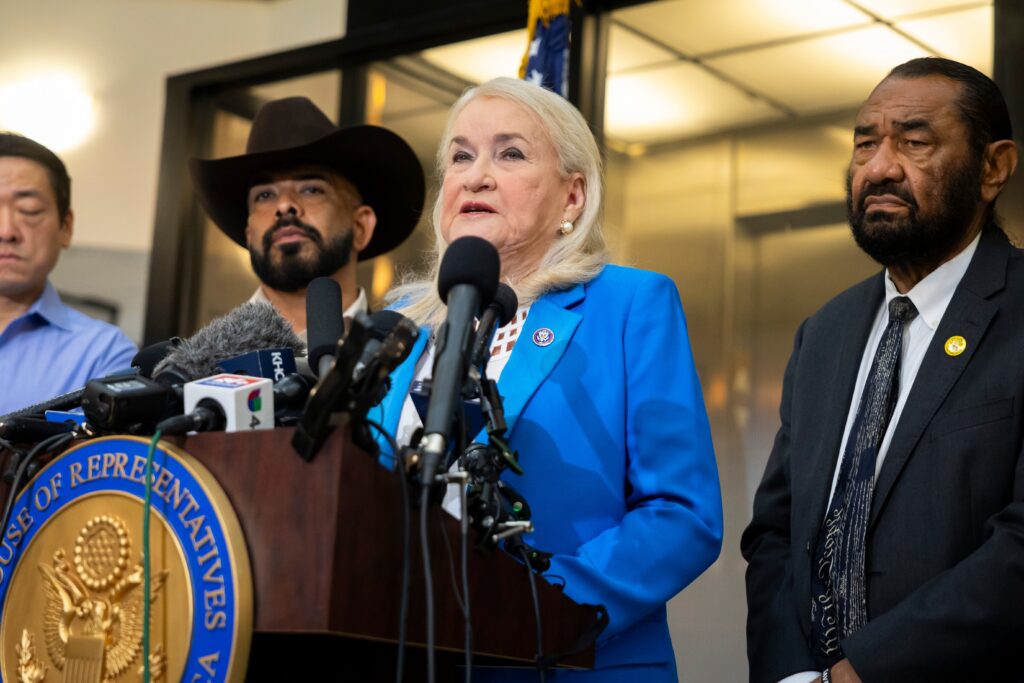
Jen Rice found one of the most striking examples yet. After Immigration and Customs Enforcement officers shot and killed Lorenzo Salgado Araujo in Houston this month, the local member of Congress, Rep. Sylvia Garcia (D-Texas), jumped into action, demanding an independent investigation and doing everything she could to hold the Trump administration to account.
But as Jen explained, thanks to Texas’ Trump-driven redistricting last year, Garcia’s district is being split up — and the neighborhood where the shooting took place, known as the East End, will this fall be part of a GOP-leaning district that stretches out into rural east Texas. The Republican nominee for the seat, favored to win it, is an election denier who, in response to the killing, has offered only a single statement praising law enforcement and didn’t respond to Jen’s request for comment.
That will likely mean that East End residents, desperate for answers about Araujo’s death, will no longer have a member of Congress even trying to get them.
It’s a reminder that fair maps matter not just to ensure that the parties are competing on an even playing field in elections. They’re also how we guarantee that voters — especially those from marginalized communities with few other ways of asserting power — can elect leaders who will work to address their most basic needs and interests.
Jen’s report powerfully brings to life what happens when politicians ignore that. I urge you to read it.
But after you do, come back here because there’s plenty more Democracy Docket reporting to catch up on from the week.
For one thing, the U.S. Department of Justice unveiled a new “election integrity” website to track its crusade to obtain state voter rolls. Yunior Rivas took a close look and found that it’s riddled with errors and inaccuracies, including actions said to have taken place on dates that haven’t happened yet, and the invention of a county in Massachusetts that doesn’t exist.
That’s perhaps not surprising, given the amount of screwups we’ve previously uncovered in DOJ’s voter roll campaign. But soon after Yunior’s story appeared, many of the errors he identified were fixed. Nice to know they’re reading.
Meanwhile, we’ve been closely following New Jersey’s admission — seized upon by the Trump administration, of course — that a software error led to around 6,600 noncitizens being mistakenly added to the voter rolls.
Yunior explained why, despite the sturm und drang from the right, the incident does nothing to support GOP claims of voter fraud. He followed up by reporting that DOJ wasted little time in opening a federal investigation into the mistake, which the state had caught and fixed. And Natalie Haussman added that Gov. Abigail Spanberger (D) doesn’t sound eager to cooperate with the probe, warning that DOJ will aim to “weaponize” any data the state turns over.
Finally, Arizona’s primaries Tuesday offered a stark reminder, if one were needed, that the GOP remains deeply in thrall to Trump’s election lies.
For governor, Republican voters nominated Rep. Andy Biggs, who voted to overturn the 2020 election and has continued to deny that President Joe Biden won the contest.
For attorney general, they picked state Senate President Warren Peterson, who recently handed over to the Trump administration records from a flawed “audit” of Maricopa County’s 2020 presidential vote.
And, perhaps most troublingly, for secretary of state they chose state Rep. Alexander Kolodin, who filed the infamous ‘Kraken” lawsuit, which used baseless allegations of hacked voting machines in seeking to overturn the 2020 vote.
As I wrote the morning after the primary:
“It all underscores how denialism has taken root as a broadly accepted position within the GOP, strongly backed by the most fervent Republican activists — while support for voter suppression policies has become perhaps the single most unifying feature of the modern party.”