The Last Frontier: For voters in remote areas, SAVE America Act would impose massive burdens
 Prefer us on Google
to see more of our voting rights news coverage when you search.
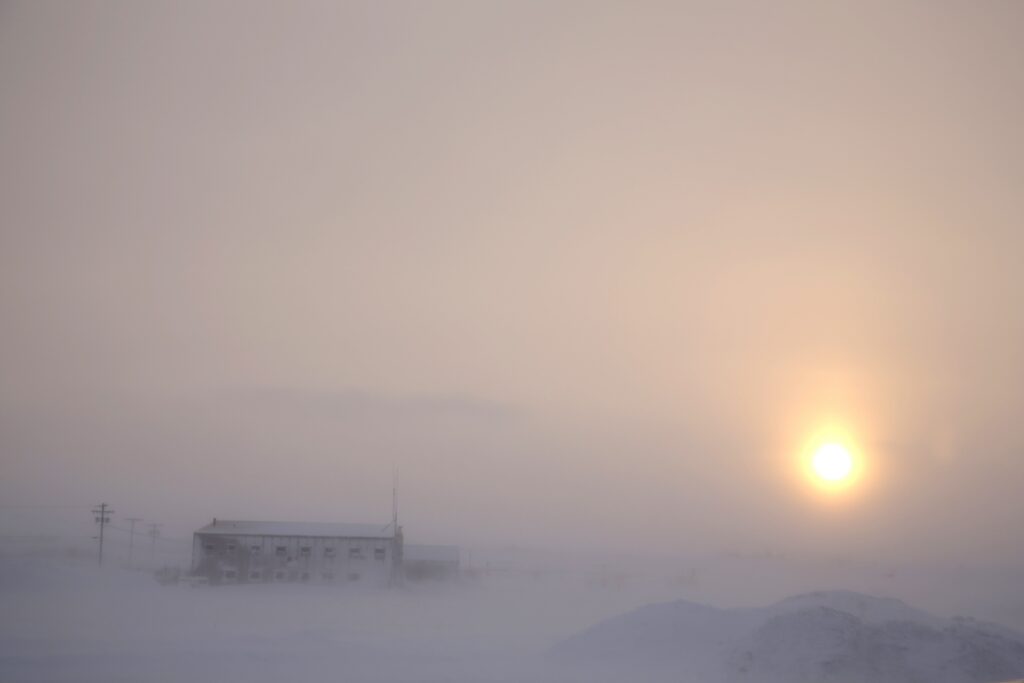
Marvin Parent hails from one of the farthest-flung regions in Alaska, but he is anything but cold and remote.
Talking on the phone from his home in Marshall, about 400 miles west of Anchorage, on another typical sub-zero morning in April, the garrulous Desert Storm veteran asked about the weather in Washington, DC.
“80 degrees?” Parent said with a laugh. “You can just fuck off right now!”
So, it was no surprise when Parent shared a similarly blunt assessment of the SAVE America Act, the bill President Donald Trump has called his “No. 1 priority” and necessary to prevent noncitizens from voting that would force Americans to provide documentary proof of citizenship requirements when they register and show identification when they cast ballots.
“Total bullshit,” Parent said. “There’s no way that people are illegally voting.”
At least, not in Marshall, population 492. “Out here, everybody knows everyone,” the former local election chief said. “You don’t check their ID. You don’t need to.”
The SAVE America Act would require new voters and anyone changing their registration, even after a routine move across town, to go in person to an election office to show their passport, birth certificate or naturalization paperwork. For many Americans, this is a minor bureaucratic hassle.
But everything’s bigger in Alaska, even — especially — paperwork headaches. The state only has six in-person election offices and not even a dozen DMV offices across its 665,000 square miles.
That’s why Alaska’s GOP senator has said the bill will lead to “disenfranchisement” in her state.
Along with Trump’s recent attempt to restrict mail voting via executive order, the SAVE America Act’s burdens would fall hardest on remote, rural communities that rely heavily on online and mail-in registration. A recent Axios analysis looked at how far away Americans lived from their nearest election offices. While the average American would take a 20-minute drive, some rural residents would face hours-long treks.
But driving isn’t even an option in many parts of Alaska.
“The closest election office would be Bethel, which is 65 nautical air miles away from here,” Parent said. He uses “nautical air miles” to measure distance to the big city of Bethel (pop. 6,325) because there are no roads. If you don’t want to shell out $180 for a seat on a Cessna 207 to Bethel, there’s also a 90-mile snow machine trail, but that’s not exactly free either (gas now goes for over $5/gallon in much of the state).
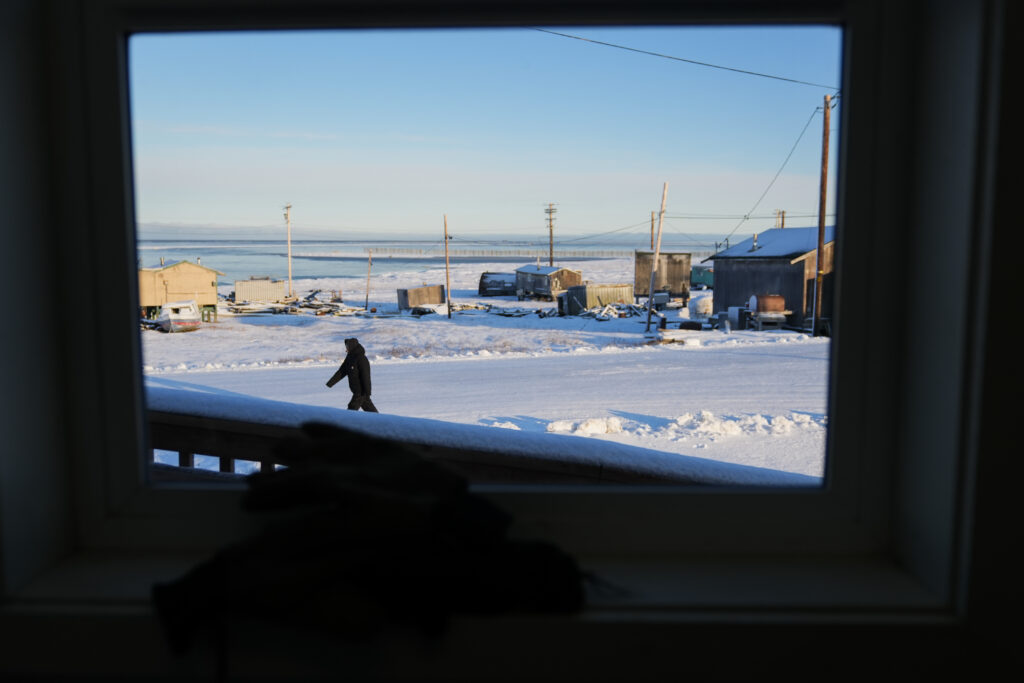
“Two thirds of Alaska is remote and roadless, and you either need a ferry, a boat, hovercraft, helicopter, small planes, ATVs, or snow machines,” said Michelle Sparck, director of Get Out the Native Vote at the Alaska Federation of Natives. “You know, that’s pretty much what the Permanent Fund Dividend provides — a lifeline for these small, roadless communities to be able to have enough capital to invest in that kind of mode of transportation, so that we can hunt and fish and also get from point A to point B.”
And in Alaska, those remote communities are “about 98% indigenous,” Sparck added.
The Permanent Fund Dividend, or PFD to locals, is the annual payment every resident receives annually from Alaska’s $88 billion sovereign wealth fund. While state lawmakers sometimes bump it up during times of economic hardship, the PFD is usually $1,000.
The fund also doubles as a voter registration drive — when Alaskans sign up for the PFD, they are automatically registered to vote, unless they opt out.
Given the very real risk of fraud, the PFD validation process is pretty stringent, which means Alaska’s voter registration rolls are pretty clean, too. “There’s no way that anybody’s cheating out here,” Parent said.
Alaska already has voter identification laws, but they let local election officials forego the formality of checking IDs if they personally recognize the voter. They also accept a wider range of ID types than the SAVE America Act would, including hunting and fishing licenses, which makes sense in a state where roadless villages are common but gun-free zones are not.
Republicans in Alaska have argued that noncitizen voting dilutes the vote of Alaska Natives, who represent around a quarter of all Last Frontier voters. But they aren’t buying it, Sparck said.
“We’re like, ‘Excuse me?’ Seventy suspected cases in 10 years can dilute over 100,000 registered voters?” Sparck said, referring to a report the Alaska Division of Elections submitted to the Department of Justice last fall. “We appreciate their concern about the Native vote, but why not apply their executive skills to real solutions — not some hyped up narrative that’s being pushed from the White House?”
In trying to prevent dilution of the Alaska Native vote, DPOC requirements would actually decimate it, Sparck said.
While natives were once near-universal voters — spurred by legislative threats to their way of life in the 1980s, like a ballot initiative to repeal hunting privileges held by traditional and subsistence hunters — participation has dropped off in recent years. The SAVE America Act “would just drive down participation that much further, much further,” Sparck said. “They would even knock the elders off, because they are the most vulnerable when it comes to paperwork.”
“They were born at a time where missionaries or a random priest or a nun was taking vital statistics in a community,” Sparck explained. “So you have very random assignments of names — you had people given the surnames of ridiculous things like Jones or Smith. My grandfather’s name is Tom Jones; he barely spoke any English!”
That kind of spotty paperwork means it’s that much harder for older Alaska Nativess to get their hands on a birth certificate, which can take weeks or even months to get from the state even in the best of circumstances.
‘The most difficult place in the United States to conduct elections’
“Alaska is — I don’t even think it’s close — the most difficult place in the United States to conduct elections,” said state Senator Bill Wielechowski (D). “It could even be in the world, quite frankly.”
“We’ve had multiple elections where polls don’t open in communities because they can’t get poll workers. Ballots don’t get sent to communities,” said Wielechowski. “Ballots can’t get sent out of communities because of the weather, because we have fog, snow, wind, you pick it.”
The lawmaker recently oversaw the passage of an elections bill that would see many of its reforms invalidated if Congress enacts the SAVE America Act. Wielechowski said Trump’s bill just wouldn’t work in Alaska.
“If you have to go in person to register, that requires, for many people who live in these villages, hopping on a plane, spending hundreds, if not thousands of dollars to go to a division of elections, which might be hundreds of miles away,” Wielechowski said. “That’s not even counting for the weather challenges that they have to deal with, or taking off work.”
Despite that, two-thirds of Alaska’s congressional delegation — Rep. Nick Begich III (R) and Sen. Dan Sullivan (R) — support the bill. Alaska’s other senator, Lisa Murkowski, is its most outspoken Republican opponent.
“The implementation on the timeline that this bill outlines is pretty near impossible in a State like Alaska,” Murkowski said on the Senate floor in March.
Murkowski noted that she grew up in Ketchikan, and would have had to fly or take a 20-hour ferry to Juneau when she turned 18 to register. Not every Alaskan can afford that, she said.
“I fear that they won’t register because financially they won’t be able to register. And if they are not able to register, they can’t vote,” she said. “And while disenfranchisement may not be the intent of the SAVE America Act — and I don’t think that it is — I think we will see that. In fact, I fully expect it to be an outcome of this.”
“It is not in Alaska’s best interest to pass that bill,” said Wielechowski. “It will disenfranchise probably thousands, if not tens of thousands, of Alaskans.”
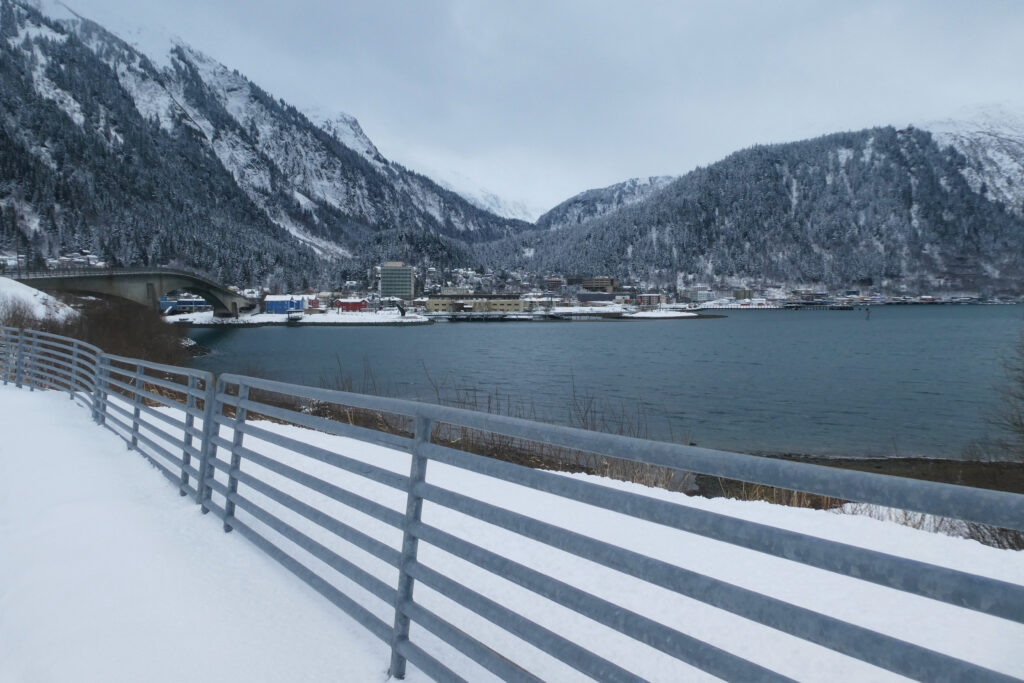
The state capitol of Juneau is itself only accessible by plane or boat. “A lot of times we have sessions canceled because planes can’t get in or out — not a lot, but it happens — and legislators can’t get in,” Wielechowski said. “And it’s just life in Alaska.”
Alaska’s unique geography is reflected in its politics. The state is fiercely nonpartisan — about 64% of Alaskan voters are registered independent or undeclared. While Republicans make up a numerical majority in both the Alaska Senate and House, the actual, governing majority in both is a coalition of Democrats with a few Republicans.
“The politics… they’re just different, and it doesn’t cut across party lines all the time,” said Wielechowski, a Democratic state senator.
Alaska Nativess are even less tethered to party politics. A recent study by the Alaska Federation of Natives found that they vote across party lines at a rate of about 80%, Sparck said.
While Alaska Natives are normally extreme swing voters, this year they’ll likely back the Democrat challenging Sullivan, former congresswoman Mary Petola. A former Yup’ik tribal judge, Peltola rode her “Fish, Family, Freedom,” campaign slogan to Congress in 2022, becoming the first Alaska Native ever to represent the state.
Recent polls have Peltola beating Sullivan, while Trump’s net approval rating has fallen to -12 in Alaska, a state he won by 13 percentage points in 2024 — the same year that Peltola narrowly lost reelection to Begich. But if the SAVE America Act had the kind of impact on native votes that voting-rights advocates fear, it could sink Peltola’s Capitol Hill comeback.
Alaska isn’t the only largely rural state where the SAVE America Act could cause major voting problems. Voters in Maine’s rural, Republican-leaning north would need to drive more than 3 hours to reach an election office, according to Axios — potentially hurting Republican Sen. Susan Collins ‘ chances to win reelection.
The Last Frontier, far-flung and forgotten in Washington D.C.
After passing the House in February, the SAVE America Act has stalled in the Senate in the face of unanimous Democratic opposition. Even though the bill’s lead sponsor, Sen. Mike Lee (R-Utah), and Trump have both repeatedly called for ending or curtailing the filibuster’s 60-vote threshold to advance the SAVE America Act, Senate Republican leadership has steadfastly refused, calling that idea a non-starter.
Republicans are now looking at trying to enact some of the act’s provisions as part of a reconciliation package. But those bills are supposed to be primarily budgetary in nature, and the DPOC and voter ID rules plainly aren’t. While GOP lawmakers will likely try to get around the reconciliation rules by turning the SAVE America Act’s elements into conditions for election assistance grants, that effort may fail — and even if it doesn’t, the money might not be enough to entice many reticent states into beefing up their voter ID laws.
But the impasse in Washington hasn’t prevented a handful of Republican states from quietly enacting versions of the SAVE America Act locally. And another dozen might join them, even though countless audits and studies have shown that noncitizen voting is exceedingly rare.
That’s a non-starter in Alaska, though.
The state is just different, said Sparck, and that’s something that its representatives — Republican and Democrat — used to recognize, leading to frequent votes against their own party whenever legislation put salmon at risk or threatened the oil revenues that fuel the PFD.
But not anymore, at least not with Begich and Sullivan. “These lawmakers, they know the challenges in our state,” Sparck said. “They know how massive our roadless areas are, and for them to actually think that it’s okay to put these new standards in — especially to make it immediate, in an election year — is really extraordinary.”
*This article was updated to correct the term used for Alaskans with indigenous ancestry. References to “Native Alaskans” were replaced with “Alaska Natives”.