Alaska wrongly removed eligible voters from active voter lists
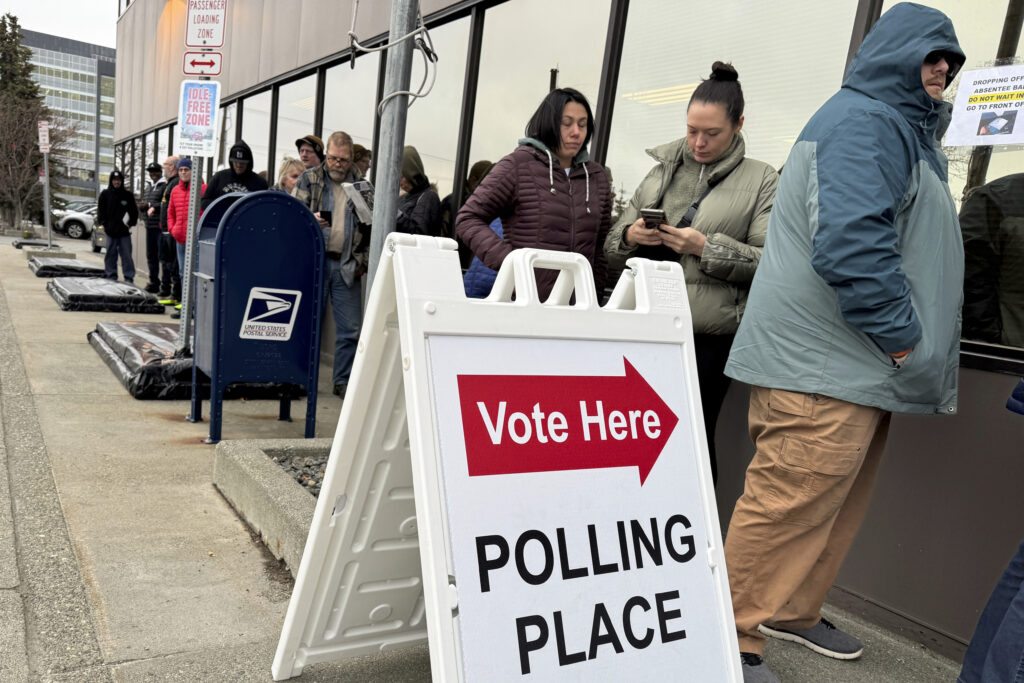
Alaska recently removed thousands of people from its active voter lists after they were flagged as noncitizens. But a state news outlet found that some were in fact eligible to vote.
Ahead of Alaska’s Aug. 18 midterm primary, the state’s elections division removed 3,048 people from its active voter list based on information it requested from the state’s Division of Motor Vehicles (DMV). That’s a nearly 700% increase from the number of people added to inactive status last year based on noncitizen suspicions, reports the Alaska Beacon.
Voters removed from the active voter lists are typically sent a letter asking them to confirm their citizenship. But several voters told the Beacon that they had been unable to contact the state.
Several other voters said they had already confirmed their citizenship — one when he had registered to vote at the state’s DMV, and another on an application to the Permanent Fund, which provides eligible residents with a payout from the state’s mineral resources annually.
Even so, both were removed from the active voter list, the Beacon reported.
Get updates straight to your inbox — for free
Join 350,000 readers who rely on our daily and weekly newsletters for the latest in voting, elections and democracy.
It’s unclear why Alaska’s elections division director, Carol Beecher, sought citizenship information from the DMV about voters in the first place. Beecher agreed in April to cooperate with the U.S. Department of Justice’s (DOJ) demands for the state’s unredacted voter files.
The state’s DMV released a memo on July 23 saying that the elections division asked it to verify citizenship for a list of 15,200 “license and identification applicants.”
In the memo, the DMV states that it’s not set up for a “formal determination of citizenship for other purposes” other than licensing, and that what the elections division was asking for was “a non-routine request.”
Beecher told the lawmakers that she believes “old data” from the DMV may have erroneously led to this year’s inflated numbers of suspected non-citizens. According to the Beacon, some on the list are people who were not full citizens when they applied for driver’s licenses, but later became citizens.
But one of the people that the Beacon contacted from the list said the elections division flagged him despite the fact that he presented “citizenship paperwork” to the DMV. That suggests that, under the kinds of proof of citizenship measures championed by President Donald Trump — including the anti-voting SAVE America Act — even having the correct documents may not spare some eligible voters from getting purged.
DOJ civil rights chief Harmeet Dhillon, meanwhile, took to social media to cheer the news about Alaska deactivating the voter status of thousands of people suspected as non-citizens.
Good! Every state needs to do this! Get rid of the dead folks too, while you are at it! https://t.co/vG2mOwLI4X
— AAGHarmeetDhillon (@AAGDhillon) July 24, 2026
While Beecher told lawmakers that her division’s pursuit of non-citizens was not at the DOJ’s behest, the memorandum of understanding she entered Alaska into with the department has a similar goal.
In that memo, signed in December, Beecher agreed to hand over the state’s unredacted voter list, which, as the Justice Department wrote, “must include, among other fields of data, the voter registrant’s full name, date of birth, residential address, his or her state driver’s license number or the last four digits of the registrant’s social security number.”
The Justice Department says in the memo that it will use the voter data for “analysis and assessment” to ensure that the state is complying with federal election laws.
It’s an unprecedented level of federal interference with election administration, which the Constitution says is the domain of the states. However, some other Republican-led states have, like Alaska, willfully complied with the DOJ’s demands.
The DOJ has sued the states that haven’t complied, but it has lost all 17 cases where there has been a ruling. No judge has granted the department access to the unredacted voter files in the states that have pushed back against this.