In new filing, DOJ opposes block on Trump’s anti-mail voting rule
 Prefer us on Google
to see more of our voting rights news coverage when you search.
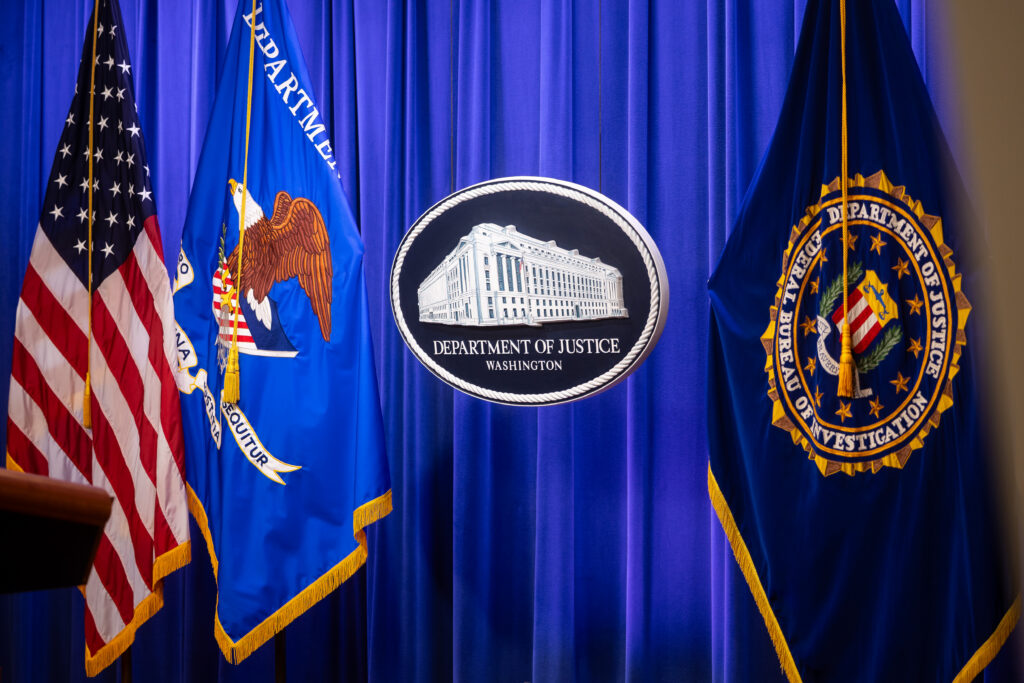
The U.S. Department of Justice (DOJ) filed its opposition late Saturday night to requests from pro-voting groups and several blue states for a federal court to block a final rule that would add new restrictions to mail-in voting.
In its latest court filing, the DOJ offered its most robust defense of the United States Postal Service’s (USPS) final rule, which imposes new ballot envelope designs on states and creates a federal database of voters who’ve requested absentee ballots.
Under the new rule, USPS would not send ballots to voters in states that fail to comply with the changes. The rule is the fulfillment of President Donald Trump’s March executive order asking USPS to scale back access to mail voting, which he falsely claims has produced massive voter fraud.
With the November elections approaching, the new USPS rule would determine whether certain voters or even certain states will be permitted to vote by mail in this year’s midterms.
Get updates straight to your inbox — for free
Join 350,000 readers who rely on our daily and weekly newsletters for the latest in voting, elections and democracy.
The opposition motion was filed in the U.S. District Court of Massachusetts, where Judge Indira Talwani has previously blocked the part of Trump’s executive order pertaining to the postal service’s actions and most recently temporarily blocked USPS’s final rule.
Talwani stated that the rule violates the constitutional authority granted to states and Congress to administer elections.
However, the DOJ argues that the new USPS rule does not infringe on the rights of states to operate their elections. Instead, the government contends that the rule only “imposes modest informational requirements on senders of outbound federal ballot mailings.”
The DOJ also claims the USPS is exercising its statutory authority to regulate how mail ballots are handled, arguing that the process is no different from how the postal service manages other sensitive mail.
“The Postal Service has likewise relied on the same statutory authorities at issue here to adopt special handling and conditions on acceptance for other types of mail that are similarly sensitive yet non-dangerous, raising unique operational concerns—such as cremated remains or replica explosives,” the filing reads. “There is no material distinction between those prior actions and this one with respect to the legal authority of the Postal Service.”
The postal service’s final rule, published on Aug. 26 and ordered to go into effect immediately, extends beyond cosmetic changes to ballot envelopes. The federal database called for in the rule will serve as a list of individuals confirmed by the USPS to have complied with the new requirements. According to the rule, those who have not complied will not receive ballots.
In an Aug. 26 motion asking the court to block the rule, the League of Women Voters of Massachusetts argued that the postal service’s new requirements align with the objectives of the executive order to restrict mail-in voting.
“It tracks the Order’s new requirements for the delivery of mail ballots and confirms that USPS will refuse to deliver eligible voters’ ballots based on whether voters appear on a list contemplated nowhere in any statute and on whether state ballot envelopes conform to standards required nowhere in any statute,” the League of Women Voters’ motion reads.
Judge Talwani will hear arguments on the preliminary injunction request on September 3.