DOJ defends Trump’s anti-mail voting order as ‘modest’ in new court filing
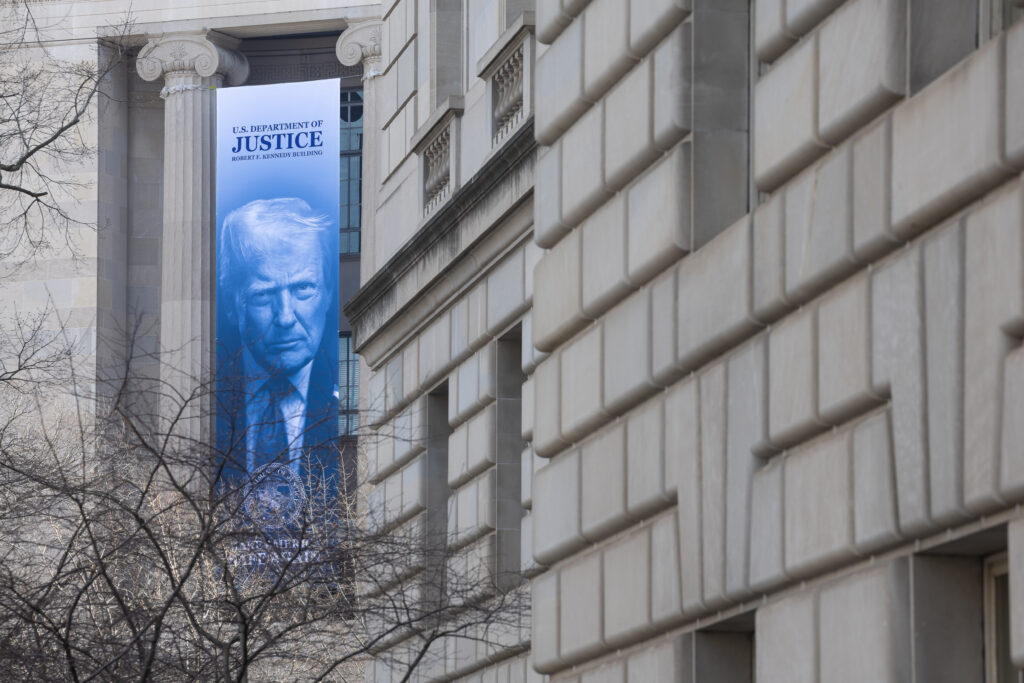
The U.S. Department of Justice (DOJ) has claimed the U.S. Postal Service’s (USPS) implementation of President Donald Trump’s anti-mail voting executive order is a “modest” set of delivery improvements — not an attempt to usurp states’ power to regulate elections.
But the DOJ also made clear that ballots that don’t comply with USPS’s requirements won’t be delivered, which could leave millions of voters disenfranchised.
Those arguments, made in a court filing Thursday, represent the Trump administration’s first substantive defense of the decree — and the USPS final rule aimed at executing it — since the U.S. Supreme Court lifted an injunction against it Monday.
Voting rights groups and nearly half of the states have asked a federal court in Massachusetts to quickly reblock the administration’s implementation of the order.
Thursday’s filing comes out of the tangle of lawsuits, injunctions, appeals, and reversals that have made mail voting availability in November’s election uncertain.
On Monday, the Supreme Court held in State of California v. Trump that one of the two injunctions blocking the executive order issued by U.S. District Court Judge Indira Talwani had been issued prematurely. Talwani soon after lifted the other injunction, which she granted in a lawsuit filed by a coalition of voting groups led by the League of Women Voters of Massachusetts (LWVMA).
Get updates straight to your inbox — for free
Join 350,000 readers who rely on our daily and weekly newsletters for the latest in voting, elections and democracy.
The plaintiffs in both those cases responded with new filings asking for a temporary restraining order to again prevent the administration from interfering with mail ballots in the upcoming midterms. Talwani consolidated the cases, and the DOJ and a group of 12 Republican-led states that had intervened in the LWVMA case then filed their opposition briefs Thursday.
The DOJ wants Talwani to let it run out the clock in the ongoing legal battle over mail ballots, which remains unsettled with less than 70 days before Election Day. Its brief asked Talwani to “allow the parties to brief and argue this case on the expedited preliminary-injunction schedule it has already ordered—rather than materially altering the nationwide regulatory landscape for ballot mail via [temporary restraining order].”
The DOJ also downplayed the final rule’s impact, repeatedly calling it a “modest” update and suggesting that it was merely regulating mail ballot envelopes — not the ballots themselves.
“Under the Rule, States can continue to mail ballots to whomever they wish whenever they wish; the rule does not regulate the form or content of the ballots themselves, the timeline for transmission of ballots, voter eligibility, vote-by-mail eligibility, or anything similar,” the DOJ wrote. “It regulates only how States must design and label the envelopes they send via U.S. mail (should they elect to use the U.S. mail to send ballots).”
But elsewhere in the brief, the DOJ argues that “[a]ll mailings that comply with these requirements will be accepted” — suggesting that mail ballots in non-compliant envelopes won’t be delivered.
Adeline Tolle contributed to this report.