Utah mail ballots head to voters Tuesday, but with no grace period for returns
 Prefer us on Google
to see more of our voting rights news coverage when you search.
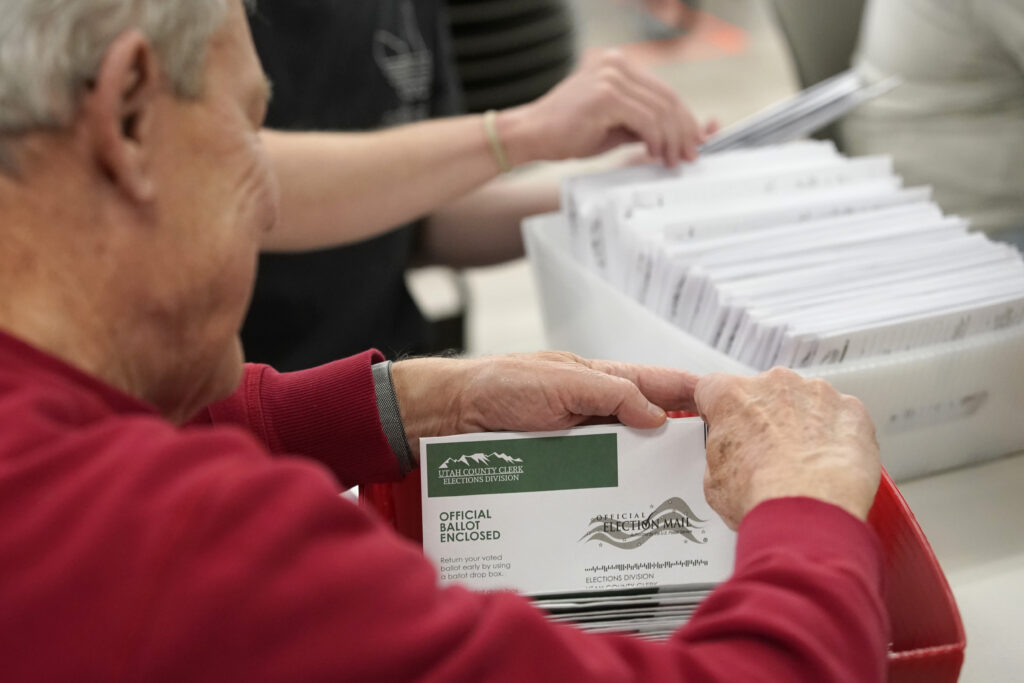
Utah, which votes entirely by mail, is sending out ballots starting Tuesday, but voters will have less time than usual to ensure they are returned and counted.
The Republican-controlled state legislature gutted the two-week grace period for mail ballot returns last year amid a nationwide GOP push to restrict the popular voting method at President Donald Trump’s behest.
Now, ballots will only be counted if clerks receive them by 8 p.m. on Election Day, even if they were postmarked before then.
The change is significant given the uptick in U.S. Postal Service delays. A new Democracy Docket analysis shows which zip codes will be most affected by new USPS cost-saving measures that will slow pickup and delivery times, with several areas in Utah expected to be impacted.
Residents have until 5 p.m. on Oct. 23 to register to vote in the midterms. However, under a new law, the state now requires “documentary proof” of U.S. citizenship when registering to vote in state and local elections.
The documents include birth certificates, a certificate of degree of Indian blood or Bureau of Indian Affairs birth affidavit, tribal treaty or tribal enrollment cards, a U.S. passport or U.S. naturalization documents.
Get updates straight to your inbox — for free
Join 350,000 readers who rely on our daily and weekly newsletters for the latest in voting, elections and democracy.
The law passed earlier this year despite the fact that Utah’s own audit found that noncitizen voting is incredibly rare. The review uncovered an infinitesimal 27 confirmed noncitizens out of more than 2 million registered voters and an even smaller number of people who were actually able to cast a ballot.
Lt. Gov. Deidre Henderson, a Republican and the state’s top election official, recently criticized the Trump administration and congressional Republicans for exaggerating voter fraud claims to push forward a sweeping anti-voting bill. She said they’re “just doubling down and creating problems where none exist, and that’s frustrating.”
There’s been plenty of friction between Henderson and the Trump administration this cycle.
The lieutenant governor was an outspoken critic of President Donald Trump’s anti-mail voting executive order, which, among other things, directed the USPS to issue new requirements for mail ballots. Henderson said it would’ve been an “unmitigated disaster” had it been allowed to go forward, and that part of the order was ultimately blocked by the Supreme Court.
Henderson also refused to turn over sensitive voter data to the Trump administration. The Justice Department has since sued the state for the records. So far, the department is 0-036 in its voter roll lawsuits nationwide. Last month, Henderson said she learned she was under investigation for not handing over the information.
In a recent interview with Utah media outlets, Henderson said political “gamesmanship” with voting “keeps me up at night.”
This is the last midterm election cycle that Utah’s universal mail ballot policy will be in place. The policy will come to an end in 2029, after which voters will have to sign up to vote by mail instead of automatically receiving a ballot.