In major win for voters, judge blocks Trump’s mail voting restrictions for midterms
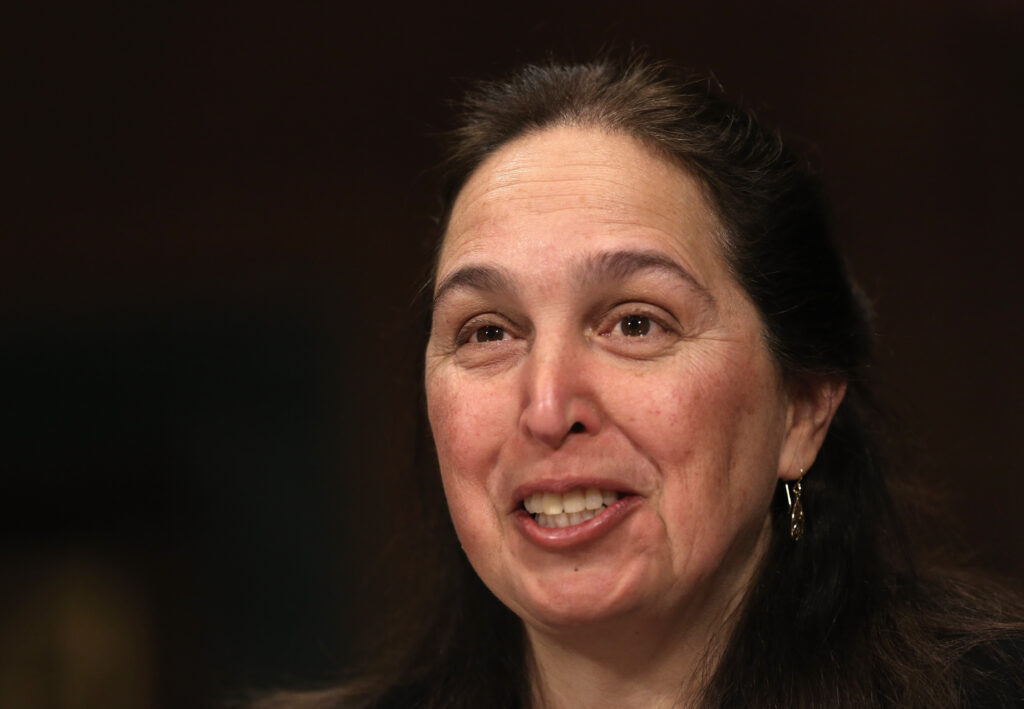
A federal judge in Massachusetts barred the U.S. Postal Service (USPS) Friday from advancing new mail voting restrictions that, if carried out, could leave vast numbers of people unable to cast a ballot by mail this fall.
The decision is a massive win for access to the ballot, though the administration is all but certain to appeal.
Issuing her ruling a day after a pivotal hearing in Boston, U.S. District Judge Indira Talwani said USPS’s rule, which derives from a sweeping executive order President Donald Trump signed in March, was unconstitutional and unsupported by federal law.
“Unauthorized by the Elections Clause, the Final Rule clashes with Congress’s statutory scheme, and is unconstitutional where it intrudes not only on Congress’s Elections Clause powers but also that power left to the States,” Talwani, who was nominated by former President Barack Obama, wrote Friday.
In her ruling, the judge sided with a coalition of pro-voting groups led by the League of Women Voters of Massachusetts and Democratic attorneys general from 24 states and the District of Columbia.
Talwani’s decision was largely expected. She’s said from the start that USPS’s new requirements and Trump’s order are unconstitutional and violate federal law. Still, coming just 60 days before the midterms, her decision is crucial.
For now, it protects millions of Americans’ ability to vote by mail by preventing USPS from refusing to deliver mail ballots in states or localities that don’t comply with the agency’s expansive new restrictions.
Get updates straight to your inbox — for free
Join 350,000 readers who rely on our daily and weekly newsletters for the latest in voting, elections and democracy.
Among the restrictions, states would be required to give the postal agency a list of all voters — including their names and addresses — who requested a mail ballot for the upcoming election. USPS would then use the lists to determine which ballots will be sent to voters.
Across 49 pages, Talwani’s ruling established that the plaintiffs corroborated their arguments that the rule would massively disrupt the upcoming elections with reams of testimony and support, while the defendants offered few facts to bolster their own arguments.
“In balancing the harms based on the record before the court, the court finds, on one side, that immediate implementation of the Final Rule issued less than seventy days before the November 2026 election threatens disenfranchisement of millions of United States citizens who seek to vote by mail,” Talwani wrote. “[A]nd, on the other side, that the record includes no evidence relating to fraudulent mail voting to support the rushed implementation of the Final Rule.”
And, if left to stand, the rule would prevent voters from casting ballots, Talwani said.
“Having considered this series of hurdles for officials against the backdrop of an impending election, and mindful of the fact that any minor malfunction will result in the denial of mail ballots, the court concludes that disenfranchisement for Plaintiff Organizations’ members, regardless of residence, is practically inevitable,” she wrote.
The Department of Justice (DOJ) is expected to appeal Talwani’s ruling to the 1st Circuit Court of Appeals.
If Talwani’s ruling is lifted on appeal, that would allow USPS to force states to comply with its restrictions or risk losing access to the only way they can send and receive mail ballots from voters.
States would also have to change the design of the envelopes they use to send voters mail ballots to comply with USPS’s new rule. The alterations include giving each envelope a unique identifying barcode that the agency will use to track and verify ballots.
The DOJ and USPS have asserted the rule is meant to standardize election mail and prevent illegal voting by noncitizens. However, voting experts and seasoned election officials have said it’s in fact an attempt to transform the postal agency from a neutral carrier of the country’s election mail into an elections administrator. And vanishingly few noncitizens try to vote, as dozens of studies and audits have shown. Even since the Trump administration diverted investigative and prosecutorial resources away from crimes like drug trafficking to focus on this specious threat to electoral integrity, few new incidents have been found.
Last week, the Supreme Court lifted Talwani’s previous injunction against Trump’s executive order, claiming that she issued it prematurely because USPS hadn’t formally adopted its new mail voting rule.
Soon thereafter, however, the postal agency finalized the rule, which changed the legal landscape. Plaintiffs quickly updated and resubmitted their suits and Talwani granted them a temporary injunction blocking the rule last week. Friday’s ruling, a preliminary injunction, is far more robust than that one.
Talwani’s injunction specified that it prevents the rule’s enforcement ahead of the November midterms. And it detailed that the government’s lawyers must provide written notice of the order to USPS officials and inform them they will be held in contempt if they violate it.
USPS defied Talwani’s previous injunction by finalizing the rule, the judge found, but given the procedural holding from the Supreme Court, she did not seek to hold anyone in contempt.
The order granting the preliminary injunction also lifted the temporary restraining order Talwani had issued, making the DOJ’s earlier appeals to the 1st Circuit Circuit and the U.S. Supreme Court moot.
At Thursday’s hearing, Talwani repeatedly asked the DOJ to provide more information about USPS’s ability to process the ballot design approvals and voter lists required by the rule. But the DOJ’s lawyer could not, so the judge gave the government a few hours to supplement the record with a statement from USPS.
That declaration said USPS officials “anticipate” being ready to go “by sometime next week,” but it did not address any of the claims levied by the whistleblower or election officials that the Postal Service’s “slapdash” new mail ballot procedures would cause “catastrophic failure which could derail the midterm elections.”
“We’ve seen no denial from the Postal Service that the whistleblower said anything that was inaccurate,” said David Becker, executive director of Center for Election Innovation & Research, which filed an amicus brief.
Alongside the DOJ, a dozen Republican attorneys general are defending USPS’s new rule. In Thursday’s hearing, Missouri Solicitor General Louis Capozzi argued the agency should be allowed to “preempt” state election laws through the new rule.
Talwani’s order does allow states to voluntarily comply with the law if they so wish, by sending mail ballot designs to USPS for approval. But she refused the red states’ request to exempt them from the order, which would have allowed USPS to refuse to deliver ballots in those states if they did not comply with the rule.
This is a breaking news story. Please check back for additional information.