DOJ asks Supreme Court to lift pause on mail voting restrictions as judge weighs stronger block
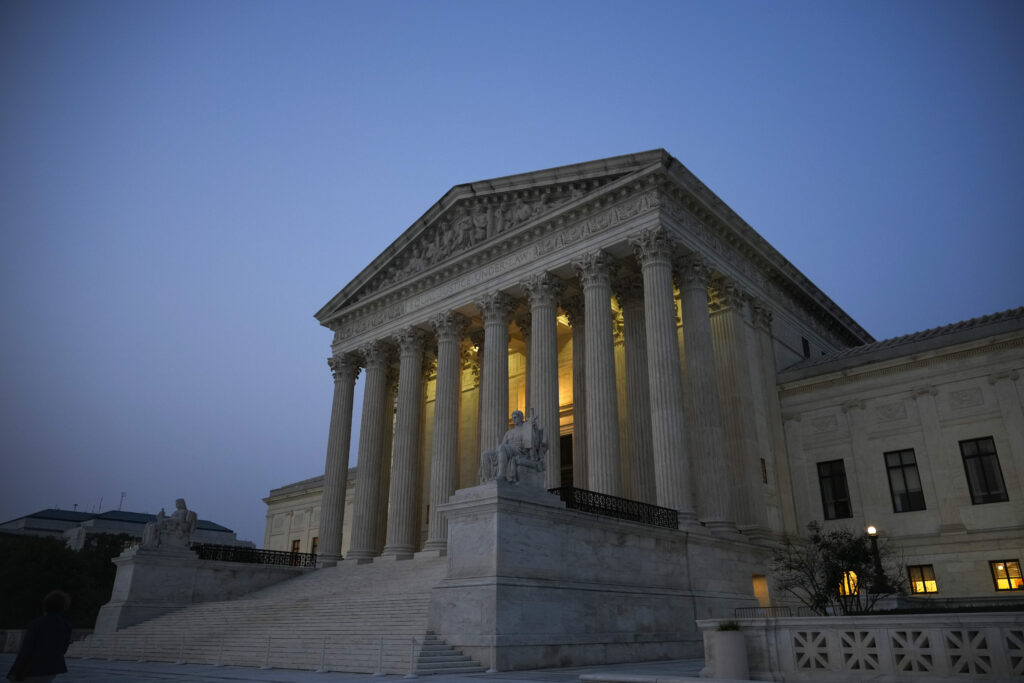
The Department of Justice (DOJ) asked the Supreme Court Thursday to lift a temporary court order against the U.S. Postal Service’s (USPS) new mail voting restriction as the federal government tries to put President Donald Trump’s anti-voting executive order into effect before the midterms.
The appeal comes as the judge separately weighs imposing a more substantial block.
Just hours earlier, U.S. District Judge Indira Talwani concluded a hearing in Boston on whether to issue a preliminary injunction blocking USPS from implementing a new rule that would impose restrictions on a voting method used by one-third of Americans in the 2024 election. During the hearing, Talwani stressed she was aiming to “get out my decision as soon as possible.”
Get updates straight to your inbox — for free
Join 350,000 readers who rely on our daily and weekly newsletters for the latest in voting, elections and democracy.
But before she could rule, the DOJ asked the Supreme Court to temporarily stay a 14-day restraining order Talwani issued last week. It’s an extraordinary request by the department, as such temporary orders are rarely appealed and, in fact, are generally considered unappealable.
The department argued that Talwani’s temporary order should be stayed until the 1st Circuit Court of Appeals weighs in on the matter.
“This Court should stay the order of the United States District Court for the District of Massachusetts, pending the resolution of the government’s appeal to the United States Court of Appeals for the First Circuit and any proceedings in this Court, and grant an immediate administrative stay,” Solicitor General John Sauer wrote Thursday.
However, Talwani’s pending preliminary injunction — a more robust form of legal relief — could render the DOJ’s appeal to the Supreme Court irrelevant. And she could rule at any moment.
The DOJ’s stay request could also be rendered inconsequential if the appeals court stays or affirms the temporary order.
For those reasons, any benefit from the Supreme Court potentially lifting the old order would likely be short-lived.
Moreover, the temporary restraining order largely allows the Postal Service to implement its mail voting rule. It only bars the agency from mandating that states comply with the restrictions.
Through the new postal rule, USPS is attempting to force states to give the federal government a list of all voters — including their names and addresses — who requested a mail ballot for the upcoming election. USPS would then use the lists to determine which ballots will be sent to voters.
States would also be required to change the design of the envelopes they use to send voters mail ballots to comply with USPS’s new rule. The alterations include giving each envelope a unique identifying barcode that the agency will use to track and verify ballots.
This story has been updated with additional details throughout.