Federal judge won’t lift temporary block on Trump’s anti-mail voting order
 Prefer us on Google
to see more of our voting rights news coverage when you search.
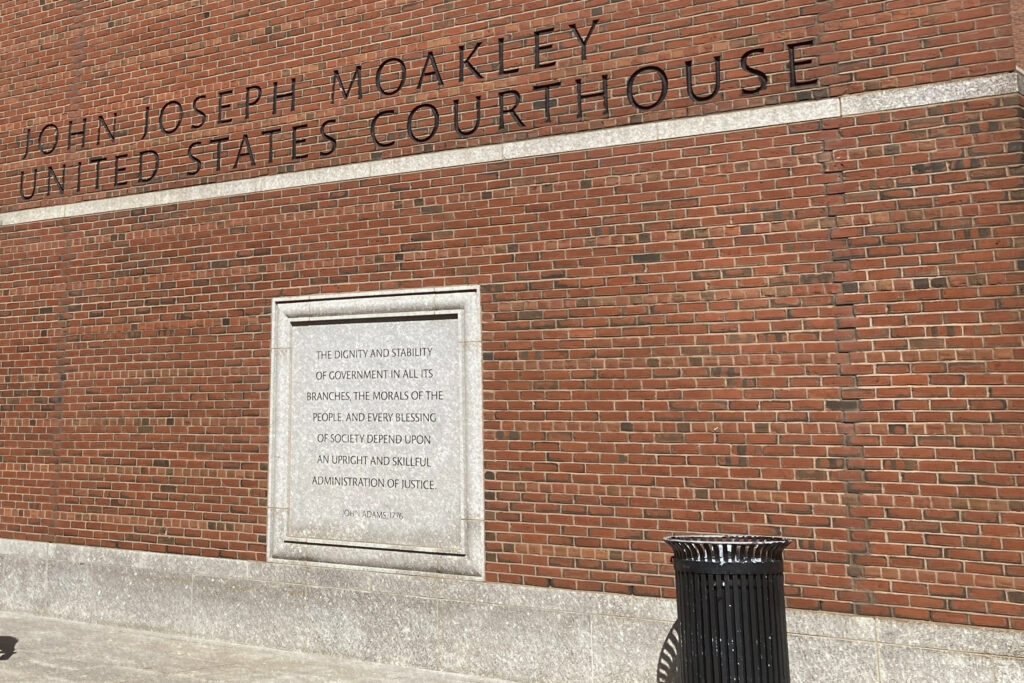
A federal judge in Massachusetts refused to lift a temporary order preventing the U.S. Postal Service (USPS) from further implementing President Donald Trump’s executive order attacking mail voting.
U.S. District Court Judge Indira Talwani issued a temporary restraining order (TRO) last week, which the Department of Justice (DOJ) and a dozen Republican states soon after sought to appeal. The defendants asked Talwani to suspend her own TRO while that appeal was heard.
But in her order Monday, Talwani noted that federal judicial procedures do not normally allow parties to appeal a TRO. Neither the DOJ nor the red states have filed an appeal with the 1st Circuit Court yet.
In explaining her decision, Talwani emphasized the effect Trump’s edict could have on voters. The “late timing of the changes to State election practices the federal agency seeks to impose by Final Rule are contrary to the public’s need for ‘clear and settled’ ‘rules of the road’ for November 3, 2026 midterm elections, now only two months away,” she wrote.
Talwani’s order also questioned some of the arguments made in defense of Trump’s March order and USPS’s recently issued rule to carry it out, offering a hint of how she might rule on a pending request to issue an injunction preventing the administration from enacting the sweeping mail voting changes ahead of November’s midterm elections.
A hearing on the matter is scheduled for Thursday.
The USPS regulations would impose new ballot envelope design requirements on states and create a federal database of mail voters. The Postal Service would refuse to mail ballots to voters in states that failed to comply with the changes, potentially stripping millions of Americans of their ability to vote by mail.
Get updates straight to your inbox — for free
Join 350,000 readers who rely on our daily and weekly newsletters for the latest in voting, elections and democracy.
Talwani had previously blocked the executive order, but the U.S. Supreme Court agreed with arguments that her injunction was premature because it was granted before USPS had implemented it. But that changed earlier this month, when USPS published its final rule.
In her order Monday, Talwani found that the defendants’ argument that the Supreme Court’s ruling should also block this TRO was misplaced.
“A Final Rule has now [been] issued and, contrary to Defendants’ cynical interpretation, the Supreme Court has not endorsed the view that any challenge to the Final Rule is now too late,” she wrote.
“Further, Defendants’ branding the Final Rule’s changes as ‘modest’ does not alter the actual requirements of the Final Rule,” Talwani added, noting that USPS would effectively decide who would get mail ballots under the change.
The federal judge also made clear that USPS could continue work setting up the systems necessary to accept state mail voter lists and assess the eligibility of the envelopes — so long as states weren’t required to do anything while the temporary injunction remained in place.
“[T]he TRO does not bar any State from seeking USPS approval of their ballot designs or uploading voter information to the Portal,” she added.