Federal voting commission says it can’t change rules after Trump sacked leadership
 Prefer us on Google
to see more of our voting rights news coverage when you search.
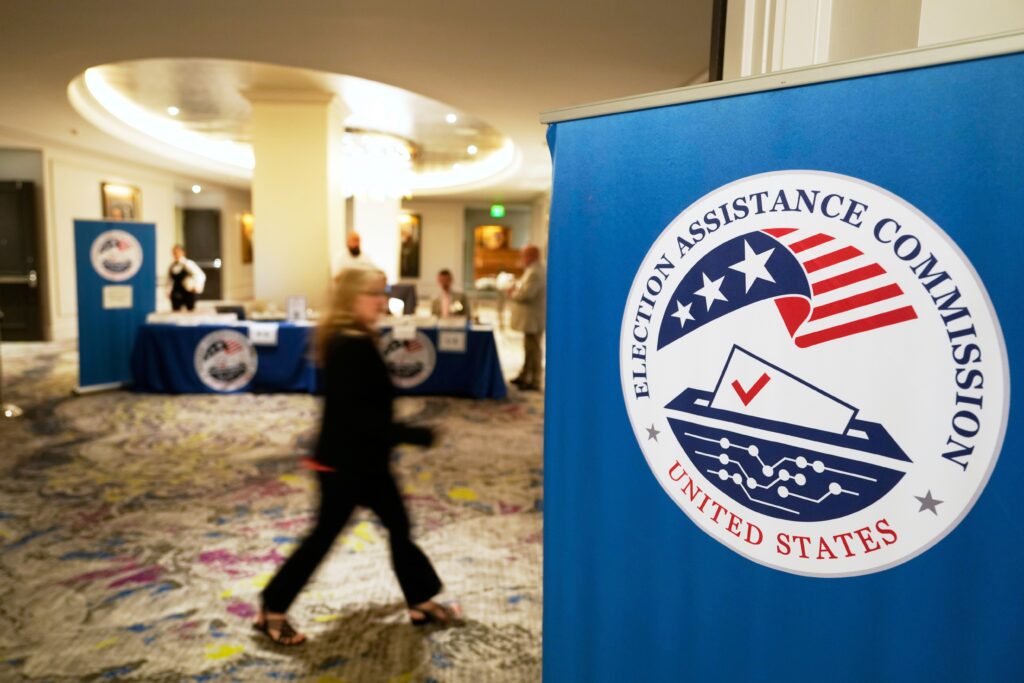
The staff of the U.S. Election Assistance Commission (EAC), a bipartisan agency created to help states administer elections, released a memo detailing what the agency can and can’t do after President Donald Trump abruptly ousted its leadership last month.
The firings ignited fears that Trump would next attempt to use the now-headless commission to wrest control of elections from states or decertify voting machines before the upcoming midterm.
The new memo, published late last week, may temper some of those fears. In particular, it stipulates that many of the agency’s key functions cannot proceed without commissioners.
Get updates straight to your inbox — for free
Join 350,000 readers who rely on our daily and weekly newsletters for the latest in voting, elections and democracy.
The president fired Democratic commissioners Thomas Hicks and Benjamin Hovland, while Republican commissioner Christy McCormick resigned under pressure. The agency’s fourth commissioner, also a Republican, resigned earlier this year.
In the absence of commissioners, EAC staff cannot adopt new policies or update existing ones, including the Voluntary Voting System Guidelines (VVSG), which are the standards the agency uses to test and certify election equipment that Americans use to vote.
In an executive order last year, Trump targeted the VVSG by directing the EAC to decertify all EAC-certified voting systems currently in use and recertify them under a new set of criteria he demanded.
According to the memo, EAC staff now cannot change the standards. They can still proceed with certifying — or decertifying — voting systems under the existing standards, but such efforts must follow a detailed, multi-step procedure. Any deviations from those rules would likely open the agency up to lawsuits from states and voting system companies that would be affected by decertifications.
Now, staff members also can’t make changes to a standardized voter registration form that lets citizens in most states register to vote, update their registration after a name or address change, or declare a party affiliation by mail.
Through that same executive order, Trump tried to force the EAC to include a proof of citizenship requirement in the National Mail Voter Registration Form. That order was quickly halted by multiple courts.
By law, the EAC needs three members to have a quorum to take official actions. Trump could resume the agency’s key functions by appointing new commissioners. However, those picks would have to be confirmed by the Senate and would also have to adhere to a statutory requirement that no more than two commissioners can belong to the same political party.
Trump’s EAC dismissals followed a Supreme Court ruling that shattered decades of precedent and gave the president almost limitless authority to fire heads of independent executive agencies.