‘Cut off at the knees’: Election chiefs fear long-term damage from Trump’s EAC firings
 Prefer us on Google
to see more of our voting rights news coverage when you search.
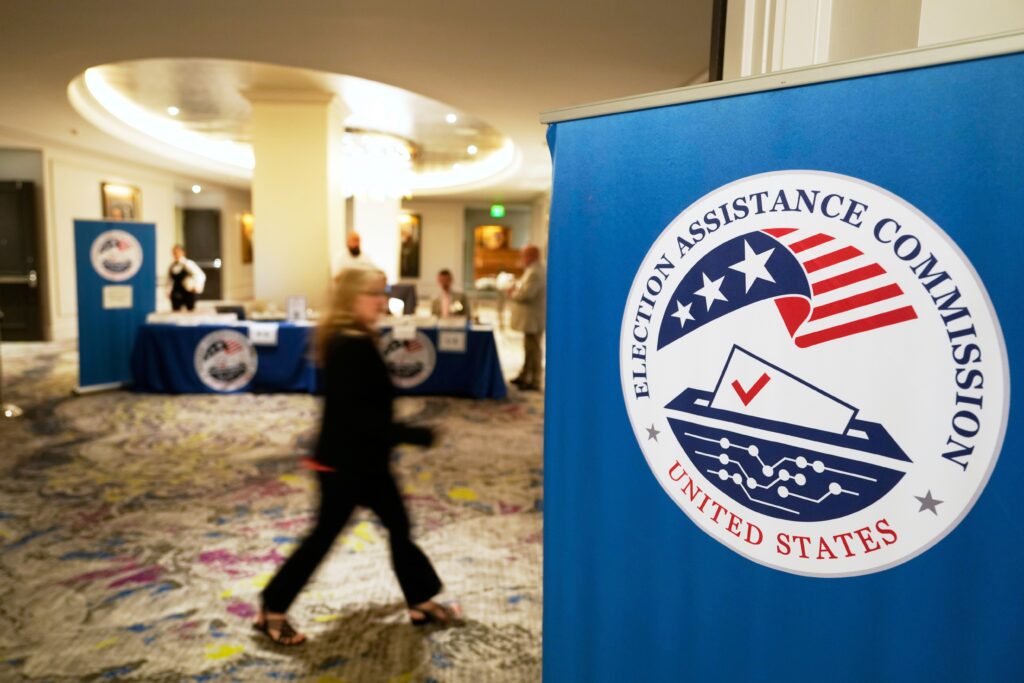
RAPID CITY, SOUTH DAKOTA— When President Donald Trump dismantled the leadership of the U.S. Election Assistance Commission (EAC) earlier this month, state election officials warned about the impact it could have on the upcoming midterm elections.
But some fear the impact could go well beyond this November’s vote and see the move as part of the president’s grander scheme to wrest control of elections from states. Others worry Trump’s shocking move could do long-term damage to the EAC by severely kneecapping its ability to provide crucial support for states in running elections.
“In the short term, the staff is able to carry out much of the work, but nothing new can be voted upon [without commissioners]” Connecticut Secretary of State Stephanie Thomas (D) told Democracy Docket during an interview at the National Association of Secretaries of State conference last week. “My concern is that the EAC inhabits a fairly unique space that is focused solely on election administration. I don’t know of any other entity that does that on a national basis.”
The EAC is a bipartisan federal agency that was created by the Help America Vote Act to help states administer elections. It issues crucial guidelines and resources on voting policies and election best practices, and — perhaps most importantly — it certifies the election equipment and voting machines that states use.
State and local election leaders have come to rely on the agency as a go-to partner for solving problems that extend well beyond election season. The agency regularly doles out grants to election offices to improve election infrastructure, upgrade voting equipment and cybersecurity measures, and develop new initiatives for voter outreach and education.
Get updates straight to your inbox — for free
Join 350,000 readers who rely on our daily and weekly newsletters for the latest in voting, elections and democracy.
It’s now unclear what the scope of that work looks like without commissioners leading the agency.
Thomas’ office leaned on the EAC in 2023, when her state enacted a new law to add 14 days of in-person early voting, she said. The law greatly expanded access for Connecticut voters, but it also created a problem: Towns across the state were struggling to find poll workers to staff the new early voting period.
Through an EAC grant in 2024, Connecticut launched a program to recruit college students to address a state-wide poll worker shortage. The program paid students to train and work as poll workers in the towns that needed them most.
Now Thomas is worried that, without commissioners, it’ll be a lot harder for states to get EAC grants to help with similar problems.
“As any election administrator knows, our work is difficult, and there’s not a lot of support out there,” she said. “Without the EAC there in a leadership role, or potentially cut off at the knees, I do have concerns about the long-term fate of election administrators. Who’s looking out for those concerns?”
State election chiefs Democracy Docket spoke with at the NASS conference all said they weren’t too concerned Trump’s move will affect the EAC’s work for the upcoming midterms.
“The good news here, as I understand it, is the commissioners wisely put into place months ago systems that ensure that the core functions of the EAC will still be carried out even without any commissioners at all,” Minnesota Secretary of State Steve Simon (D) said.
But Simon’s main fear is that Trump wants to install loyalists to head the EAC as part of a broader effort to take control of elections. The agency is led by four commissioners — two from each political party — and any commissioner that Trump nominates would have to be approved by the Senate, which Simon said would be hard for them to do so close to an election.
“The EAC of course exists to help states,” Simon added. “There was no reason to have done this so close to an election, or even before an election at all.”
Washington Secretary of State Steve Hobbs (D) told Democracy Docket that he’s not as worried that Trump’s firing of the EAC’s commissioners is part of a larger strategic gambit to take over elections.
“If you look at the big picture, it doesn’t do much because the commission itself can still do the [machine] testing and all that,” he said. “But it does show that Trump is definitely using the ruling from the Supreme Court to just fire anybody, basically. I think it’s just a temper tantrum disguised as these firings because none of his stuff is getting through. He can’t get the SAVE Act passed. Every time he takes something to court, it’s dismissed.”
Even though the EAC is set up to continue performing its core duties without commissioners, Trump’s brazen move sends a troubling message to election officials and voters, according to Simon.
“It’s concerning because it’s a flexing of political muscle more than anything else,” he said. “But the EAC itself is not going away because it doesn’t have commissioners.”