DHS noncitizen voter claims unravel in Nevada as state confirms flagged voters are citizens
 Prefer us on Google
to see more of our voting rights news coverage when you search.
Nevada election officials said Thursday that 185 voters in the state who the Department of Homeland Security (DHS) identified as noncitizens were all, in fact, citizens — the latest snafu in the department’s attempts to uncover illegal voters across the country.
But beyond simply being wrong, DHS also appeared unwilling — or unable — to provide information necessary to substantiate its claims.
“As for the 185 individuals, our records indicate that they were citizens,” Greg Ott, Nevada’s chief deputy secretary of state, wrote to DHS Wednesday. “You have provided nothing of substance to suggest otherwise.”
Get updates straight to your inbox — for free
Join 350,000 readers who rely on our daily and weekly newsletters for the latest in voting, elections and democracy.
A month earlier, DHS had sent Nevada voter-registration identification numbers for the 185 alleged noncitizens. When the state asked for more information used to identify them — names, dates of birth, residential addresses — DHS said no.
In his email Wednesday, Ott quoted DHS official Kimberley Vogt as saying that the department would “prefer to limit our information sharing to just providing you the voter ID from your public voter list.”
Nevada officials then reiterated that they were “unable to conduct an analysis without real verifiable information.”
The incident deepens concerns about the reliability — and honesty — of the Trump administration’s nationwide effort to identify alleged noncitizen voters ahead of the midterms.
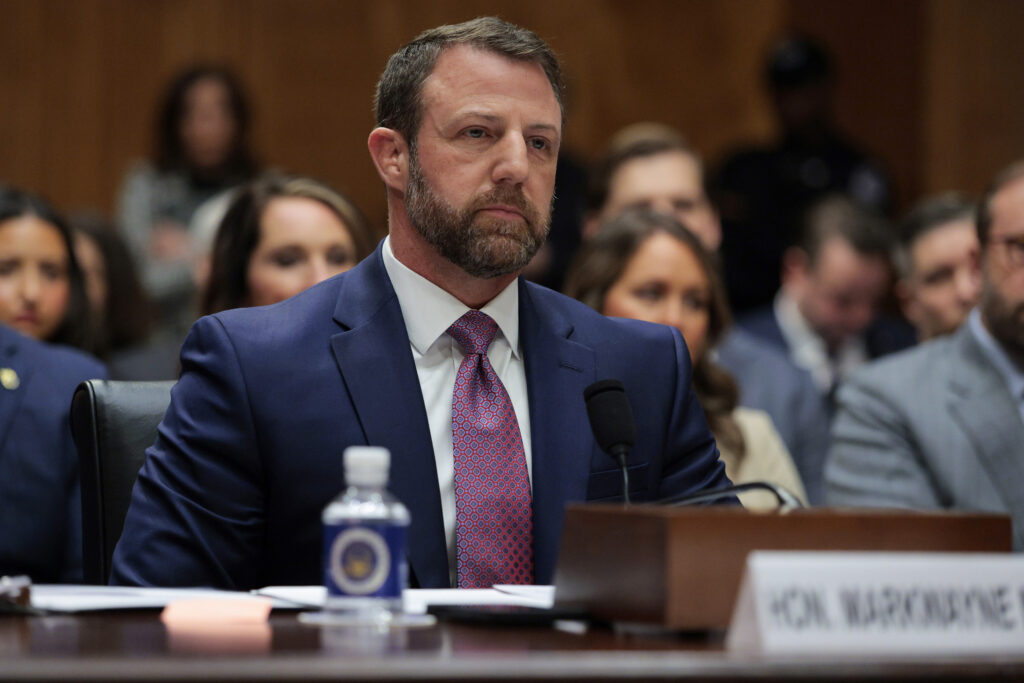
DHS’s unwillingness to share its data is also alarming because of the threats it is currently making against states. Homeland Security Secretary Markwayne Mullin has said state election officials could face criminal prosecution for refusing to yield to DHS’s voter roll demands.
In July, Mullin claimed that DHS had identified over 250,000 noncitizens registered to vote in California, New Jersey, Nevada and Pennsylvania.
That same month, the department told Nevada officials that as many as 15,903 noncitizens could be registered to vote in their state. That number has not held up to scrutiny.
During an Aug. 13 virtual meeting with Nevada election officials, federal officials acknowledged that the larger figure had not undergone a full manual review and said investigators had so far manually reviewed a subset of the records and identified 185 people they believed were not U.S. citizens.
DHS subsequently sent Nevada the voter-registration numbers for those 185 people, along with another 6,218 records that had not undergone the same review.
The department later publicly defended that smaller number. After election officials questioned the original 15,903 figure, DHS said the 185 were individuals who had gone through manual review and had been confirmed as noncitizens.
Now, Nevada says even those cases do not withstand scrutiny. Its dispute with DHS exposes another potential flaw in the department’s review.
DHS provided Nevada primarily with voter-registration identification numbers. In an email earlier this month, the department claimed that each voter ID was unique to an individual registrant.
Nevada said that wasn’t true.
The state had recently moved from separate county voter-registration systems to a centralized statewide database. During that transition, voters received new statewide identification numbers, meaning that the same numerical identifier can have been associated with different people at different times, according to Nevada officials.
Ott offered a simple example: A number once assigned by a county to one voter could later be assigned by the statewide system to an entirely different person. Without a name, date of birth, address or another identifying characteristic, Nevada cannot know which person DHS actually matched against federal immigration records.
So Nevada asked DHS for precisely that information — only for Vogt to decline to provide it.
Earlier this month, DHS told Nevada that its analysis considered multiple attributes — potentially including names, dates of birth, addresses and phone numbers — and that records with more matching attributes received a higher confidence level. But DHS did not tell Nevada which attributes matched for the 185 people or provide those underlying data points, according to the state.
In an interview with Democracy Docket in August, Nevada Secretary of State Cisco Aguilar called DHS’s efforts to identify noncitizens “bullsh*t.”
“If they are going to accuse individuals in a certain state that they do not understand of being a noncitizen, when they are potentially a citizen — that is dangerous,” he said.
DHS’s allegations of noncitizens registering to vote in other states also haven’t held up well. In August, the department confessed that it lacked “high confidence” in its claim that more than 14,000 noncitizens were registered in Pennsylvania.