Voters handed Trump a decisive defeat. But his threats to voting continue
 Prefer us on Google
to see more of our voting rights news coverage when you search.
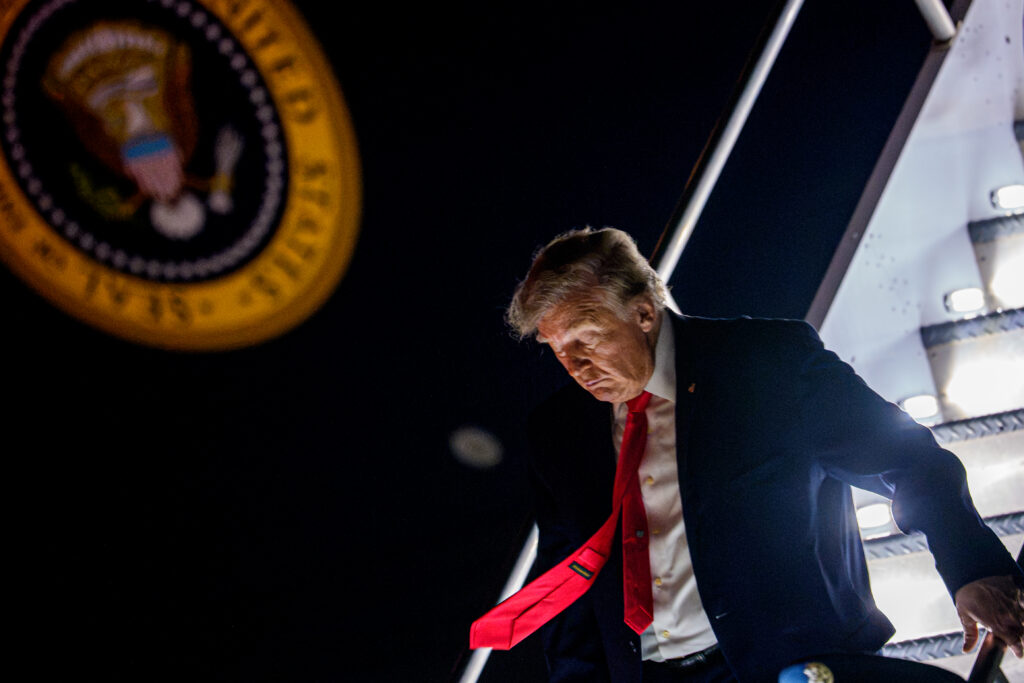
From coast to coast, voters delivered a stunning, thorough rebuke to President Donald Trump and congressional Republicans.
In Florida, North Carolina and Texas, thousands of voters overcame the GOP’s aggressive political gerrymanders — which the party initiated at Trump’s behest.
After the Supreme Court gutted the landmark Voting Rights Act and made racial gerrymanders easier, Black voters got out to vote and contributed to striking GOP losses and historic firsts across the South.
But despite Trump’s brutal shellacking, numerous threats to the vote persist. And though the size of the Democratic victory is undeniable, the Trump administration may still challenge the results on multiple fronts.
Trump’s anti-voting crusade unlikely to end
Though he appeared to acknowledge the GOP’s crushing defeat in interviews with the New York Times and Politico and said he was willing to work with the incoming Democratic Congress, Trump is unlikely to back down from his attack on elections.
Undermining the vote has become a hallmark of his second term. Over the past two years, the Trump administration repeatedly attempted, by fiat, to rewrite election rules to burden voters and usurp state control of election systems.
Get updates straight to your inbox — for free
Join 350,000 readers who rely on our daily and weekly newsletters for the latest in voting, elections and democracy.
Trump’s anti-voting effort dramatically escalated weeks before Election Day with the Department of Justice’s (DOJ) unprecedented lawsuits against California and Alaska and its widespread threats against election officials.
While the DOJ’s lawsuit challenging around 21,000 potential votes in California met a swift end at the Supreme Court, its Alaska suit is ongoing.
The DOJ seeks to prevent Alaska from certifying the results of its U.S. Senate race if the Republican incumbent, Sen. Dan Sullivan, loses to Democratic challenger Mary Peltola. The reason is that a second Daniel Sullivan — whom Republicans accuse of being a spoiler — is also running.
The race is currently close, with incumbent Sullivan in the lead. Should Peltola pull ahead and win, much will hinge upon the size of her victory. The DOJ specifically aims to challenge the race if Peltola wins by a margin smaller than the number of votes the second Sullivan receives, arguing his presence confused voters who intended to vote for the incumbent.
Just before Election Day, the DOJ appealed a lower court’s dismissal of the Alaska lawsuit to the 9th Circuit Court of Appeals. Attorney General Todd Blanche also vowed to keep “fighting tooth and nail” to halt the state’s election procedures.
New lawsuits could erupt
Beyond California and Alaska, the DOJ could intervene in close races, even if they don’t shake Democrats’ control of Congress.
As of Wednesday morning, Mississippi’s U.S. Senate race remains too close to call. A few dozen votes could ultimately decide it. While Mississippi is one of the few states without an automatic recount mechanism, losing candidates can still challenge the inclusion or exclusion of ballots under state or federal law.
If Republican incumbent Cindy Hyde-Smith loses to Scott Colom, a Democratic prosecutor, by a razor-thin margin, the GOP will likely mount a legal effort to challenge ballots, and it could be joined by the DOJ.
In particular, Republicans could seek to challenge thousands of affidavit — or provisional — ballots voters cast in this election. The elevated number of provisional ballots this year appears to stem from a surge of voter registration deactivations by Mississippi Secretary of State Michael Watson in the months leading up to Election Day.
The Trump administration may again attempt to undermine faith in elections by whipping up voting fraud conspiracy theories about states that take longer to report election results, such as California.
DHS voter investigations ongoing
Hours before polls closed, other Trump Cabinet members indicated that they would intensify their crusade against free and fair elections.
“After this election we’ll be gathering all the data, we’ll be gathering the voting logs, and we’ll be going through those and making sure that no illegals voted,” Homeland Security Secretary Markwayne Mullin said in a Fox News interview Tuesday afternoon.
To achieve what Mullin laid out, the Trump administration would have to obtain — through either lawsuits or court warrants — copious amounts of election materials from states. The effort would likely look similar to the DOJ’s previous demands that states hand over their unredacted voter rolls for inspection. While some states complied with those demands, many didn’t, and the administration has lost every lawsuit trying to access voter data from noncomplying states.
The review Mullin described is similar to a sweeping initiative the Department of Homeland Security (DHS) carried out in the months leading up to the midterms. A bombshell whistleblower report and court proceedings have revealed that the department scoured almost all states’ voter rolls for noncitizens through an opaque process involving hundreds of immigration officials.
Pro-voting groups have argued that the department scrutinized almost the entire American electorate in an undisclosed investigation. In doing so, the Trump administration encroached upon states’ constitutional authority to determine voter eligibility and register voters, they said.
Through several different lawsuits, civil rights and voting groups are challenging distinct phases of DHS’s massive voter investigation. However, despite those suits, Mullin’s comments indicated that his department intends to continue.
Voters passed a slew of new anti-voting policies
Tuesday night, voters across several states approved new barriers to the ballot, primarily in the form of requiring voters to present an ID before they cast a ballot.
Ballot measures to enshrine voter ID requirements in state constitutions are projected to pass by wide margins in Nevada, North Carolina and Ohio.
While voter ID laws may be a well-intentioned mechanism to secure elections, many voters — especially younger people — can face difficulties obtaining valid photo ID.
That is particularly challenging when lawmakers heavily restrict what is considered a valid form of ID, as demonstrated by several anti-voting maneuvers in recent years.
For example, just weeks before Election Day, New Hampshire Republicans suddenly outlawed student IDs as a form of voter identification.
Similar voter ID ballot measures are expected to fail in Arizona, California and Colorado.