DHS lacks ‘high confidence’ in its Pennsylvania noncitizen voter roll claims
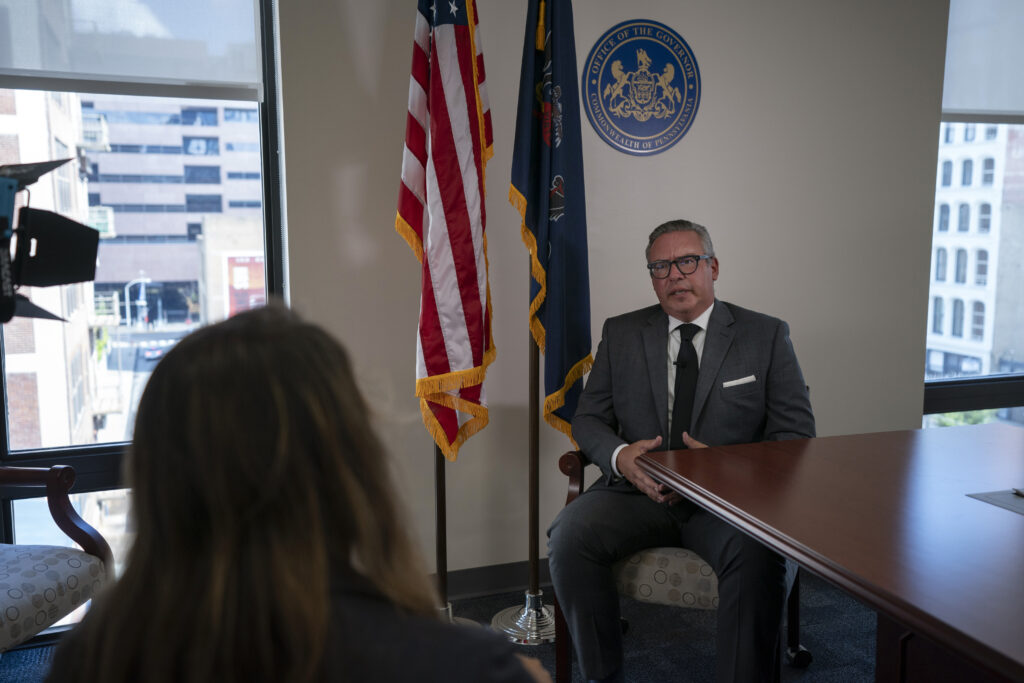
The Department of Homeland Security (DHS) privately confessed that it lacked “high confidence” in its claim that more than 14,000 noncitizens were improperly registered to vote in Pennsylvania, according to a new letter from the state’s top election official.
Pennsylvania Secretary of the Commonwealth Al Schmidt (R) said DHS officials made the admission during an Aug. 13 virtual meeting with state election officials, nearly a month after Homeland Security Secretary Markwayne Mullin alleged that 14,576 noncitizens were registered to vote in the battleground state.
“During the meeting, DHS representatives explained that they did not have high confidence that the 14,576 individuals referenced in your letter were, in fact, non-citizens who had improperly registered to vote in Pennsylvania,” Schmidt wrote in an follow-up letter to Mullin Tuesday.
Get updates straight to your inbox — for free
Join 350,000 readers who rely on our daily and weekly newsletters for the latest in voting, elections and democracy.
The disclosure is the latest indication that sweeping noncitizen-voting claims promoted publicly by the Trump administration were based entirely on preliminary or unverified federal data.
DHS had sent Pennsylvania its initial findings in a July 16 letter, part of a broader administration push to scrutinize state voter rolls for alleged noncitizen registrations.
But according to Schmidt, DHS officials acknowledged during the private meeting that the agency still needed to explain how it arrived at the Pennsylvania figure and agreed to provide the methodology underlying its analysis, including the specific data sources it used.
Pennsylvania is still waiting for that information.
State officials are also seeking details about how DHS matched registered Pennsylvania voters against federal records and how the department determined which matches carried greater or lesser degrees of confidence.
“Furthermore, we ask you to explain what data from your review that DHS is offering to provide to the Department of State,” Schmidt wrote.
According to the letter, Pennsylvania officials understood that DHS was willing to provide a list of state voter identification numbers for people the department had determined “may be non-citizens” — but without additional information explaining why each individual had been flagged.
“Please let us know if our understanding is incorrect,” Schmidt wrote.
The limited information would make it difficult for Pennsylvania election officials to independently verify DHS’s conclusions before taking any action against a voter’s registration.
Schmidt reiterated that voter removals must be based on reliable information and comply with state and federal law.
“The right to vote is sacred, and the cancellation of any voter registration record must be based on reliable data sources and done in accordance with Pennsylvania and federal law,” he wrote.
The Pennsylvania exchange closely mirrors a similar dispute between DHS and Nevada election officials.
In Nevada, DHS initially claimed that as many as 15,903 noncitizens appeared on the state’s voter rolls. Federal officials later acknowledged that the figure was preliminary and that the overwhelming majority of the names had not undergone manual review.
By mid-August, DHS said it had manually reviewed only a portion of the Nevada list and identified 185 cases it considered confirmed, while more than 14,000 remained under further review.
Nevada officials repeatedly pressed DHS for the underlying information needed to independently verify those findings, warning that unreliable federal matching could result in eligible U.S. citizens being wrongly targeted for removal.
“If they are going to accuse individuals in a certain state that they do not understand of being a noncitizen, when they are potentially a citizen — that is dangerous,” Aguilar told Democracy Docket last week. “It’s gross negligence to even think that we’d only take that dataset and truly apply it to our analysis of our voter rolls.”
The Pennsylvania letter now raises similar questions about how much vetting occurred before the administration publicized its allegations there.
Schmidt’s office said DHS officials agreed during the Aug. 13 meeting to provide a written description of their methodology and a list of the specific datasets used in the Pennsylvania analysis.
“We await this information,” Schmidt wrote.
The letter concludes by asking DHS to provide the additional information so Pennsylvania can “further review and determine appropriate next steps.”