GOP targets U.S. citizens living overseas in latest suppression scheme
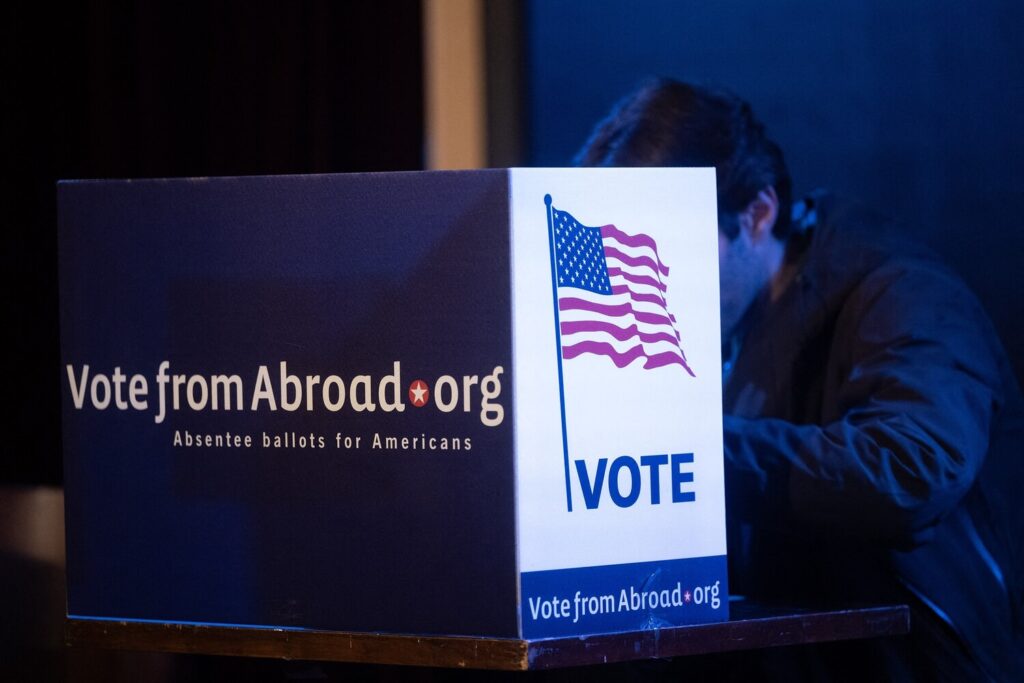
As Republicans escalate their campaign against voters living overseas, they’ve zeroed in on a small, little-understood group — American citizens born and living abroad who vote through their family connection to a state.
A Virginia court held a hearing Wednesday on a GOP lawsuit seeking to disenfranchise these overseas voters, and a similar hearing is happening in a Nebraska court Thursday.
These cases underscore a glaring reality in the Republican approach to voting rights: The party has spent years insisting that voting is a right reserved for American citizens, fighting scattered efforts to allow noncitizens to vote in local elections. Now, it’s asking courts across the country to decide that for some Americans, citizenship is not enough to have the right to vote.
And in some cases, Republicans have made their motivation clear: they believe that overseas voters are more likely to be Democrats.
Get updates straight to your inbox — for free
Join 350,000 readers who rely on our daily and weekly newsletters for the latest in voting, elections and democracy.
Darius, 23, was born in Amsterdam and has lived in the Netherlands nearly his entire life (he asked that his last name not be used). But he’s a United States citizen, and when he thinks about the U.S., he thinks about Kentucky — where his mother is from.
“I’ve visited the United States a lot. My mother is American. And a lot of my family is still in the States, over in the great Commonwealth of Kentucky,” Darius told Democracy Docket. “Basically for all my life, as much as I can remember, I visited the States at least once, perhaps twice a year. We were very fortunate to be able to do that. My grandparents were there, my cousins, my aunt, my uncle. We’ve always gone to visit them and to see them. My parents found that to be a very important part of my life.”
If he ever moved to the United States, he said, he could imagine living in New York or Kentucky as well.
Even though I haven’t lived there, I still feel a connection there,” he said of Kentucky. “There is a real connection I have to the state. And I can imagine a lot of other voters abroad have that too. Even if you’ve never lived there, you still have a connection to the country.”
Voters like Darius are part of a small group of American citizens abroad who are now at the center of the GOP’s crusade to narrow the nationwide electorate.
Over the past year, the Republican National Committee (RNC) has filed at least eight lawsuits targeting overseas voters in Michigan, North Carolina, Arizona, Virginia, Nebraska, Colorado, Nevada and New Jersey. The lawsuits have repeatedly focused on so-called “never resident” voters — U.S. citizens who were born abroad and are eligible under state law to vote based on a parent, spouse, guardian or other family member’s residence in a state.
The lawsuits can often sound overly technical. But voting advocates say they are part of a much broader agenda to carve a relatively small and little-known group of American citizens out of the electorate and use them as a wedge against overseas voting more generally.
“I think it’s part of an all-out attack on voting that we’re seeing across the country. The goal of going after this group of voters is twofold. One is to just interfere with the right of U.S. citizens to vote. And that’s people who live and work and study abroad, U.S. citizens,” Martha McDevitt-Pugh, international chair of Democrats Abroad, told Democracy Docket. “It’s also aimed to discourage and intimidate voters abroad and make them feel uncertain or confused or fearful about whether it’s okay to vote.”
The Uniformed and Overseas Citizens Absentee Voting Act (UOCAVA) protects the ability of military and overseas voters to cast absentee ballots in federal elections. States are also empowered to have their own laws that determine how overseas voters register and which state or local voting address they can use.
For former U.S. residents now living abroad, that address is typically the last place they lived before leaving the country. For citizens born abroad, many states allow them to use a family connection — such as a parent’s last residence — as the legal anchor for voting eligibility.
That system is in response to a simple but overlooked problem: If someone is a U.S. citizen, born abroad to an American parent, has never voted anywhere else and has no personal U.S. residence, where can they vote?
Republicans have essentially argued the answer should often be nowhere.
In state after state, the RNC has argued that these Americans cannot “inherit” residency or voting eligibility through their family and that state constitutions require voters to have personally lived in the state where they cast a ballot.
But the people being targeted say the idea that they have no meaningful connection to the U.S. — or to the state where they vote — misunderstands their experience.
Carter, a 27-year-old U.S. citizen living in Ontario who also asked that his last name not be used, votes in Michigan. He was born in Canada and has always lived there, but most of his extended family lives in Michigan.
“I have a majority of my extended family living in the U.S. They all live in Michigan, which is where I vote,” Carter told Democracy Docket. “I vote in the interest of the family that I have there.”
He also pointed to something many Americans living in the U.S. might rarely think about: U.S. citizens abroad still have obligations to the country, including filing taxes.
“Sometimes I have to pay, but I always have to file,” Carter said.
Darius said the same issue is central to how he thinks about voting. Even though he lives in the Netherlands, he still must file and pay taxes.
“I pay my taxes,” Darius said. “I therefore would also like to have a voice in how they’re spent, however minute that might be.”
To McDevitt-Pugh, the GOP’s argument erases the real civic and family ties many Americans abroad have to the United States.
“One of the things we know about U.S. citizens who are born abroad is they’re actually very connected to their country,” McDevitt-Pugh said. “They travel with their family during holidays and vacations, visit their grandparents and their cousins. They have a very strong attachment to the United States. Many of them will move to the States.”
She said these voters are often young Americans who are just reaching voting age and want to participate for the first time. Targeting them now, she argued, risks cutting them off from civic participation before it becomes a habit.
“When they start voting early in life, they’re likely to continue to vote. So it really leaves them without a voice in the country where they’re a citizen,” McDevitt-Pugh said. “It’s a country where they’re required to file a tax return. They’re subject to tax laws just because they have a U.S. passport.”
The RNC lawsuits argue that even if they have tax obligations, follow overseas voting rules and their families are rooted in a state, they should still be cut out of the electorate because they have not had a primary address in the state.
Republicans have also made the partisan stakes explicit.
In Michigan, the RNC argued that overseas voters “overwhelmingly support Democratic candidates” and that counting their ballots “disproportionally harms Republican candidates”. In Nevada, the RNC similarly alleged that “never resident” voters “overwhelmingly favor Democratic candidates.”
That political framing is part of what makes voting rights advocates view the wave of litigation as a targeted attack on voters, not a neutral fight over election administration.
McDevitt-Pugh said Democrats Abroad is responding with voter education, outreach, legal advocacy and voter protection work. The organization operates in more than 50 countries, she said, with local groups tabling at bookstores, train stations and other places where Americans abroad gather.
It also runs social media campaigns, phone-banking programs and voter assistance efforts to help Americans abroad register, request ballots and navigate local election offices.
“The other thing we do is we have our own voter protection team,” McDevitt-Pugh said. “We’re very proactive in letting people know that we’re here and we stand with them.”
That support matters because voting from abroad can require extensive planning that voters inside the U.S. may never have to consider.
Darius said he has to stay on top of deadlines, print out forms and account for international mail delays. In Kentucky, he said, he can request some materials online, but still has to physically mail his ballot back. He tries to send it two or three weeks early to make sure it arrives on time.
“You really have to put the effort in,” Darius said. “Especially as voters from abroad, because it’s important. It’s so important to be civically engaged and on top of these things because there’s always new attacks trying to undermine whether it’s registration or actually vote by mail.”
Carter said he uses VoteFromAbroad.org, a voter assistance website run by Democrats Abroad, to help him through the process. He said voting from abroad is manageable, but layered with several bureaucratic processes.
“There are a ton of checks and balances in place to make sure every vote is legal,” Carter said. “I can only vote once, unlike what many people are trying to say about us. And every year we have to fill out a new abroad voter registration and request form.”
For Carter, the right-wing rhetoric surrounding overseas voters is frustrating because it turns ordinary American citizens abroad into something suspicious.
“There’s sometimes this perception that we’re some evil organization trying to sabotage the elections, and that’s just completely false,” Carter said. “All I want is for my family, myself and as many people as possible to live the best lives they can in America.”