Virginia Supreme Court hears GOP bid to block voter-approved redistricting
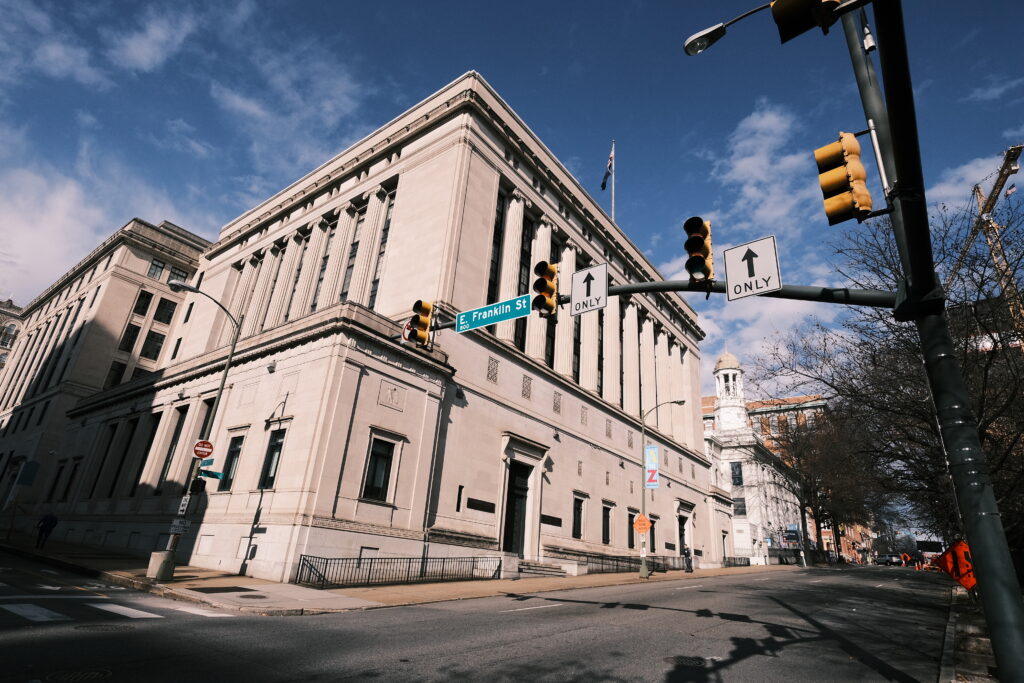
The Virginia Supreme Court heard arguments Monday morning in a case that will help determine whether Democrats can go forward with the redistricting plan approved by voters Tuesday.
Under the plan, Virginia would implement a “10-1” electoral map that could win Democrats four more seats in Congress and help counteract President Donald Trump’s unprecedented mid-decade gerrymanders across the United States.
But a group of Republicans sued in October, arguing that Democratic lawmakers violated certain procedural rules in passing the constitutional amendment on redistricting they put on the ballot, which was needed to conduct a mid-decade redistricting. A lower court judge ruled in favor of the plaintiffs in January. The appeal will now be heard by the Virginia Supreme Court.
See our coverage below:
Get updates straight to your inbox — for free
Join 350,000 readers who rely on our daily and weekly newsletters for the latest in voting, elections and democracy.
10:00 a.m. ET
Too early to tell?
That wraps up oral argument! The justices were solely focused on whether the legislature violated the constitutional process in passing the proposed constitutional amendment to counteract mid-decade redistricting by Republicans in other states.
The outcome will likely hinge on how the justices interpret the text of the process as laid out in state law. However, as Democrats pointed out, it would be extremely unfair to nullify the will of the people over a simple technicality.
— Ashley Cleaves, Legal Content Editor
Rebuttal wraps us up
Appellants close out their arguments by reminding the court of the GOP’s arguments before SCOTUS last month: In that case, Republicans asserted that Election Day is a single day in November, but today they asked the court to define the election as when early voting actually begins. Interesting…
— Adeline Tolle, Researcher
9:58 a.m. ET
Do procedural defects invalidate the will of voters?
One question in the back of our minds as parties make their arguments about publication requirements, legislative history, and timing: Will these potential defects invalidate last week’s special election?
The court could find that, while there were procedural defects in the passage of the proposed constitutional amendment, those defects do not necessarily void last week’s special election and the voters’ decision.
– Adeline Tolle, Researcher
9:52 a.m. ET
‘That seems extreme’
The court asks McCarthy: Wouldn’t it be extreme for the 90-day publication notice rule to give one “rogue” circuit clerk veto power over a constitutional amendment?
McCarthy argues that notice was never posted, so no attempt to follow the rule was made.
Asked if the lack of notice was harmless, McCarthy says no, because the 90-day notice is meant to make sure voters are informed and that there’s sufficient time for both sides to campaign.
– Jen Rice, Reporter
‘Purpose is on our side’
Republicans hammer home their argument that the intended purpose of Art. XII is to make sure voters are informed about proposed changes to the state constitution.
– Adeline Tolle, Researcher
9:48 a.m. ET
‘Nonsensical proposition’
At least one justice appears to support Republicans’ claim that it’s a “nonsensical proposition” to argue a special session exists while a regular session is open.
– Adeline Tolle, Researcher
9:45 a.m. ET
The legislature’s own rules
The special session that passed redistricting was formally called to pass a budget. Attorney Thomas McCarthy, arguing for the Republican appellees, makes the case that the legislature failed to follow its own rule requiring a two-thirds supermajority vote to address issues outside of the scope of the special session set by the governor.
Asked by the court for historical context, McCarthy says “as far as we can tell, it’s unprecedented” for the legislature to consider a matter outside of the specific reason the special session was called.
– Jen Rice, Reporter; Ashley Cleaves, Legal Content Editor
Mostly softball questions for GOP lawyer
In another ominous sign for Democrats, the justices so far haven’t peppered Thomas McCarthy, the lawyer for Republicans, with the same tough questioning they had for the lawyers for Democrats and for Virginia.
Instead, at least some of the questioning for McCarthy seems aimed at drawing out and expanding his arguments, such as when one justice asked him whether there was historical precedent for calling a special session in the way that Democrats did to pass redistricting. It gave McCarthy the chance to say that there seems not to be.
— Zachary Roth, Managing Editor
9:42 a.m. ET
Can courts enforce the General Assembly’s own rules?
Republicans raise the lower court’s conclusion that the General Assembly violated its own procedural rule requiring a two-thirds majority to approve “assembly” of the special session. Legislative Democrats reconvened the special session in October with only a simple majority — an issue the appellants say is outside the scope of the court’s authority to enforce.
— Adeline Tolle, Researcher
9:39 a.m. ET
Republicans present their case
The “bare partisan majority rammed” the proposed constitutional amendment through the General Assembly.
— Adeline Tolle, Researcher
Did the legislature follow the right procedures?
A justice says that the legislature had the power to put forth the constitutional amendment on redistricting, but the key question is whether they followed the right procedures. He asks Republicans to focus on that.
— Ashley Cleaves, Legal Content Editor
9:30 a.m. ET
What about ‘accountability’?
Justices have asked all the appellants about the importance of the 1902 version of Art. XII that had two priorities: to allow a 90 day delay for voter education and to hold elected officials accountable. The Commonwealth emphasizes that the 1971 Art. XII focuses primarily on education — not necessarily accountability.
—Adeline Tolle, Researcher
Patently unfair
“It would be patently unfair to override the people’s vote because of a concern that they had not gotten the opportunity to voice their opinion months earlier,” Virginia Solicitor General Tillman J. Breckenridge tells the court.
— Ashley Cleaves, Legal Content Editor
9:25 a.m. ET
Historically thinking
What we’re wondering in the Democracy Docket office: Is Virginia the only state that talks about colonial times during Supreme Court oral arguments?
— Matthew Kupfer, News Editor
Commonwealth makes their case
Now, the Virginia Solicitor General’s office begins their similar, yet distinct arguments, on why the proposed constitutional amendment was lawfully passed by the General Assembly.
–Adeline Tolle, Researcher
9:20 A.M. ET
Constitutional rewrite – 1902 to 1971
The lower court took great concern with the General Assembly’s failure to publish the proposed amendment for 90 days after passage. Now, Legislative Democrats seek to parse out the legislative history of Art. XII, which governs the constitutional amendment process.
Democrats note that the 1902 constitution required a publication notice 90 days after passage of the proposed amendment. A corresponding statute (30-13) was passed to implement the constitutional requirement. However, the 1971 constitution removed the publication provision, but the General Assembly did not remove the implementation statute. Virginia and Legislative Democrats argue 30-13 does not apply to the current version of Art. XII, and therefore no violation occurred.
As one justice noted this morning: “Who goes to the courthouse to get their news now anyways?”
— Adeline Tolle, Researcher
9:17 a.m. ET
Election Day is Election Day
Legislative Democrats (cheekily) commandeered GOP talking points to argue that the first passage of the proposed amendment was lawful because it occurred before the “next general election,” which Democrats say took place on Nov. 4. Republicans have consistently argued that the election actually began when early voting opened on Sept. 19, an ironic departure from their arguments before SCOTUS just last month, when they suggested Election Day refers to just one day.
Justices seem skeptical of Democrats’ argument.
— Adeline Tolle, Researcher
9:10 a.m. ET
‘Constitutional silence is telling’
Legislative Democrats make the case that the opening of the January 2025 general session did not automatically terminate the special session that was opened in May 2024. They argue that the constitution remains silent as to when a special session must be closed, as opposed to the explicit time limits set for the scope of a general session.
— Adeline Tolle, Researcher
Tough questioning
At the outset, several justices sound skeptical of two Democratic arguments: 1) that the special session in which the new map was passed was valid despite the procedural arguments Republicans have raised against it, and 2) that, now that voters have spoken, it’s a problem for the courts to overrule them.
That may simply reflect a concern to apply normal judicial scrutiny — or it could suggest challenges ahead for Democrats.
— Zachary Roth, Managing Editor
Two legislative sessions?
Did the legislature meet the requirement of two consecutive legislative session? Justices are asking whether the special session ends with the convening of the general legislative session. For this redistricting plan to pass muster, the amendment must be passed by two consecutive legislative sessions. The question now is whether the first passage during the special session counts.
— Ashley Cleaves, Legal Editor
9:07 A.M. ET
Small housekeeping note
The arguments are being broadcast without video, often making it unclear which justice is speaking.
— Matthew Kupfer, News Editor
Attorney questions court authority
Attorney Matthew Seligman, representing Democratic lawmakers, opened arguments saying Virginia voters had approved the final step in passing the new map, calling it a “clear and comprehensive process.”
Seligman argued the court does not have the authority to enforce alleged violations of the legislature’s own rules.
– Jen Rice, Reporter
9:00 a.m. ET
Amending the Virginia Constitution
Art. XII of the Virginia Constitution sets the process for the General Assembly to amend a provision. To amend:
1) the General Assembly must pass the proposed amendment;
2) an intervening election must take place;
3) the newly elected General Assembly must pass the same proposed amendment;
4) the proposed amendment is submitted to — and ratified by — the voters.
Today, Republicans are primarily arguing that the legislature did not follow steps one and two.
— Adeline Tolle, Researcher
Some background reading
As proceedings begin in Virginia’s highest court, you can get up to speed with this summary of last week’s in-depth Democracy Docket coverage of the redistricting vote and the legal challenges to it.
And ICYMI, a Virginia court on Sunday rejected a Republican bid to block the new map, ruling that doing so after voters have approved it “would imperil the public interests.” That’s a different case from the one the Supreme Court will hear Monday.
–Zachary Roth, Managing Editor