Virginia court blocks voter-approved redistricting, appeal coming
 Prefer us on Google
to see more of our voting rights news coverage when you search.
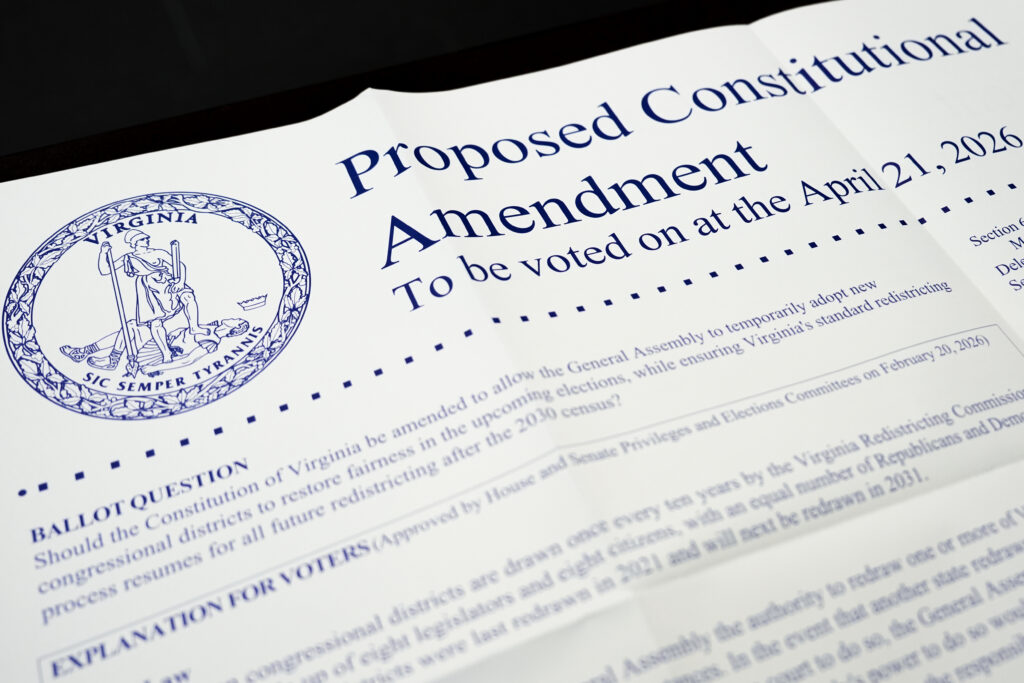
A Virginia judge temporarily halted the state’s newly approved congressional map — but state officials are already moving to try to overturn the ruling, setting up a rapid legal fight in the state’s Supreme Court.
In a decision issued Wednesday on a Republican lawsuit, a judge in Tazewell County ruled that the legislature’s constitutional amendment and the referendum voters just approved were invalid — a move that immediately blocks the state from implementing the new districts.
Get updates straight to your inbox — for free
Join 350,000 readers who rely on our daily and weekly newsletters for the latest in voting, elections and democracy.
The court declared the amendment invalid from the start, and ordered that “any and all votes for or against the proposed constitutional amendment in the April 21, 2026 special election are ineffective.”
The judge also went further, issuing a permanent injunction — a legal order that blocks action going forward — preventing state officials from “certifying the results” and from taking “any actions to give effect to the proposed constitutional amendment.”
But despite the sweeping language, this ruling is far from the final word.
Virginia Attorney General Jay Jones (D) moved immediately to challenge the decision, signaling a fast-track appeal that could quickly shift the case to higher courts.
“My office will immediately file an appeal in the Court of Appeals,” Jones said. “Virginia voters have spoken, and an activist judge should not have the power over the People’s vote. We look forward to defending the outcome of last night’s election in court.”
That appeal is expected to move swiftly — and could ultimately land before the Supreme Court of Virginia, which will have the final say on whether the voter-approved map can take effect.
For now, the ruling creates a pause — not a defeat.
The court’s decision hinges on procedural and constitutional arguments about how the amendment was passed, including timing requirements and legislative steps, the kinds of disputes appellate courts often revisit, especially when they collide with a direct vote of the people.
The referendum, approved by voters just a day earlier, allows Virginia to redraw its congressional map ahead of the 2026 elections — part of a broader national mid-decade redistricting battle, initiated by President Donald Trump, that could shape control of the U.S. House.
Opponents of the measure had hoped the court challenge would stop the effort outright. Instead, higher courts will weigh not just procedural questions, but the fundamental issue of whether a voter-approved amendment can be blocked after the fact.