Virginia ballot initiative seeks to finally clarify voting rights restoration for those with past felony convictions
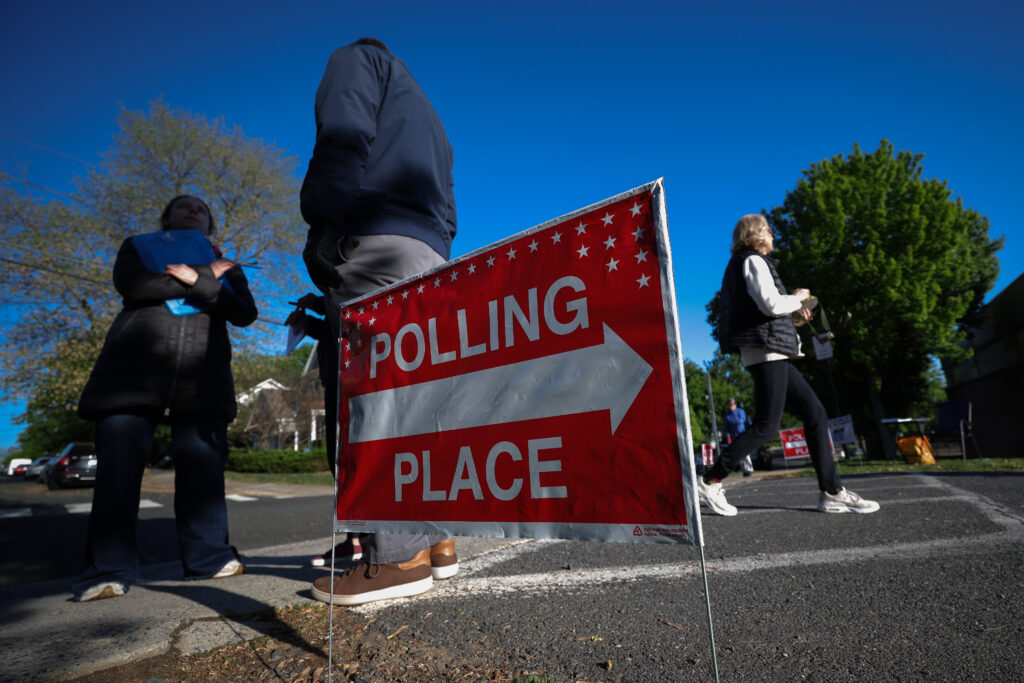
Despite a federal court ruling this year that Virginia’s voting ban for people with felony convictions is unlawful, and Gov. Abigail Spanberger’s (D) freeing of 100,000 people subject to that ban, there remain thousands of Virginians who still can’t vote due to felony status.
In November, Virginians will have the opportunity to vote on whether or not people who’ve served their time for felony crimes can have their voting rights automatically restored. A majority vote in favor of this ballot measure would amend the state’s constitution to allow people with past felony convictions to vote again.
It would also end nearly 15 years of wrangling in Virginia over how best to reinstate the right to vote for those with felony status after previous governors’ efforts continued to leave thousands disenfranchised, a problem that disproportionately impacted African Americans.
Get updates straight to your inbox — for free
Join 350,000 readers who rely on our daily and weekly newsletters for the latest in voting, elections and democracy.
“There has been a tug of war in Virginia between rights restoration and the denial of voting rights to persons with prior convictions, and race has always been the fulcrum,” said Glenn Harris, president of Race Forward, which partners with local groups organizing around the ballot measure. “Certainly, the right to vote is sacred, but it involves more than just the ballot. Expanded voting rights determine where collateral sanctions prevail or whether persons who have made amends for prior mistakes can be fully integrated back into society with opportunities to contribute fully.”
Rough estimates of Virginians disenfranchised due to past felonies are somewhere between 200,000 and 250,000. That’s despite Spanberger’s announcement in August, during a commemoration of the March on Washington, that she had restored the rights of 100,000 voters.
That’s also despite the fact that a federal court ruling in January declared the state’s felony-based voting ban a violation of the Virginia Readmission Act of 1870, a post-Civil War federal law passed largely to protect Black Virginians’ rights as the state re-entered the Union.
The federal court ruled that the felony voting ban must only apply to crimes that were considered felonies when the 1870 act was passed. Virginia subsequently shrunk the list of crimes that lead to disenfranchisement to just three: murder, voluntary manslaughter and involuntary manslaughter.
“The court ruling said that if a crime wasn’t a crime in 1870, then people should not lose their right to vote under the Virginia State Constitution,” Nicole Porter, senior director of advocacy at The Sentencing Project, said. For example, “drug felony offenses were not crimes in 1870. So people convicted of felony drug offenses should have never lost the right to vote, according to the federal court ruling.”
And yet thousands still have, because the ruling did not automatically restore these voting rights. The Virginia Constitution still leaves the decision to re-enfranchise to the governor, and those eligible must fill out an application to get the governor’s approval. Virginia is currently one of only three states that permanently revoke voting rights in this manner.
That application process had been streamlined under previous governors dating back to 2013, to make it easier for former felons to get their voting rights back. However, Gov. Glenn Youngkin (R) repealed that practice in 2023, making it more difficult for those with prior felony convictions to have their voting franchise restored.
Spanberger returned Virginia to an easier path, but is still leaving many unable to vote due to her office’s classification of what constitutes a felony that revokes voting rights.
“Spanberger’s administration went through Virginia’s criminal code to interpret which criminal offenses are categorized under the offenses in the state constitution that remain disenfranchising offenses given the federal court order,” Porter said. “People could make claims that they disagree with those interpretations, and there are litigators who don’t agree with the governor’s interpretations, but that’s the current framework being used to determine if someone’s offense was a disenfranchising offense or should have never resulted in their disenfranchisement in the first place.”
Activists working on the issue in Virginia said they are concerned that the state does not provide eligible voters returning from prison with enough information about their rights or how to apply to have those rights restored.
“For the last four years, Virginia has been really bad at informing individuals coming out of the penitentiary on what to do when they get home, other than go see your probation officer,” Duane Edwards, a board member for Virginia Organizing, said. “Most people we talk with don’t even know that they can get their rights back, and it’s just due to the fact that there’s misinformation or lack of information on what to do about their situation.”
Most of that was under the Youngkin administration. In addition to undoing much of previous governors’ progress on rights restoration, it also did not share applications with Spanberger that he had not yet reviewed, according to a spokesperson from Spanberger’s office.
“The Spanberger administration inherited a voting rights restoration process that the Youngkin administration gutted,” her office told Democracy Docket. “Upon taking office, the Spanberger administration rebuilt the restoration of rights process and reinstated processes to review received applications and proactively identify Virginians who have lost their right to vote.”
Virginia Organizing has been working on the rights restoration issue since 2002, mainly through helping people who’ve returned from prison to publicly tell their stories and advocate for law reforms.
It is one of the groups that worked to pass a law in January creating a ballot referendum on automatically restoring the voting rights of every person formerly convicted of a felony, regardless of the type of crime. If the referendum passes, appealing to the governor to have those rights restored will no longer be necessary. They will be granted as soon as a person completes their sentence.
Edwards, who himself is a returning citizen from prison, said the implications for this ballot initiative will ripple far beyond being able to vote.
“Getting your right to vote back is not going to get you a job,” Edwards said. “But one thing that I’ve known from experience is getting my right to vote back did something for my confidence that I felt I can go get that job. And just to watch somebody’s face when I’m talking to them, once they get their rights back, the change is night and day on how that person’s confidence grows in their own abilities.”