Virginia takes key step to end ‘overt and intended effort to block Black people from voting’
 Prefer us on Google
to see more of our voting rights news coverage when you search.
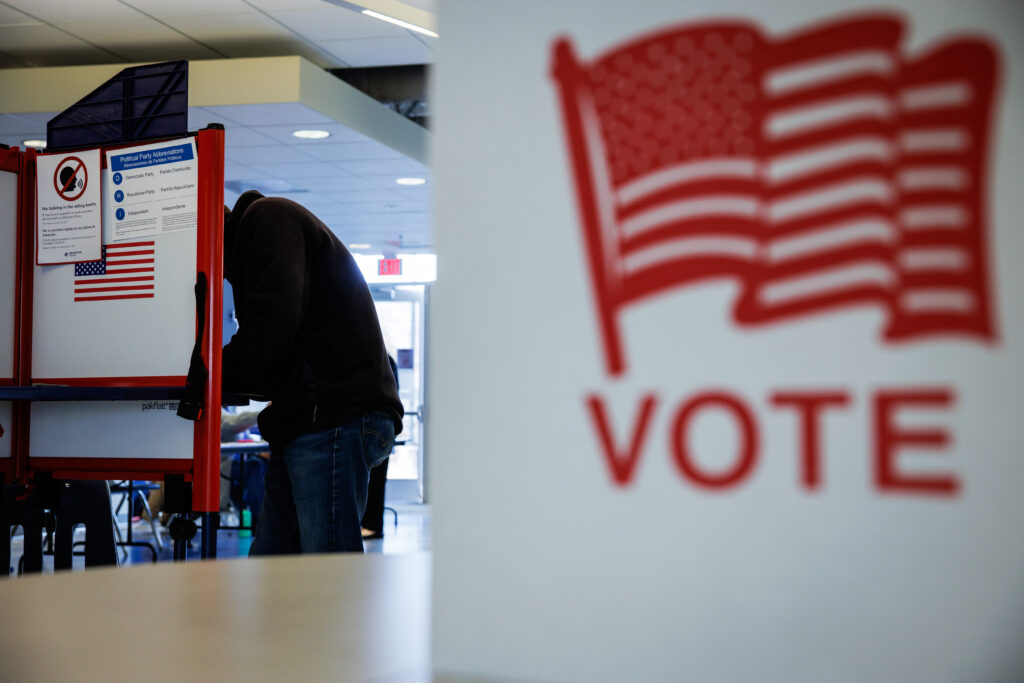
In a decisive vote Friday, the Virginia Senate approved a constitutional amendment that would automatically restore voting rights to people with felony convictions after they complete their sentence and guarantee the right to vote in the commonwealth. The measure will now head to voters for final approval.
The amendment, which passed the Senate 21-18 after earlier approval by the House of Delegates, would fundamentally change how Virginia treats voting rights.
Get updates straight to your inbox — for free
Join 350,000 readers who rely on our daily and weekly newsletters for the latest in voting, elections and democracy.
Under the state’s long-standing practice — one of only three states with it — people with felony convictions are disenfranchised for life unless the governor personally restores their voting rights after they petition for it. The amendment, if approved, would replace that system with automatic restoration upon release.
It would also, for the first time, explicitly recognize voting as a fundamental right in the Virginia Constitution.
If voters ratify the amendment, hundreds of thousands of Virginians — particularly Black residents — would no longer be shut out of the democratic process by political discretion. More than 300,000 Virginians remain unable to vote because of prior felony convictions, including one in eight Black residents.
“Taking away a person’s right to vote who has been convicted of a felony has never been about punishing people who committed a crime. It was and remains an overt and intended effort to block Black people from voting,” state Sen. Mamie Locke (D) said during floor debate. “When felony disenfranchisement was incorporated in the post-Reconstruction 1902 Constitution alongside poll taxes, literacy tests and grandfather clauses, it was just one tool designed to stop as many Black people from voting as possible. It is beyond dispute that felony disenfranchisement was and is as Jim Crow as poll taxes.”
Voting rights advocates hailed the Senate vote as the culmination of years of organizing.
“Virginia’s advancement of the voting rights restoration amendment to the ballot is a milestone years in the making,” Rebekah Caruthers, president and CEO of the Fair Election Center, said in a statement following the Senate vote. “Placing the amendment on November’s ballot gives Virginians the opportunity to affirm a fundamental principle: when people have returned to their communities, their voting rights should be restored without delay or any additional paperwork. Voting rights restoration will bring a more inclusive and representative democracy for everyone.”
Under Virginia law, constitutional amendments do not go to the governor and cannot be vetoed. Gov.-elect Abigail Spanberger (D) has, however, publicly supported the measure.
With legislative passage complete, the question now moves to voters, who will decide whether Virginia finally ends a Jim Crow-era system and guarantees the right to vote in the commonwealth.