In voting rights win, Virginia agrees to stop mass voter purges near Election Day
 Prefer us on Google
to see more of our voting rights news coverage when you search.
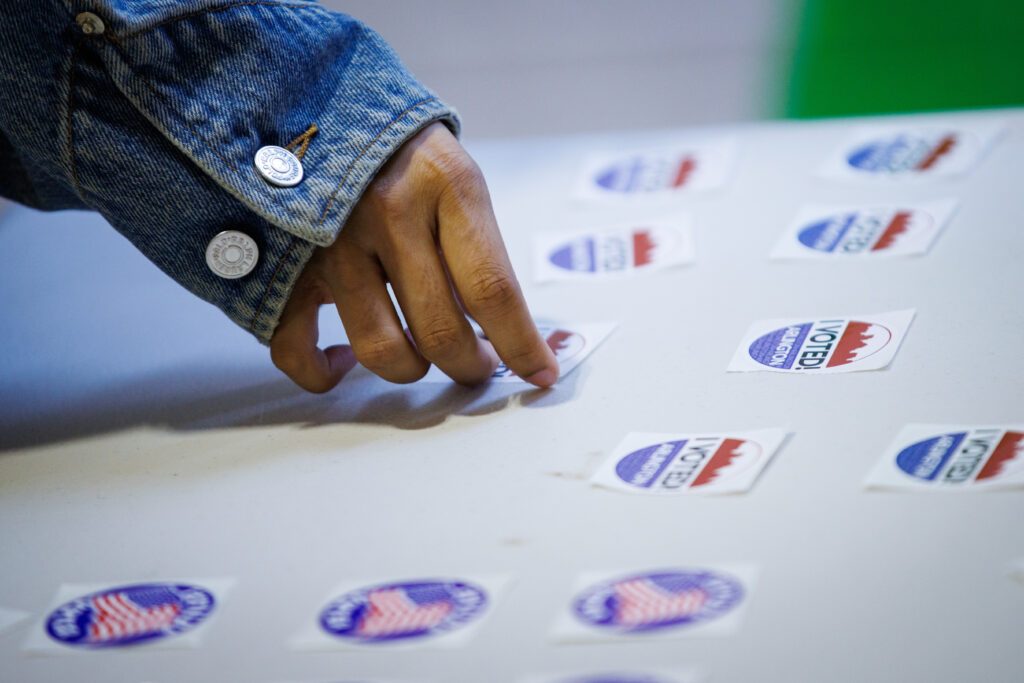
A federal court Monday approved a settlement forcing Virginia to halt voter purges near elections — delivering a major win for voters by reinforcing federal protections against last-minute disenfranchisement.
Virginia agreed to stop removing voters from its rolls within 90 days of federal elections, ending a yearslong battle over a purge program that disproportionately targeted naturalized citizens and relied on flawed government data.
Get updates straight to your inbox — for free
Join 350,000 readers who rely on our daily and weekly newsletters for the latest in voting, elections and democracy.
The case — brought by the Virginia Coalition de for Immigrant Rights and League of Women Voters of Virginia (LWVVA) — challenged a policy launched by then-Gov. Glenn Youngkin (R) ahead of the 2024 election that flagged suspected noncitizens using outdated Department of Motor Vehicles (DMV) records.
Over 1,600 voters were purged and thousands more flagged right before the 2024 election, including eligible citizens.
At the heart of the lawsuit was the National Voter Registration Act, a landmark federal law that bars states from systematically removing voters within 90 days of a federal election — a safeguard often called the “quiet period” designed to prevent errors from disenfranchising voters just before they cast ballots.
After months of litigation and a high-profile intervention by the U.S. Supreme Court allowing the purge to proceed in 2024, the case continued.
Last week, the parties reached a settlement — and on Monday, a federal judge approved it, locking in new limits on Virginia’s voter removal practices.
Under the agreement, Virginia election officials are now prohibited from carrying out key voter removal programs during that 90-day window, a direct rebuke to the state’s prior approach.
The settlement also requires advance notice of any new voter removal processes and allows voting rights groups to contact and assist voters who were previously purged — a step aimed at repairing harm already done.
Advocates said the outcome restores critical guardrails that were ignored in 2024.
“After a long battle in federal court, we are proud to reach a settlement that protects Virginian voters from being systematically purged within 90 days of a federal election,” Joan Porte, president of the League of Women Voters of Virginia, said in a press release following the decision. “LWVVA will use information from this lawsuit to continue our advocacy work to ensure every eligible voter can cast a ballot and have that ballot counted.”
The dispute exposed a growing national tension between Republican-led efforts to aggressively purge voter rolls and federal protections designed to ensure eligible voters are not wrongly removed.
While states have authority to maintain their voter rolls, federal law draws a clear line against mass purges close to elections. In Virginia, advocates argued the state crossed that line, using unreliable data to flag voters without giving them meaningful time to correct errors.
Naturalized citizens were especially vulnerable, since DMV records do not always reflect updated citizenship status.
“The court’s decision to end this systemic purge program is a relief for the thousands of naturalized citizens who were wrongfully targeted, but it should never have taken a lawsuit to get here,” Monica Sarmiento, executive director for the Virginia Coalition for Immigrant Rights, said. “Our communities deserve better than to have their votes threatened days before an election based on unreliable data. It should alarm every American that the Supreme Court allowed an illegal systemic purge program targeting vulnerable populations to proceed in 2024. We will continue to fight until every eligible voter in the Commonwealth can cast their ballot without fear.”
The settlement does not eliminate Virginia’s ability to maintain its voter rolls — but it does impose firm limits on when and how those removals can occur, reinforcing that last-minute voter purges, even if framed as election integrity measures, cannot come at the expense of eligible voters’ rights.