Trump admin will push for more time to implement anti-mail voting order, new filing suggests
 Prefer us on Google
to see more of our voting rights news coverage when you search.
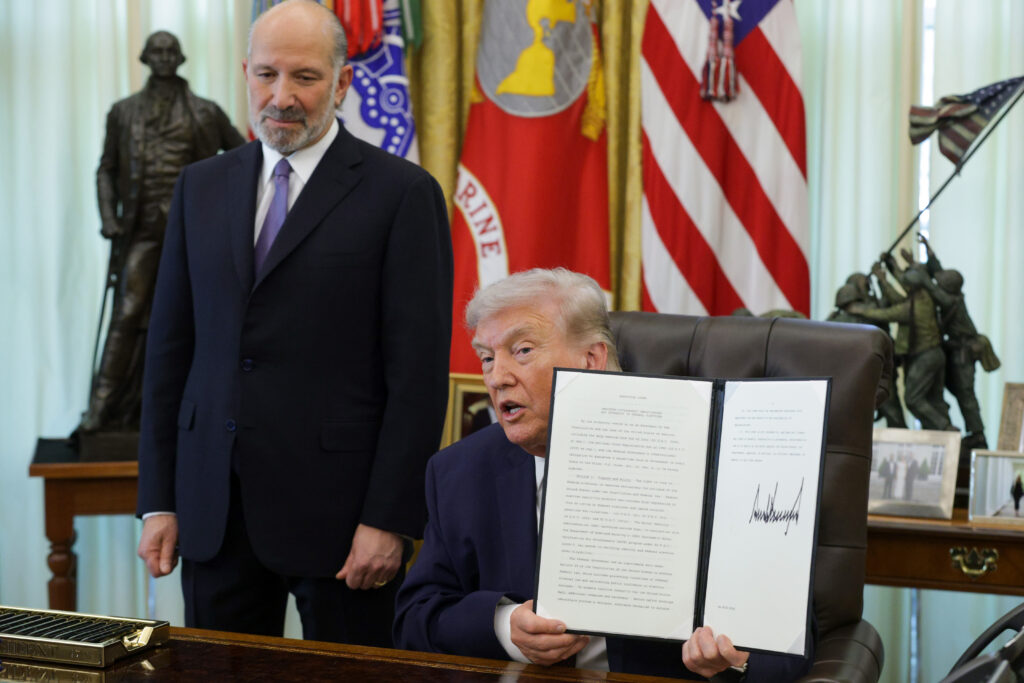
As it schemes to get President Donald Trump’s executive order attacking mail-in voting past legal challenges, his administration is shifting its approach to creating a national voter registration list.
The implementation changes — detailed in a Department of Justice (DOJ) notice filed Monday night in multiple lawsuits seeking to block the directive — offer insights into the administration’s legal strategy as it works to impose a rule that could radically restrict mail voting.
They suggest the administration is hoping to convince courts to give it more time to implement the order, and that it may later argue that elements of the implementation plan aren’t related to the order, and so can’t be blocked.*
The notice flags a new Department of Homeland Security (DHS) memo, which updates a plan the Trump administration approved Friday for the creation of national voter registration lists demanded by the president in his March executive order.
The order directs DHS to work with the Social Security Administration (SSA) to create lists of verified U.S. citizens eligible to vote in each state, and for the U.S. Postal Service (USPS) to send absentee ballots only to voters on approved lists submitted by states.
The new notice makes DHS’s already vague implementation plans even less clear. The changes also appear aimed at making it less likely that a court blocks the executive order. Some tweaks address privacy law concerns, while others seem to get out ahead of a likely forthcoming injunction.
Get updates straight to your inbox — for free
Join 350,000 readers who rely on our daily and weekly newsletters for the latest in voting, elections and democracy.
Friday’s memo said DHS would integrate “USPS datasets” to “identify anomalies that may suggest voter fraud or misuse.” The new notice walks that back, instead saying only that DHS will work on data-sharing agreements with USPS.
Despite facing numerous lawsuits, the administration has plugged away at turning Trump’s diktat into reality. Late last month, USPS posted its proposed rule requiring state election officials to send it lists of voters who have requested a mail-in or absentee ballot, and refusing to deliver ballots to those not listed.
Election law experts say Trump’s executive order is unconstitutional; the Constitution empowers states and Congress to run elections, not the president.
While a federal judge in Washington D.C. declined to issue a preliminary injunction last month, saying at the time that the administration had not yet taken concrete enough steps for plaintiffs to sue, another federal judge in Massachusetts sounded more likely to block the order in a hearing last week.
Monday night’s notice also claims that the DHS data-sharing agreements with USPS “are not directed by [the executive order] and would be contingent upon whether USPS issues a final rule; the content of such rule, if any; and any policy and legal determinations as to the desirability and feasibility of any such data-sharing.”
That change may be aimed at buying the administration more time to implement the order by making the plan seem more hypothetical and contingent on future USPS action. That would be in keeping with U.S. District Judge Carl Nichol’s decision last month that issuing a preliminary injunction at this point would be premature.
It could also suggest DHS may try to later claim that a future court injunction blocking the order’s voter list provisions does not extend to the agency’s data-sharing initiative with USPS.
The updated strategy also abandons DHS’ prior plan to use the Systemic Alien Verification for Entitlements (SAVE) program for checking states’ voter registration lists for noncitizens. The administration’s push to use SAVE — a database originally developed to confirm applicants’ eligibility for federal benefits — as a broad citizenship-checking tool has been heavily criticized for incorrectly flagging thousands of eligible voters as potential noncitizens. Trump bid the expansion of SAVE in an earlier 2025 executive order that was later mostly blocked by the courts.
The new plan is for DHS to work with the Social Security Administration and Department of State to provide state-specific “citizen-related information from each agency,” which would be made available to state election officials by June 30. The new plan also contemplates the creation of a public-facing citizenship-check portal sometime later this year.
The comment period on USPS’ proposed rule closes July 2, meaning that a rule couldn’t be finalized until after DHS’ proposed June 30 date to make state citizenship data available to election officials.
Despite having voted by mail multiple times, Trump has railed against the practice, claiming falsely that it enables widespread fraud. Trump repeated those claims this past weekend as the ballot count in California showed a progressive Democrat take the lead over Trump’s preferred candidate in the Los Angeles mayor’s race.
*Democratic plaintiffs in this case are represented by the Elias Law Group (ELG). ELG Chair Marc Elias is the founder of Democracy Docket.
Maya Bodinson contributed to this report.