Judge denies attempt to stop Trump’s mail voting order
 Prefer us on Google
to see more of our voting rights news coverage when you search.
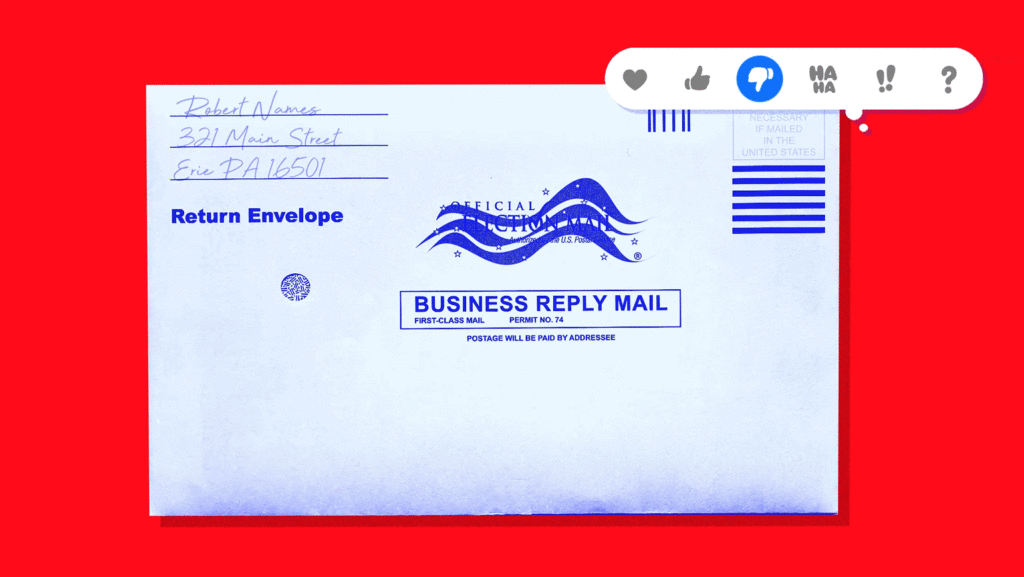
A federal judge said it’s too soon to block President Donald Trump’s latest push to restrict mail voting ahead of the 2026 midterm elections.
Trump signed an executive order in March directing the Department of Homeland Security (DHS) to work with the Social Security Administration (SSA) to create lists of verified U.S. citizens eligible to vote in each state, which it calls “State Citizenship Lists.” It also instructs the U.S. Postal Service (USPS) to send absentee ballots only to voters on approved lists submitted by states, also called “Mail-In and Absentee Participation List. ”
Led by the Democratic Senatorial Campaign Committee, Democrats quickly sued to block the order.*
Election law experts largely agree that the diktat is unconstitutional, as states and Congress have authority over elections, not the president.
Get updates straight to your inbox — for free
Join 350,000 readers who rely on our daily and weekly newsletters for the latest in voting, elections and democracy.
U.S. District Judge Carl Nichols did not necessarily disagree that the order could be unlawful, but said that the lawsuit was nonetheless premature. The agencies haven’t implemented the order yet, so the Democrats and pro-voting groups haven’t been harmed by it yet, Nichols reasoned. And without an injury, they don’t have standing to sue.
The order “requires nothing from Plaintiffs — no compliance, no changed behavior, nothing at all — because it is not aimed at them but instead tells only the agencies to do something,” Nichols, a Trump appointee, wrote.
In the wake of the ruling, Democratic plaintiffs promised to keep fighting the order.
“We are confident we will prevail in the end when this illegal and completely unworkable executive order is fully adjudicated,” they said in a joint press release. “The Court’s decision does not change the longstanding principle that the Executive Branch cannot infringe on the rights of Americans to cast their ballots, including those who vote by mail, along with the authority of states to run their own elections.”
In his ruling, Nichols posited that the administration had taken steps to amass a national list of eligible voters.
“The Government has not yet established the infrastructure to compile the Lists, nor has it determined what information will be used to compile them (or how doing so would be lawful). As a result, it remains speculative whether the State Citizenship Lists, if and when they are initially compiled, will contain inaccuracies,” Nichols wrote.
Democrats and voting-rights advocates argued that the citizenship lists, relying on DHS databases that have been shown to have serious flaws, would lead to eligible voters having their registrations revoked and prevented from casting ballots.
Nichols sounded skeptical of this argument in his opinion: “While it is conceivable these Lists may have some flaws, at least initially, it is impossible to be sure when the agencies have not yet determined what databases they will use or if they can perfect them ahead of use. And even if the Lists as initially compiled contain some flaws, that would mark only the first step in an attenuated chain of speculation.”
Nichols also made a similar determination concerning the Mail-In and Absentee Participation List, finding that plaintiffs lack standing since the USPS has not finalized a rule yet.
“All that provision does is direct the Postal Service to initiate a rulemaking process and consider potential regulatory changes. To be sure, the Postal Service may eventually issue a final rule that directly affects Plaintiffs or their members and that Plaintiffs believe is unlawful. “But that is when Plaintiffs would have the requisite ‘personal stake’ that supports Article III standing.”
His decision Thursday, however, allows Democrats to seek a preliminary injunction again, once USPS and DHS take concrete steps to implement the order.
The executive order gives the USPS until the end of May to begin the rulemaking process for establishing a Mail-In and Absentee Participation List.
“Plaintiffs may, of course, renew their motions if and when those future actions occur,” Nichols wrote. “Until then, however, Plaintiffs cannot show that preliminary injunctive relief is warranted.”
In his ruling, Nichols also seemed to take a broad view of presidential powers over election administration.
“[T]he Order is not self-executing. It does not itself regulate voter registration or how mail-in or absentee ballots will be transmitted; rather, it directs executive branch officials to take certain actions, subject to the limits of existing laws. That is a key distinction,” Nichols wrote. “While the President may not have the authority to change the design of mail-in ballots or remove individuals from states’ voter registration lists, he does have the authority to supervise and direct the actions of executive branch agencies.”
Trump’s executive order is also being challenged by pro-voting activists and Democratic-led states in Massachusetts. A hearing is scheduled in the latter case next week.
*Democratic plaintiffs in this case are represented by the Elias Law Group (ELG). ELG Chair Marc Elias is the founder of Democracy Docket.
*This story was updated to include a statement from the Democratic plaintiffs.