Postal Service moving forward with Trump’s attack on mail voting
 Prefer us on Google
to see more of our voting rights news coverage when you search.
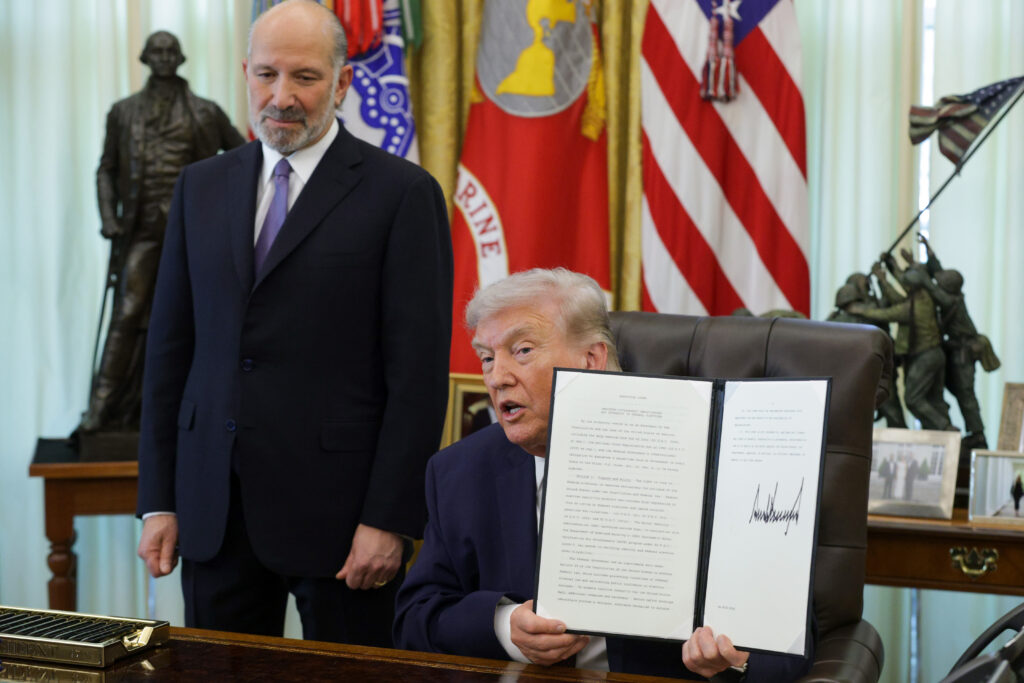
The U.S. Postal Service (USPS) said in a yet-to-be-published proposed rule Friday that it’s drawing up plans to radically crack down on mail voting by sending ballots only to voters who are registered with the federal government.
The proposed rule, which will be formally published next week, is an alarming step toward implementing President Donald Trump’s sweeping attack on mail voting ahead of the 2026 midterm election. And it would represent a massive expansion of federal control over voting, without congressional authorization.
Get updates straight to your inbox — for free
Join 350,000 readers who rely on our daily and weekly newsletters for the latest in voting, elections and democracy.
Trump signed a sweeping executive order in March that, in part, ordered the Postal Service to only send mail ballots to voters on lists created and controlled by the federal government.
The order is currently the subject of multiple lawsuits. USPS’s proposed rule came a day after a federal judge overseeing one of the lawsuits declined to block the order. The judge concluded the plaintiffs lacked standing to challenge the order since federal agencies had not yet taken steps to implement it.
Now, that appears to have changed.
USPS is moving forward with the order even though legal experts and voting rights organizations have warned that it is a blatantly unconstitutional attempt to restrict the right to vote and usurp states’ authority over elections.
Under the Constitution, states run elections and only Congress can set national standards.
The proposed rule would require state election officials to send USPS a list of voters who have requested a mail-in or absentee ballot at least 30 days before ballots are sent out under state law. If voters aren’t on the list, they will not receive a ballot.
It also allows state officials to make “supplemental submissions to enroll additional individuals or modify prior submissions until the last day that ballots may be mailed out to individuals under state law.”
In this way, that provision tacitly admits that it will lead to errors that need to be fixed, whether through “supplemental submissions” or modifying “prior submissions.”
Those errors, caused by a new federal government program that is not explicitly authorized by Congress, are precisely the kind of harm the plaintiffs challenging the executive order seek to prevent.
In their lawsuits, Democrats and voting-rights advocates argued that using USPS’s list, as well as other federal registration lists included in Trump’s order, would lead to eligible voters being unable to cast ballots. In part, that’s because the lists would rely on Department of Homeland Security databases that have been shown to have serious flaws.
USPS also said the names of mail voters would be associated with a “unique barcode” that is assigned to their ballot. It claimed that the barcode would “help determine adherence to federal law and facilitate law enforcement efforts.”
Justin Levitt, a law professor at Loyola Marymount University and a former deputy assistant attorney general at the Department of Justice (DOJ), said in a social media post Friday that the proposed rule was a move toward Trump’s order being ruled unconstitutional.
“One step closer to standing, which means one step closer to an end to this charade,” Levitt said, referring to U.S. District Judge Carl Nichols’s ruling Thursday.
While Nichols did not necessarily disagree with Democrats and pro-voting groups that Trump’s order could be unlawful, he said they couldn’t show that they had been harmed by it because federal agencies hadn’t acted on the directives.
In fact, though he was rejecting the plaintiffs’ request for a permanent injunction against the order, Nichols specified that his decision was actually a message for the Trump administration to act in order to give the plaintiffs standing to sue.
“It is not aimed at [the plaintiffs] but instead tells only the agencies to do something,” Nichols, a Trump appointee, said of his decision.
The Postal Service did not immediately respond to Democracy Docket’s request for comment.
Friday was the deadline Trump included in his order for Postmaster General David Steiner to initiate a rulemaking process to formally implement the president’s mail voting restrictions.
In recent weeks, Steiner, who also serves as CEO of USPS, has met with other senior Trump administration and DOJ officials to discuss ways to implement the order.
This story has been updated with new details throughout.