A court blocked Trump’s attack on mail voting. But voting advocates aren’t celebrating yet
 Prefer us on Google
to see more of our voting rights news coverage when you search.
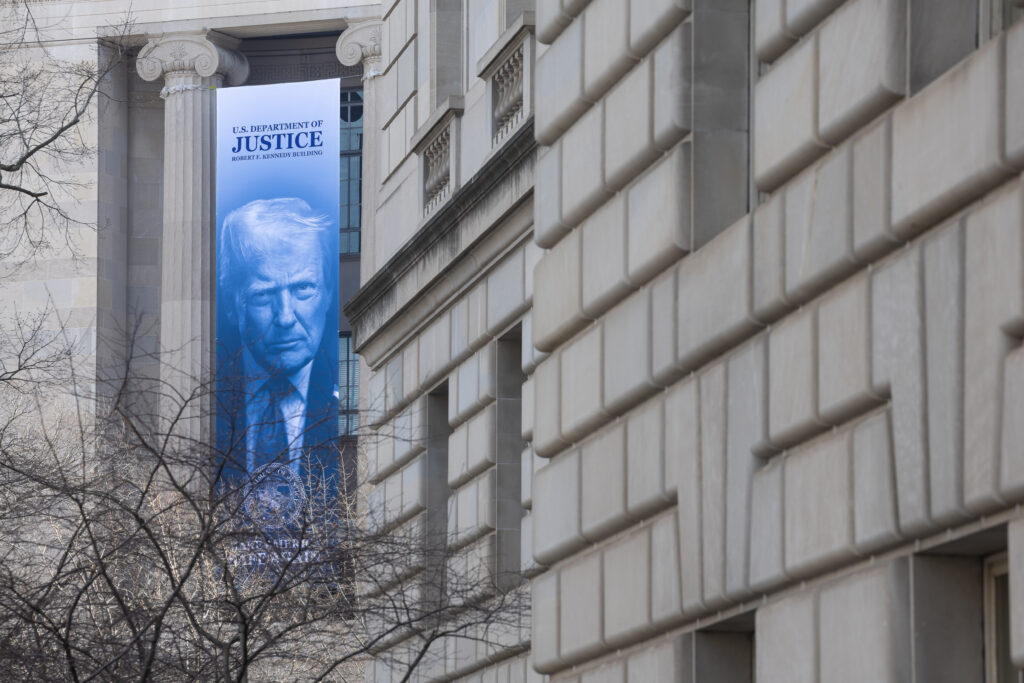
President Donald Trump’s attempt to attack mail voting and build a national voter registration list took a major hit Thursday when a federal court ruled it was unconstitutional.
But despite the win, the administration’s legal opponents aren’t ready to take a victory lap just yet, given this administration’s predilection for defying and dodging court decisions. And the judge who issued the ruling seems to share those concerns.
“There are these ongoing attempts to circumvent court orders or do things through the back door that courts have told them they can’t do through the front door,” said Doug Poland, litigation director for Law Forward Wisconsin, who filed an amicus brief in the lawsuit.
In a 37-page opinion, U.S. District Judge Indira Talwani found that most of Trump’s March 2026 executive order (EO) on mail voting exceeded the president’s power and violated the principles of federalism and the separation of powers by encroaching on the states’ and Congress’ authority to administer elections.
The order would direct the Department of Homeland Security (DHS) to work with the Social Security Administration to create lists of verified U.S. citizens eligible to vote in each state. It would also instruct the U.S. Postal Service (USPS) to send mail ballots only to voters on state approved lists. After the order was published, a coalition of 22 Democratic-led states and Washington D.C. quickly sued in Massachusetts federal court to block it.
The Department of Justice (DOJ) now plans to appeal Talwani’s decision in the case, California v. Trump. Plaintiffs expect the agency will also seek a judicial stay of the injunction while that plays out in the 1st Circuit Court of Appeals.
While appeals and stays are a normal part of civil litigation, this administration has also shown a propensity for going far beyond the usual — and some would say, ethical and legal — bounds of resisting a courtroom loss.
“There’s so much lawyering from the DOJ here that is raising ethical questions,” said David Becker, executive director of the Center for Election Innovation & Research (CEIR) and a former DOJ Voting Rights section attorney.
Becker pointed to revelations of DOJ lawyers tampering with grand juries in the Broadview Six cases, the deficiencies of the warrant application used to seize 2020 ballots in Fulton County, Georgia, and the administration’s open defiance of court orders in some deportation cases.
That’s why, Becker said, Talwani went into exacting detail with her injunction. It runs four pages and requires the DOJ to not only notify each government agency of their duties to comply but also then notify the court of those communications by July 2.
“I think the judiciary — and not just Democratic-appointed judges — is pretty clearly saying,’I don’t want there to be any misunderstanding about what this order requires you to do,’” Becker said.
Ahead of next week’s deadline, plaintiffs in the case intend to send formal inquiries to the DOJ’s attorneys in the case asking for indicia that the executive branch is complying. They will also look for notices on the federal register amending the rule proposal USPS posted to implement the EO.
Get updates straight to your inbox — for free
Join 350,000 readers who rely on our daily and weekly newsletters for the latest in voting, elections and democracy.
Talwani’s ruling clearly prevents USPS from withholding mail-in ballots in the 23 jurisdictions that sued. DHS also can’t create citizenship lists in those states, and the administration as a whole cannot take any other steps to implement and enforce the EO against them. But Becker thinks it may apply beyond just those jurisdictions.
Judge Talwani’s opinion orders and declares “that Sections 2 and 3 of the EO are legally void as they are ultra vires and unconstitutionally violate the separation of powers.”
“That is a general injunction,” said Becker. “I interpret that [to mean] that the Postal Service couldn’t act in such a way that they withhold mail delivery of ballots in the non-plaintiff states.”
Becker conceded the ruling could be clearer, especially given that it then goes into exacting detail in enjoining the defendant agencies and “their offices, agents, servants, and employees” from “implementing or giving effect to Sections 2 or 3” ahead of the midterm elections “in the Plaintiff States.”
Implementing the order against roughly half of the nation would be difficult as a practical matter, said Law Forward Wisconsin’s Poland. “It applies to the 23 states who are plaintiffs, but in fact it’s going to impact their ability to do with respect to everybody,” he said.
Moreover, successful court challenges have derailed other elements of the administration’s plan to solve the virtually nonexistent problem of noncitizen voting, Poland said, noting that Talwani pointed to the DOJ’s losing streak in its 31 voter registration roll lawsuits.
“It’s all in an effort to try to create some kind of master voter registration list that they can then use to control who gets to register to vote and who gets to vote in the states,” Poland said. “But we’ve got multiple layers now of legal barriers to the Trump administration getting this information.”
Democratic states aren’t the only plaintiffs challenging the EO. A collection of voting rights advocates led by the League of Women Voters (LWV) sued in Massachusetts as well, in a lawsuit that’s also being heard by Judge Talwani. A bloc of Democratic organizations led by the Democratic Senatorial Campaign Committee (DSCC) likewise challenged the order in D.C. district court.*
The issue of standing — whether the plaintiffs can show they have been sufficiently harmed to sue as a threshold question — is trickier in both the LWV and DSCC cases.
Last month, U.S. District Court Judge Carl Nichols ruled the DSCC lawsuit was premature because the EO hadn’t yet been implemented enough to cause harm. Democrats have appealed that ruling, and since it came out, USPS published a proposed rule and DHS issued multiple memos on implementing the order.
The D.C. Circuit Court of Appeals has yet to rule on the matter, but if they reverse — or if Talwani publishes an opinion saying LWV has standing — then the subsequent injunction would likely cover the entire nation.
Becker applauded Talwani for shutting down the EO to the degree she could. When Trump returned to the White House, he appointed his personal attorneys to some of the highest legal offices in the nation. They brought with them the same legal strategies they used to help Trump avoid liability for the Jan. 6 riots.
“Trump’s personal lawyers, during the Biden administration, really adopted a rope-a-dope strategy of litigation where they tried to try to drag things out as long as possible,” Becker said.
In contrast, Judge Nichols in the D.C. challenge bought the standing arguments brought by the government, delaying a final ruling on EO’s constitutionality there.
“What you’re seeing with Judge Talwani is that she gets it — she sees what they’re trying to do,” Becker said. “She’s not going to overstep her bounds and create an order that goes well beyond 2026 at this point, but for 2026 the states are undoubtedly suffering harm because they’re in the middle of running elections.”
“There’s a broader judicial recognition,” Becker added. “Judges [are] seeing the DOJ trying to violate the spirit of the orders while having a plausible argument that they’re not violating the letter of the order exactly.”
Asked for comment, DHS directed Democracy Docket to a social media post Thursday made by James Percival, the department’s general counsel.
“For those unfamiliar with judicial sabotage, the dead giveaway is California being the lead plaintiff but the case being filed in Massachusetts,” Percival wrote. “When California thinks it can’t win in San Francisco, you know it’s a doozy!”
USPS did not respond to a request for comment and the DOJ declined to comment.
Election officials have lambasted Trump’s order for sowing chaos into an already tumultuous midterm election. Speaking at a CEIR conference Wednesday, Minnesota Sec. of State Steve Simon (D) called the order “extremely problematic on a number of levels.”
“To be talking about standing up this kind of apparatus now, at this close a date, is something that I think elections administrators everywhere are very, very nervous about,” Simon added, noting that the general election was nearly 130 days away.
“The administration is trying to create a national voter database through these registration rules,” said Rhode Island Sec. of State Gregg Amore (D). “It’s important that Americans understand that it’s outside of the scope of the Constitution.”
*Democratic plaintiffs in this case are represented by the Elias Law Group (ELG). ELG Chair Marc Elias is the founder of Democracy Docket.