The courts walloped Trump’s anti-voting agenda this week
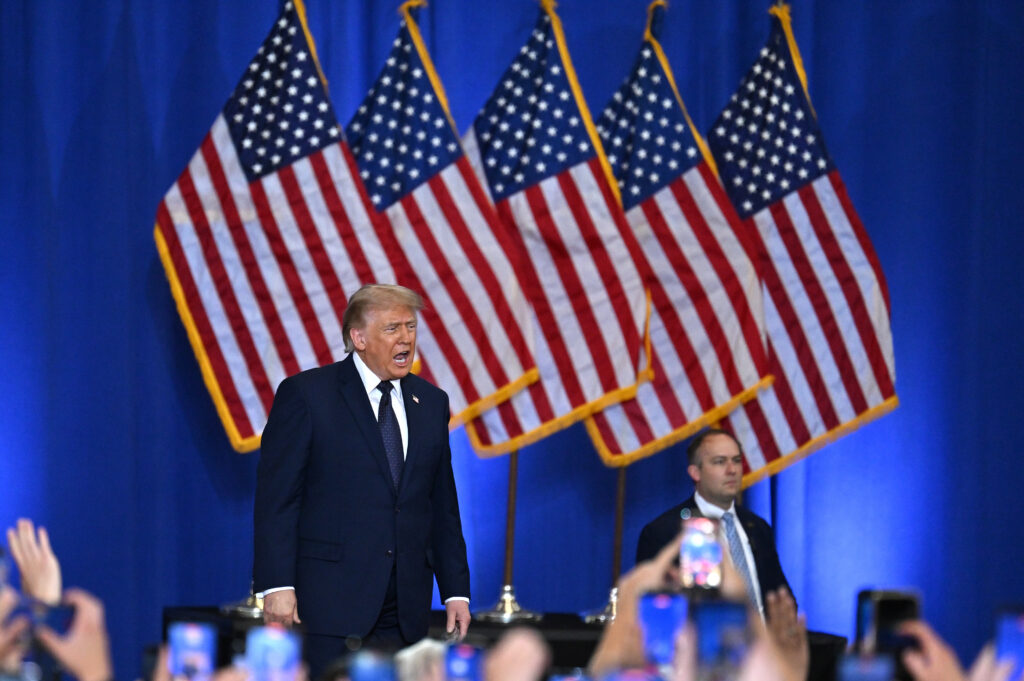
President Donald Trump’s effort to restrict the vote ran headlong into a legal brick wall this week, as judge after judge ruled against his sweeping anti-voting executive orders and the Department of Justice’s (DOJ) effort to seize control over elections from the states.
The flurry of rulings against the president indicates that — at least for now — both conservative and liberal judges across the country are holding firm against the Trump administration’s multi-pronged campaign to suppress the vote ahead of the November midterm elections.
Reacting to this week’s pro-voting victories, election chiefs from coast to coast had a simple message: States run elections, not the president.
Get updates straight to your inbox — for free
Join 350,000 readers who rely on our daily and weekly newsletters for the latest in voting, elections and democracy.
“Courts across the country continue to uphold the U.S. Constitution – which clearly gives states and Congress the authority to set the time, place, and manner of elections,” Minnesota Secretary of State Steve Simon (D) said in a statement.
In particular, this week’s rulings struck at a central tactic of Trump’s disenfranchisement strategy: Attempting to federalize the creation and maintenance of state voter registration rolls — and therefore control who can and cannot vote.
Trump and the DOJ’s awful week in the courts started Monday morning with a federal judge in Maryland throwing out the Department of Justice’s (DOJ) lawsuit seeking the Old Line State’s unredacted voter registration list.
U.S. District Judge Stephanie Gallagher, an appointee from Trump’s first term, found that the Civil Rights Act (CRA) of 1960 did not allow the DOJ to obtain state voter rolls through force of the law. She also slammed a recent legal memo from the department that purported that the CRA allowed the DOJ to force states to hand over unredacted statewide voter registration lists and then share that data with the Department of Homeland Security (DHS).
Gallagher’s ruling was yet another hit to the department’s national effort to obtain voter data from the states: She was the ninth federal judge to rule in favor of a state on the receiving end of one of the DOJ’s 31 voter roll lawsuits.
The bad news kept coming for Trump Monday after a federal judge in the District of Columbia also blocked DHS from allowing states to use an overhauled federal citizenship database to remove voters from the registration rolls.
The database, the Systematic Alien Verification for Entitlements (SAVE), is typically used to verify the citizenship and immigration status of people applying for public benefits, government assistance and driver’s licenses.
While the Trump administration has claimed to be refashioning the database to remove noncitizens from registration rolls, the program routinely falsely flagged naturalized citizens who are eligible to vote.
In a sharply worded ruling, U.S. District Court Judge Sparkle Sooknanan, a Biden appointee, slammed the effort, saying the Trump administration “knowingly trampled on the privacy rights of American citizens in a manner that threatens the sacred right to vote.”
It did so, Sooknanan wrote, by pooling personal data held by several federal agencies in violation of the Social Security Act’s prohibition on disclosing social security numbers, various provisions of the 1974 Privacy Act, and the Administrative Procedure Act.
Republican elected officials and Elon Musk, the richest man in the world, responded to Sooknanan’s ruling with naked nativism and xenophobia, insinuating that her order shouldn’t be valid because she was born in Trinidad and Tobago and is a naturalized citizen.
“No one born in another country should be serving in our government,” Rep. Nancy Mace (R-S.C.) wrote on social media. “Judges included.”
Back on the voter roll front, a panel of Sixth Circuit Court of Appeals judges Wednesday affirmed a lower court’s rejection of the DOJ’s attempt to force Michigan to turn over its voter registration file.
The 2-1 ruling was a severe setback for the DOJ, as it marked the department’s first appellate defeat and its tenth consecutive defeat in its voter roll lawsuits. As it was an appeals ruling, the decision is also binding precedent in other voter roll cases, such as the department’s pending lawsuit against Kentucky.
That same day, U.S. District Judge Denise Casper also permanently blocked several key parts of Trump’s first anti-voting executive order, which he signed in March 2025.
Casper, who is based in Massachusetts, found that the order’s proof of citizenship requirements, its restrictions on military and overseas voters and its attempt to pressure states to reject late-arrive mail ballots violated federal law and encroached on states’ constitutional authority to carry out elections.
That was only Trump’s first loss from Massachusetts this week.
On Thursday, a separate federal judge in the Bay State struck down provisions in Trump’s second anti-voting executive order that attacked mail voting and directed the federal government to create federal voter registration lists.
District Judge Indira Talwani, who was appointed by former president Barack Obama, said those two directives, and others in the order, were “legally void” because Trump exceeded his constitutional authority in issuing them.
“The Constitution does not grant the President any specific powers over elections,” Talwani wrote.
Her ruling largely stopped the United States Postal Service (USPS) from following through with an alarming proposed regulation that would require state election officials to send the federal government a list of voters who plan to vote by mail in an upcoming election.
While attempting to defend the proposal before lawmakers this week, Postmaster General David Steiner publicly confirmed that if voters aren’t on the lists — which USPS would maintain — the Postal Service will not deliver a ballot to them.
If fully implemented, USPS’s proposal would effectively create a federal registration list for absentee voters.
Talwani’s order also severely hampered DHS and the Social Security Administration’s efforts to compile state-specific lists of U.S. citizens eligible to vote. Combined, these lists would effectively create a national voter database, which Congress has never authorized the federal government to compile, the judge noted.
In a statement, Colorado Secretary of State Jena Griswold (D) called the ruling a “major victory for American democracy.”
“Trump will not be able to use the Postal Service to control which voters receive a mail ballot, and cannot use the DOJ to intimidate election officials into following his unlawful order,” she said.