Trump’s mail ballot rule could worsen postal delays, Washington secretary of state warns
 Prefer us on Google
to see more of our voting rights news coverage when you search.
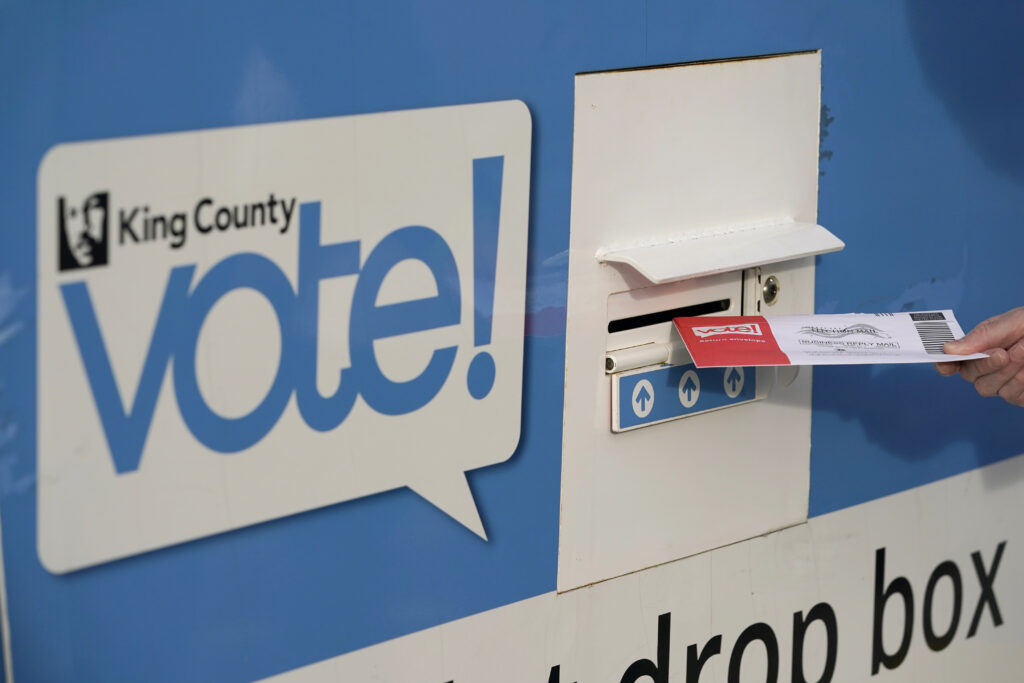
Washington state’s chief election official urged the U.S. Postal Service (USPS) to withdraw its proposed mail ballot rule Friday, warning that the Trump-backed proposal could worsen existing mail delays, impose new costs on local election officials and disenfranchise eligible voters.
In comments submitted to USPS, Secretary of State Steve Hobbs (D) said the proposed rule — which seeks to implement part of President Donald Trump’s anti-mail voting executive order — is unnecessary, unconstitutional and unworkable for states that already administer secure vote-by-mail elections.
“This rule represents a solution looking for a problem,” Hobbs wrote. “It’s unnecessary and does nothing to enhance the security of our elections. As written, the federal government would determine which voters can receive and return a ballot using the U.S. Postal Service, which is outside its authority.”
Get updates straight to your inbox — for free
Join 350,000 readers who rely on our daily and weekly newsletters for the latest in voting, elections and democracy.
The comments add to growing opposition to USPS’ proposed rule, which is part of Trump’s broader effort to restrict mail voting. A federal court recently blocked key portions of Trump’s executive order for the 2026 midterm election, but USPS has continued to face pressure over the proposed rule and related implementation steps.
The proposed rule would require states to provide USPS with information about voters who request mail-in or absentee ballots, and to use unique barcodes on ballot envelopes.
Voting rights advocates have warned that the rule could allow USPS to refuse to deliver ballots if voters are not included on approved lists or if states fail to comply with new federal demands.
Postmaster General David Steiner added fuel to those fears in comments to lawmakers Wednesday.
Hobbs said Washington counties have already prepared their 2026 general election ballot envelopes, and that the proposed rule could force counties to replace them, generate new barcodes and hire additional staff or contractors on a compressed timeline.
“Under the proposed rule, difficulties in meeting these challenges could result in voters not timely receiving their ballots, interfering with their ability to participate in the election,” Hobbs wrote.
He also warned that the proposal could worsen problems Washington election officials are already seeing with USPS delivery and postmarking.
During Washington’s February 2026 special election, Hobbs said 1.3% of returned ballots — or 75% of all rejected ballots — were rejected because of a late postmark.
That was the state’s highest rejection rate for an election since 2019.
Hobbs also cited a recent local mail delivery test in which election workers placed generic return ballot envelopes in USPS collection boxes. In one test conducted on Election Day, seven of 15 envelopes mailed before 9 a.m. were not postmarked until the next day, which would have made them too late to count.
“These inconsistencies in postmarking demonstrate a lack of standardization and uneven service delivery even when limited to a small sample area,” Hobbs wrote. “I’m concerned about what inconsistencies would emerge or worsen if this rule were applied nationally without the appropriate implementation and training to avoid delays or worse.”
The warning also comes as the U.S. Supreme Court has yet to rule in a case over whether states can count mail ballots that are cast and sent by Election Day but arrive afterward. A ruling barring states from accepting late-arriving ballots would make USPS delays even more consequential for voters, especially in states that currently allow ballots to be counted after Election Day if they are postmarked on time.
Hobbs said the proposal would create new burdens without addressing any real election problem. Between 2008 and 2025, he wrote, Washington found just five instances of proven voter fraud out of nearly 90 million ballots cast.