This week at Democracy Docket: Trump’s plan to suppress voting this fall starts with California
As the midterms get closer, President Donald Trump and his allies are kicking their efforts to suppress voting into high gear.
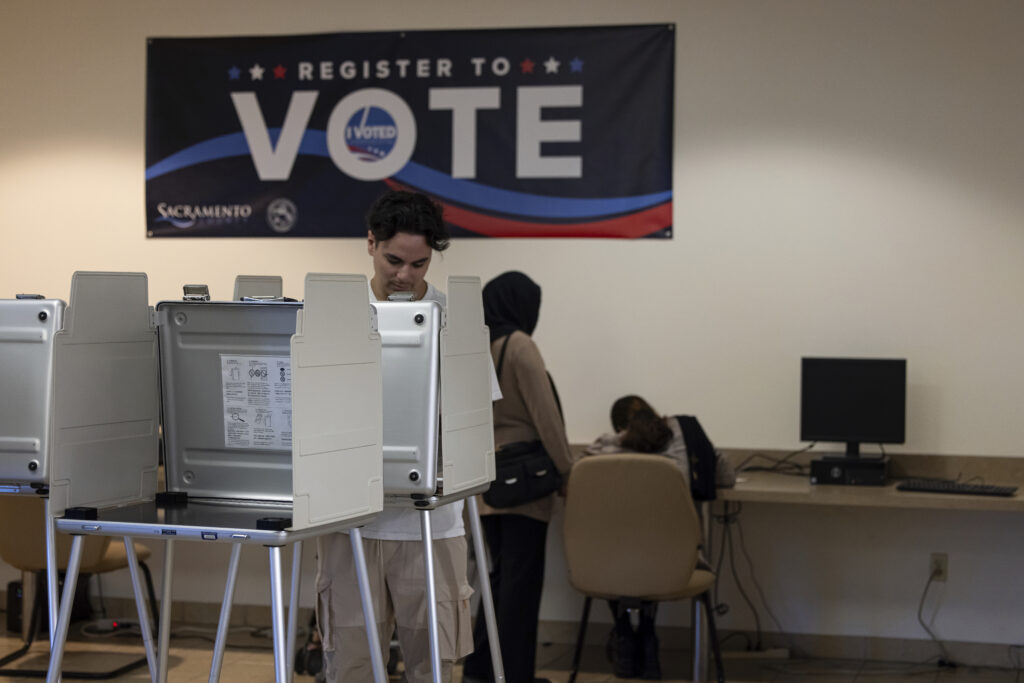
California was the epicenter this week. Vice President JD Vance, as Matt Cohen reported, became the latest top Republican to try to sow doubts about the state’s primary. The veep, echoing his boss, said it was “pretty shady” that a GOP candidate was in the top two early in the count — in the state’s jungle primary, the top two finishers advance to the general election — then fell away as more mail ballots were counted.
Get updates straight to your inbox — for free
Join 350,000 readers who rely on our daily and weekly newsletters for the latest in voting, elections and democracy.
Of course, the attack on California’s election system, as Jim Saksa explained, is about laying the groundwork to subvert the midterms. Indeed, Jacob Knutson noted that Trump tapped the federal prosecutor Jay Clayton as the next director of national intelligence just days after Clayton went on cable news and spread baseless conspiracy theories about California’s vote counting. And a Trump-appointed U.S. attorney has already said he’s investigating the primary vote and expects to bring (bogus) charges in connection with it.
Ohio, which is set to host a key Senate race this fall, is the administration’s other new target, Jacob reported. The FBI launched a raid Thursday on a Cleveland-based voter registration group, and questioned some of its leaders at their homes. The move was quickly denounced by national Democrats and voting leaders as another effort to intimidate voters and deter political participation.
That was far from the only step taken this week by Trump’s Department of Justice (DOJ) to suppress voting. In a case in which it’s defending Georgia’s sweeping voter suppression law, Yunior Rivas reported, it argued this week that states can purge voters from the rolls even in the 90-day period before an election — when purges are barred by federal law. If the courts side with DOJ, it would deal a major blow to a key federal voting protection designed to prevent eligible voters from being wrongly removed.
The department also gave a new answer to the question of what it wants to do with the unredacted voter rolls it’s seeking from all 50 states. It’s given confusing answers on that topic, sometimes saying it merely wants to ensure states are complying with federal law, while other times acknowledging it wants to run them thru a federal government database to find noncitizens. As Yunior reported, a DOJ lawyer this week opted for evasion, telling a judge who asked about the department’s purpose: “I’m not going to get into the details.”
GOP-led states also got in on the act. As Jen Rice reported, Florida’s Supreme Court rejected a bid by pro-voting groups to block the state’s new congressional map, even though it pretty clearly appears to violate a voter-approved constitutional ban on partisan gerrymanders. The only justice on the court to vote for blocking the map — which could give Republicans four extra seats this fall — was the one who wasn’t appointed by Gov. Ron DeSantis (R), who led the push for the redraw.
And as Brentin Mock detailed, GOP lawmakers in Arizona passed a measure that puts a referendum on the ballot this fall to aggressively restrict mail voting by requiring photo ID. That came two days after their counterparts in Ohio approved their own ballot measure, which would enshrine voter ID in the state constitution, Yunior reported. California and Nevada already have Republican-backed ID measures on the ballot, meaning voters in four key states will be asked to greenlight new anti-voting laws.
But here’s some good news to leave you with. Since a federal judge last month declined to block Trump’s executive order aiming to restrict mail voting, there’s been concern that — although the order is blatantly unconstitutional — it could survive for long enough to cause real damage and confusion this fall. But, as Yunior reported, a federal appeals court this week said it would fast-track an effort to overturn the lower court ruling and block the order.
That’s a hopeful sign — both about how the court will rule, and about the timetable on which it will act, which is almost as important. And these days, we need all the hope we can find.