Trump DOJ says it’s probing California elections amid baseless fraud claims
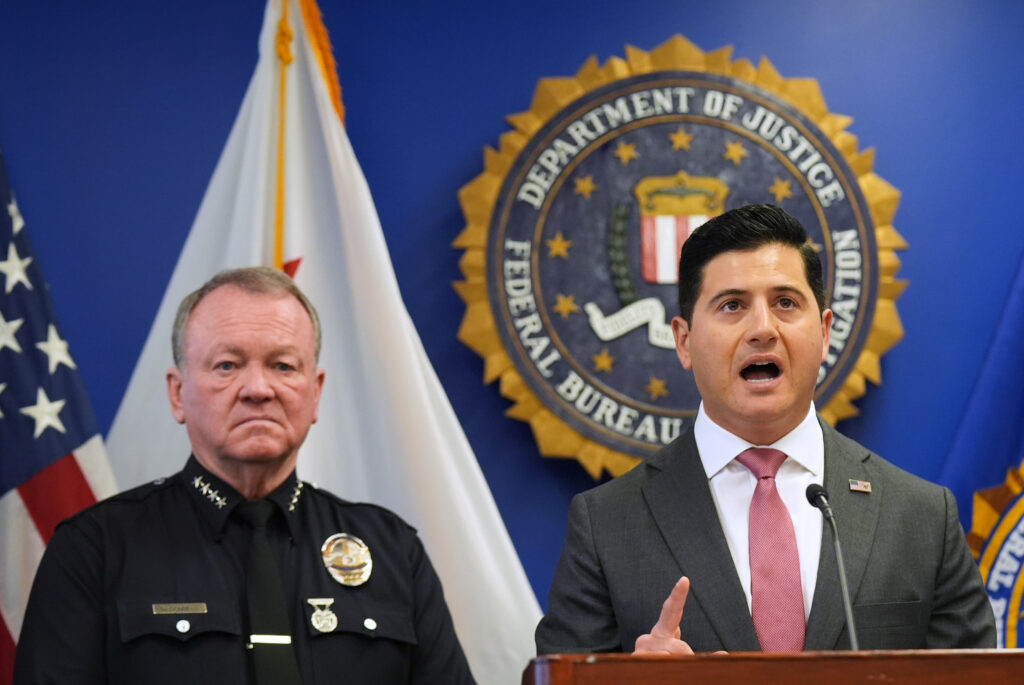
A Trump-appointed federal prosecutor said Friday that his office is pursuing “multiple” election fraud investigations in California, amping up President Donald Trump’s baseless attacks on the state’s still-ongoing primary vote count — even as election officials say the delayed results are a normal part of California’s legally required ballot verification process.
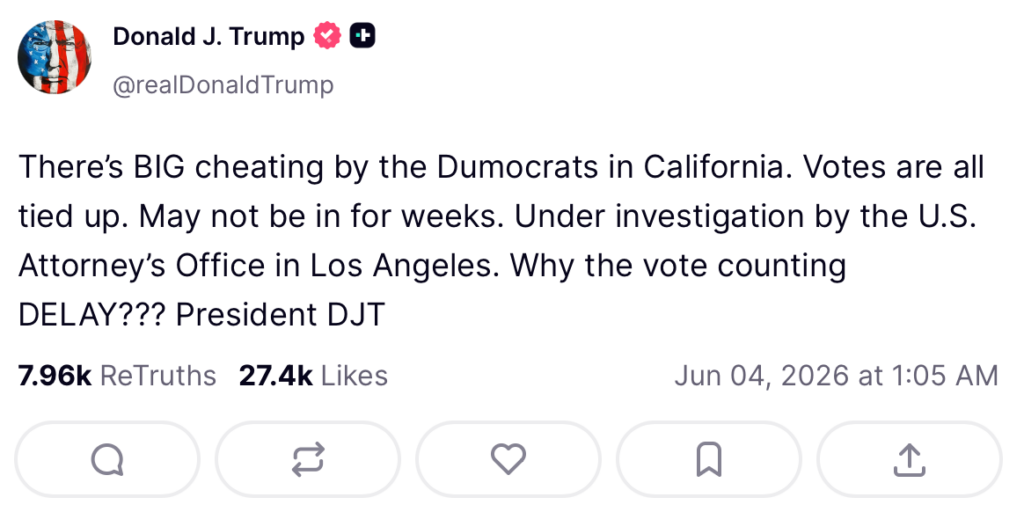
First Assistant U.S. Attorney Bill Essayli, the top federal prosecutor in the Central District of California, announced the investigations in a social media post, one day after Trump accused California Democrats of trying to “steal” the state’s gubernatorial primary and Los Angeles mayoral primary without providing evidence.
Get updates straight to your inbox — for free
Join 350,000 readers who rely on our daily and weekly newsletters for the latest in voting, elections and democracy.
“Without commenting on any specific investigation, my office has multiple election fraud investigations underway in coordination with FBI Los Angeles,” Essayli wrote.”We will follow the evidence wherever it leads and prosecute any violations of federal election law to the fullest extent.”
The Justice Department also sent an attorney to observe ballot processing in Los Angeles on Friday morning, a move the county described as part of a public observation process rather than evidence of wrongdoing.
“Our office was notified late yesterday that the U.S. Attorney’s Office would send an Assistant U.S. Attorney to the Ballot Processing Center to observe ballot processing activities,” Los Angeles County registrar-recorder spokesperson Mike Sanchez said in a statement. “The individual arrived this morning, was provided an overview of the public observation program, and participated in a walkthrough of the ballot processing operations.”
The Los Angeles County District Attorney’s Office also said it had “not received any complaints from the federal government regarding criminal misconduct related to vote-counting or fraud in the Los Angeles County primary election.”
Essayli did not identify the targets of the investigations, describe any alleged misconduct tied to Tuesday’s primary or provide evidence that California’s slow count is connected to fraud. His announcement appeared to echo Trump’s claims that the state’s use of mail-in ballots and its ongoing vote count are inherently suspicious.
“You see what’s happening in California, they’re rigging the election,” Trump said Thursday. “We just don’t want cheating in our elections, and you see it happening in California. Those numbers are coming down rapidly. They found a lot of mail-in ballots last night, shockingly. So, we don’t want that.”
There is no public evidence that California’s ongoing primary count is fraudulent.
Instead, the state’s gradual results are the product of laws requiring election officials to count valid mail-in ballots that arrive after Election Day, verify signatures, process provisional ballots and give voters time to fix ballot problems so their votes can count.
California Secretary of State Shirley Weber (D) reminded voters that the count can continue for up to 30 days after the election, and that results will change as counties process remaining ballots.
“Accuracy comes before speed,” Weber said. “California is the nation’s largest voting state, with millions of ballots to process and count. Taking the time to do this work correctly protects voters’ rights and ensures the integrity of our elections.”
As of Wednesday, California counties had processed and counted more than 5.6 million ballots, while an estimated 3.6 million ballots remained outstanding, according to Weber’s office. Mail-in ballots postmarked by Election Day and received within seven days must still be processed. County officials must report final results for state and federal contests by July 2, and Weber will certify statewide results on July 10.
That timeline has created an opening for Trump and his allies to suggest, without proof, that the counting itself is suspect. But delayed results are not evidence of fraud. California mails ballots to all active registered voters, and many voters return them late. Election officials do not discard ballots because they arrive after Election Day if they were postmarked on time and meet state requirements.
Essayli, however, framed California’s election system itself as vulnerable.
“California’s election system has serious structural vulnerabilities,” Essayli wrote. “Universal vote-by-mail with no voter ID requirements creates conditions where fraud can go undetected and unpunished, eroding public confidence.”
Essayli’s announcement also comes amid a broader Trump administration push to focus federal prosecutors on alleged noncitizen voting, a form of fraud that election experts say is exceptionally rare.
Voting rights advocates and election officials have long warned that sweeping claims like those risk undermining public confidence by conflating isolated allegations with unsupported claims of widespread fraud.
Even some Republicans have urged caution or directly pushed back on the fraud narrative. The Los Angeles County Republican Party issued a statement saying the count is proceeding under California law, not outside it.
“Following the June 2, 2026 primary election, the vote counting process is underway and will continue in accordance with California law,” Los Angeles County GOP Chair Roxanne Hoge wrote. “While initial results were reported on election night, a significant number of ballots remain to be processed, which is standard for California’s elections.”
Other Republicans have been more direct in rejecting viral claims.
Elizabeth Barcohana, a local Republican official in Los Angeles, pushed back after a right-wing outlet suggested a Republican candidate had received no votes in a series of ballot updates.
“No, it did not happen,” Barcohana wrote. “Spencer Pratt (orange on the graph) received votes in every single ballot drop. This is fake news.”
In California’s top-two primary system, the two candidates with the most votes advance to November regardless of party. That means the order of finish matters, especially in crowded races like governor and Los Angeles mayor.
While Essayli says federal investigations are underway, neither he nor Trump has presented public evidence that California’s ongoing count is fraudulent. Local election officials — and even some Republicans — have instead described the changing vote totals as the expected result of counting millions of valid ballots after Election Day.
Essayli’s own authority has been the subject of legal scrutiny.
A federal judge ruled in October that he had unlawfully continued serving as acting U.S. attorney without Senate confirmation, disqualifying him from supervising criminal cases. Though the judge allowed him to remain first assistant U.S. attorney — effectively keeping him atop the Los Angeles office.
This story has been updated.