DOJ’s latest answer on why it wants state voter rolls: ‘I’m not going to get into the details’
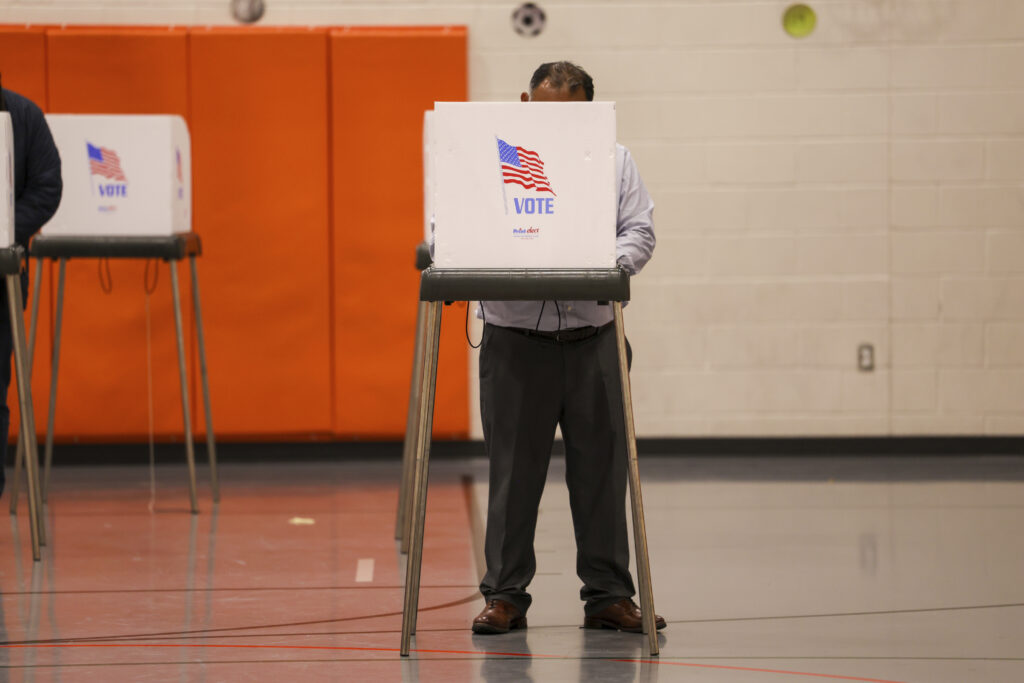
The Trump administration struggled Wednesday to explain exactly how it plans to use the sensitive voter data it is demanding from states across the country, with a government lawyer telling a federal judge in Maryland: “I’m not going to get into the details.”
The exchange came during a hearing in Baltimore over the administration’s lawsuit seeking Maryland’s statewide, unredacted voter registration list — part of DOJ’s sweeping nationwide campaign to obtain voter data from nearly every state.
Get updates straight to your inbox — for free
Join 350,000 readers who rely on our daily and weekly newsletters for the latest in voting, elections and democracy.
U.S. District Judge Stephanie Gallagher, an appointee of President Donald Trump, did not immediately rule on Maryland’s motion to dismiss the case, saying she would issue a written opinion.
But according to the local outlet The Daily Record, which reported from the hearing, Gallagher repeatedly pressed the department over both its legal theory and what it actually plans to do with the records if it gets them.
DOJ lawyer William F. Mohrman, who Democracy Docket reported worked to overturn the 2020 election, told Gallagher that the department wants the data to ensure Maryland is complying with federal election laws. But when Gallagher asked whether DOJ was disavowing statements made in other voter data cases that the records could be shared with the Department of Homeland Security, Mohrman did not provide a clear answer.
Instead, he said the data could be “run through” other federal records to determine whether people on the voter list are ineligible.
“I’m not going to get into the details,” Mohrman said. “The attorney general is going to take the list, and one of the things the things the attorney general is going to try to figure out is whether or not there’s people on that list that are ineligible to vote.”
The exchange captures how the government is demanding access to massive amounts of sensitive voter information while offering courts, state officials and the public shifting and evasive explanations for what it intends to do with it.
In some cases, DOJ lawyers have insisted the data will only be used to assess compliance with federal voting laws. In others, department attorneys have acknowledged the records could be shared with DHS to check citizenship status.
In Maryland on Wednesday, DOJ again declined to give a clear answer about where those limits actually are.
DeMarinis, the defendant in the case, said after the hearing that he expected a favorable ruling.
“The DOJ did not articulate any sort of reasonable requests, or purpose behind the request, and that was proven today,” DeMarinis told The Daily Record. “They need to tell us the reason why they’re doing this. Until they articulate those, I’m going to protect Maryland voters and their privacy.”
DOJ has sent letters demanding unredacted voter data from election officials in at least 48 states and has sued at least 30 states that resisted those demands.
So far, eight federal district courts have dismissed DOJ’s voter data lawsuits. None has ruled in favor of the government, and DOJ has appealed all eight dismissals.
Gallagher noted that losing streak during Wednesday’s hearing, telling DOJ that several courts had already considered the government’s theory and rejected it, then asked whether the department had any additional authority to offer.
“No,” Mohrman replied. “We disagree with the decisions in those district courts.”
Maryland argues federal law does not give DOJ broad authority to seize the state’s full voter file, including private information protected by state law.
Mohrman also told the court that Maryland’s state privacy protections would not apply once DOJ obtained the records, though he said the department would comply with federal law.
Gallagher did not say when she would rule.