This week at Democracy Docket: The Supreme Court makes it official — states have free rein to discriminate against Black voters
 Prefer us on Google
to see more of our voting rights news coverage when you search.
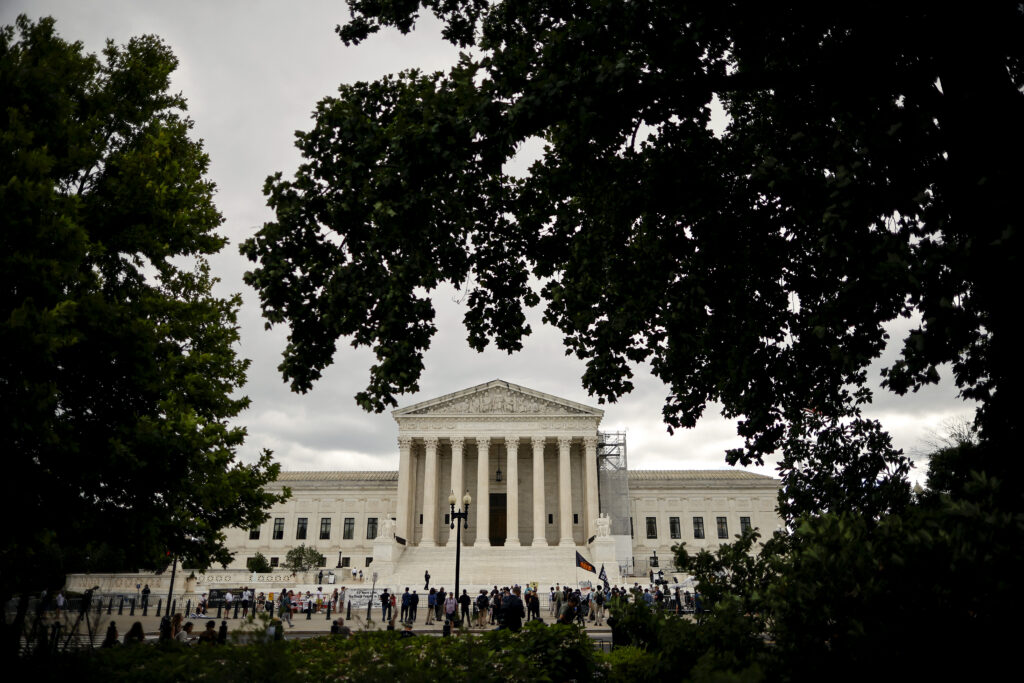
If there was any doubt before, there can be none after this week: The Supreme Court is going to give states free rein to discriminate against minority voters — even in some of the most egregious cases.
The court’s six conservatives ruled Tuesday that Alabama could use a congressional map that eliminates one of the state’s two majority-Black districts, and that had already twice been blocked by a lower court for intentional racial discrimination.
Get updates straight to your inbox — for free
Join 350,000 readers who rely on our daily and weekly newsletters for the latest in voting, elections and democracy.
Democracy Docket covered the ruling more closely than any other news outlet.
Brentin Mock reported the news within minutes of the ruling dropping. Jacob Knutson related Justice Sonia Sotomayor’s impassioned dissent, which charged that the majority opinion “debases democracy.” Jim Saksa explained how the decision represented a complete 180 from what the court found in the same case just three years ago. And Jen Rice had the furious response from Democrats and civil-rights advocates, one of whom accurately said the ruling “gives cover to Alabama and others to deliberately and openly discriminate against Black voters without fear of any consequence.”
The same night, California primary voters went to the polls — and registered a mixed verdict on Republican voter suppression efforts.
Chad Bianco, the far-right sheriff who, spurred by conspiracy theorists, seized hundreds of thousands of ballots earlier this year, badly lost his bid for governor, Matt Cohen reported. But, in the attorney general race, Michael Gates — who championed a local voter ID law as a city attorney, then helped lead the Trump administration’s grab for state voter rolls as a top U.S. Department of Justice official — advanced to the general election, Yunior Rivas wrote.
Gates is almost certain to lose to the Democratic incumbent this fall. But the result is the latest evidence that attempts to restrict voting remain absolutely central to Republican politics.
Back to the governor’s race: Democrat Xavier Becerra has now advanced to the general election. So it’s worth asking, as Jim did: If elected, will Becerra follow in the footsteps of the current incumbent, Gov. Gavin Newsom (D), by helping lead the fight to defend democracy from President Donald Trump? The answer could matter beyond the Golden State.
California takes a notoriously long time to count its votes. So Matt reported on the inevitable, dishonest attempts by the far right, turbocharged by Trump, to pretend that the delay is evidence of fraud. And Yunior added Friday that the Trump administration is now saying it’s probing the state’s elections — as it continues to try to undermine confidence in voting.
Finally, we ended the week with some news that didn’t get a lot of attention but that we think is very much worth following closely: As Yunior explained, the Department of Homeland Security has approved a plan to create a citizenship verification system for state voter rolls — part of Trump’s March executive order cracking down on mail voting. It comes after Jacob and Jim reported last week that the U.S. Postal Service issued a draft rule of its own that would likewise begin implementing its part of the scheme.
Trump’s order is being challenged in court, and election experts say it’s unconstitutional on its face. So there’s no need to panic. But with his administration moving forward on multiple fronts to make the order’s goals a reality, we aren’t going to take our eye off this story for a second.