These 19 election deniers and vote suppressors are on the ballot in the midterms. We should be worried
 Prefer us on Google
to see more of our voting rights news coverage when you search.
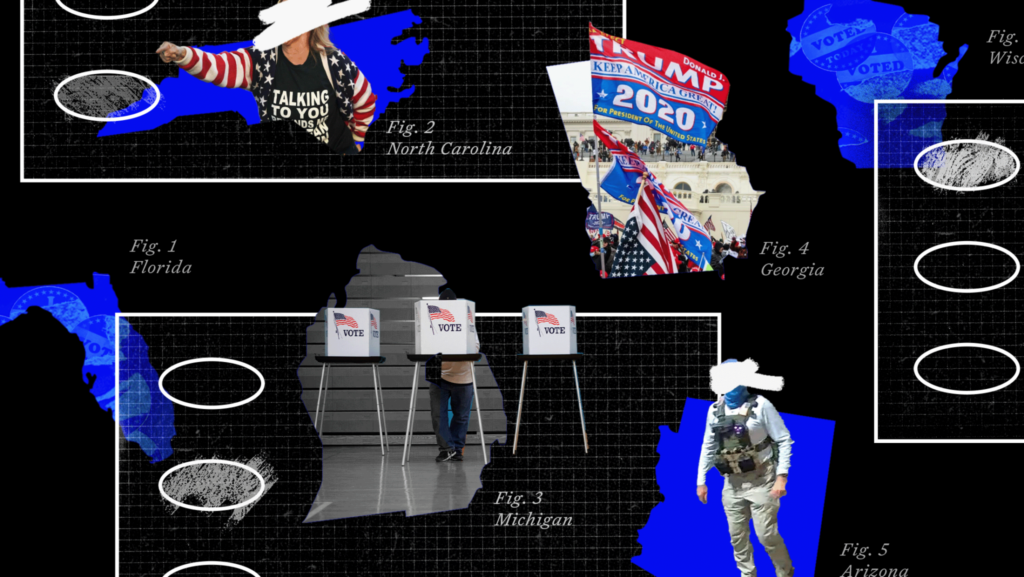
From Maine down to Texas, and from North Carolina out to Arizona — hundreds of Republican election deniers and vote suppressors will be on the ballot this fall.
Many are running for pivotal state-level roles like governor or secretary of state that wield enormous power to undermine a fair election. Others are running for seats in the U.S. House or Senate, from which they could help drive anti-voting policies that threaten to disenfranchise millions of voters.
A tally by the pro-democracy group States United Action found that there are 132 election deniers across 35 states running for statewide or federal office this year.
Of those, Democracy Docket has identified 19 candidates who are currently on the ballot — in the general election and in their state’s primaries — to pay especially close attention to. Some are running for state-level positions that play a major role in the vote-counting and certification process in key swing states. Others are outspoken election deniers running in House and Senate races that could determine control of Congress — and who could be well-placed to spread lies about illegal voting during the fraught post-election period.
“We’re halfway through the midterm cycle, and more than 130 Election Deniers have already secured spots on the November ballot,” Kelly Rader, research director at States United Action, told Democracy Docket. “In many cases, we’re seeing new candidates embrace election denial and advance through competitive races. Election denial continues to be a defining force in the 2026 election landscape. This year’s elections really matter because the candidates who win will play a key role in how elections are run and how Trump’s power is checked.”
Get updates straight to your inbox — for free
Join 350,000 readers who rely on our daily and weekly newsletters for the latest in voting, elections and democracy.
Jim Marchant
Nevada Sec. of State
This isn’t Marchant’s first rodeo running to be Nevada’s elections chief. Back in 2022, Marchant — a Nevada politician who served in the state assembly from 2016 to 2018 — unsuccessfully ran for secretary of state, in a campaign focused on promoting Trump’s Big Lie and amplifying election conspiracy theories. Marchant has a deep history of QAnon ties and has palled around with prominent election deniers like MyPillow CEO Mike Lindell. Marchant was also involved in Trump’s ‘fake elector’ scheme to overturn the 2020 election results in Nevada.
Marchant’s latest campaign is centered on an extreme anti-voting platform: strict voter ID and proof of citizenship laws, replacing voting machines with paper ballots, precinct voting, and hand-counting ballots. This fall, he’ll face incumbent Secretary of State Cisco Aguilar (D), who narrowly defeated him in 2022. Should Marchant win, he’d be one of the most extreme election deniers and anti-voting activists running elections in a pivotal swing state.
Tim Fleming
Georgia Sec. of State
As chair of the Georgia General Assembly’s election procedures committee, state Rep. Tim Fleming (R) is leading the GOP’s push to pass new anti-voting laws ahead of the midterm elections. Fleming also sponsored an elections overhaul bill last year that sought to withdraw Georgia from the Electronic Registration Information Center — a nonpartisan voter registration accuracy organization — and ban absentee ballot drop-off the weekend before Election Day.
Fleming made restrictive voting policies central to his campaign, which said he would “champion voter ID and election transparency,” “deport any illegals attempting to vote in Georgia” and “make it impossible for the Left to cheat in our elections.”
Fleming’s primary victory now sets up a general election that could determine whether Georgia’s elections are run by a pro-democracy official — or by a Republican who has campaigned on making voting harder in one of the nation’s most closely watched states.
Ken Paxton
Texas, U.S. Senate
Texas Attorney General Paxton led a dangerous legal effort to subvert the 2020 presidential election and unlawfully install Trump into the White House. Paxton’s lawsuit — drafted by Trump’s legal team — questioned the constitutionality of the election itself, arguing that steps taken to ensure voters could safely cast ballots during the ongoing COVID pandemic were legally invalid. It was such a long shot that even other far-right political figures called it a bridge too far.
Paxton also has been a vocal supporter of the SAVE America Act — a key issue in many GOP primaries. His race against Democrat James Talarico is one of the most competitive Senate races this November.
Andy Biggs
Arizona Governor
Biggs, a U.S. congressman, baselessly claimed in 2020 that Arizona’s voting machines were rigged, that poll watchers in Detroit were participating in vote tabulations, and that 10,000 Maricopa County voters were “disenfranchised.” Biggs later voted against certifying the 2020 election after speaking at various “Stop the Steal” rallies that helped instigate the Jan. 6 riot. Biggs was one of six House Republicans who asked Trump for a preemptive presidential pardon for their efforts to overturn the 2020 election.
Biggs, who is a frontrunner for Arizona’s July primary election, has put voter suppression policies at the forefront of his campaign, promising to “sign election integrity legislation to deliver election results in a timely fashion and ensure only legal Arizona citizens participate in our elections.”
Arizona, a key swing state, has become a hotspot for election conspiracy theories and voter fraud claims. A governor like Biggs leading the state would only embolden election conspiracies and push the state legislature to pass more restrictive voting measures.
Stacy Garrity
Pennsylvania Governor
Garrity, Pennsylvania’s elected treasurer since 2021, spoke at a Pennsylvania rally on Jan. 5, 2021, where she urged lawmakers to decertify the state’s election results because of voter fraud. In 2022, she spoke at a rally with Trump and Mehmet Oz, then a U.S. Senate candidate, and claimed the 2020 election was stolen.
“We know that he won,” Garrity said of Trump while he was on stage next to her. Garrity has since tried to walk those claims back, but has made voter suppression a cornerstone of her campaign — primarily by supporting strict voter ID measures for Pennsylvania.
As governor, Garrity would have the power to appoint a secretary of state, which could allow her to install an election denier to oversee elections in a prominent battleground state. She faces the incumbent, Gov. Josh Shapiro.
Michael Whatley
North Carolina, U.S. Senate
Whatley, the former chairman of the Republican National Committee, is the Republican nominee facing off against former Gov. Roy Cooper (D) in a race that Democrats see as one of their best chances of flipping a Senate seat. But the race isn’t just to flip a seat; it’s to keep an avowed election denier out of the Senate.
Whatley, a former Republican National Committee chair, has falsely claimed that “massive fraud” took place in Democratic-leaning cities in the 2020 presidential election and supported objections to the Electoral College vote that confirmed Joe Biden’s victory. He later argued that President Donald Trump played no role in the deadly riot at the U.S. Capitol on Jan. 6, 2021.
Thomas Tiffany
Wisconsin Governor
Tiffany, who’s served in the U.S. House of Representatives since 2020, voted against certifying Joe Biden’s 2020 election victories in Arizona and Pennsylvania over false claims of mass voter fraud. He later said he would have voted against certifying Wisconsin’s election results if he had the opportunity.
Tiffany — a frontrunner for the GOP nomination in Wisconsin’s August 11 primary election — is supporting the Trump administration’s probe into the 2020 vote in Wisconsin, which includes the FBI interviewing several senior state election officials
“So clearly they have found something that is worth investigating, and so I just believe they should be allowed to complete the investigation,” Tiffany told a local reporter. “If there’s nothing there, then that’ll go away. If they do find something, then they can investigate that even further to make sure that there’s been no problems.”
As governor of Wisconsin, Tiffany will have the authority to appoint officials to run the state’s elections through the Wisconsin Elections Commission, which means he could install fellow election deniers to oversee elections in a critical swing state.
Marsha Blackburn
Tennessee Governor
Blackburn, who’s served in the U.S. Senate since 2019, initially said she wouldn’t vote to certify the 2020 election, citing false claims of voter fraud. Though she flipped her vote in the aftermath of the deadly Jan. 6 riot, Blackburn remains one of the most fervent anti-voting senators. Earlier this month, Blackburn, who is leading the GOP gubernatorial field for the August 6 primary election, introduced legislation to incentivize states to voluntarily hand over sensitive voter registration data to the Department of Homeland Security.
Steve Toth
Texas, U.S. House of Representatives
Toth, a longtime state lawmaker, has made voter suppression a priority during his time in the Texas statehouse: He called for audits into the 2020 election in the Texas counties that Biden won and has since filed numerous bills to impose stricter voting rules and harsher penalties for voter fraud. Toth didn’t campaign much on election integrity during the primary but said in an interview that voters wanted his opponent, Rep. Dan Crenshaw, out because he failed to “admit that there is any election fraud.”
Toth is running in a safe Republican district, so he is all but certain to be in Congress next year.
Tommy Tuberville
Alabama Governor
As a U.S. senator, Tuberville was one of 147 GOP lawmakers who voted to overturn the 2020 election after the deadly riot at the U.S. Capitol on Jan. 6, 2021. A close ally of Trump, Tuberville has since spent his time in the Senate pushing anti-voting policies, including being one of the loudest voices supporting the SAVE America Act — the sweeping voter suppression bill.
As governor, Tuberville would have ultimate authority over Alabama’s election administration — from having a role in certifying election results to signing laws determining who has access to the ballot box.
Rick Jackson
Georgia Governor
Jackson, a billionaire businessman, has repeatedly echoed Trump’s false claims about Georgia’s 2020 election. Jackson doubled down on those claims while campaigning for governor: He ran ads attacking Secretary of State Brad Raffensperger (R) — who resisted Trump’s pressure campaign to help overturn Biden’s win — which compared Raffensperger to ‘Judas’ for his actions. Asked during the campaign whether he thought the 2020 election was stolen, Jackson said, “that was totally ridiculous what happened in 2020 and our people really let us down.”
Should Jackson be elected governor, he’s poised to play a major role in issues such as voting access, election administration, redistricting, and any future contested elections.
Pamela Evette
South Carolina Governor
Evette, the state’s lieutenant governor, campaigned on an extreme anti-voting agenda, including requiring voters to prove their citizenship before registering, and tightening ID requirements. Evette said she supported ending the state’s “reasonable impediment” provision, which allows people without a photo ID to sign an affidavit and vote via provisional ballot.
Evette, who was endorsed by Trump, also campaigned on aggressive voter purges, including the use of the U.S. Department of Homeland Security’s SAVE database, which already has been known to falsely flag voters as ineligible to vote.
With Evette running the state, there’s a good chance South Carolina Republicans will try even harder to redraw its congressional map to weaken the political power of Black voters for 2028, after failing to do so for the midterms.
Vivek Ramaswamy
Ohio Governor
Ramaswamy has spent much of his time in the public eye spreading election conspiracy theories. During a town hall event while running for president in 2023, he called January 6 an “inside job,” and claimed, without evidence, that “the 2020 election was indeed stolen by Big Tech.”
While campaigning for governor, Ramaswamy has called on the state legislature to pass strict voter-suppression measures, including a push to enshrine the state’s restrictive voter ID law in the Ohio Constitution. As governor, Ramaswamy will have more influence over the GOP-led legislature to pass voter suppression laws and could interfere in any contested elections.
Alex Mealer
Texas, U.S. House of Representatives
Mealer is running for Congress in Texas’ newly redrawn 9th congressional district, which now leans Republican after the GOP’s mid-decade gerrymander.
Mealer claimed voter fraud, despite a lack of evidence, after losing a 2022 race for Harris County judge, and she’s made anti-voting policies a core component of her campaign.
“Elections should be EASY TO VOTE, AND HARD TO CHEAT,” Mealer wrote on her campaign website. “As I learned firsthand during the Harris County 2022 election, our elections are often hard to vote and easy to cheat. I am not interested in bumper sticker wins—we need election integrity legislation with real teeth and safeguards.”
David Willson
Colorado Attorney General
Willson, a former Army attorney who was part of election denier Tina Peters’ legal team, is putting anti-voting policies and conspiracy theories at the forefront of his campaign.
As a GOP attorney general candidate for the state’s June 30 primary, he promised to investigate the public officials who prosecuted Peters — including Colorado Sec. of State Jena Griswold (D), who’s also running for attorney general — along with the judge who sentenced Peters. Willson also has a background in cybersecurity, which he said he’ll put to use to investigate false claims of election fraud in Colorado.
Paul LePage
Maine, U.S. House of Representatives
LePage, a former governor and brash businessman who once described himself as “Donald Trump before Donald Trump became popular,” has a long history of promoting election conspiracies and false claims of voter fraud. LePage has claimed that the 2020 presidential election was “clearly stolen.” He later backtracked, but he hasn’t backtracked on the many other elections he’s claimed were rigged by Democrats, including his 2022 gubernatorial loss and 2018 House race.
Currently, there’s a crowded Democratic primary field with no clear frontrunner — leaving LePage ahead in most polls.
Alexander Kolodin
Arizona Sec. of State
Kolodin, a state representative who’s part of the far-right Arizona Freedom Caucus, was sanctioned by the state bar in 2023 for his role in lawsuits trying to overturn the 2020 election — including one of the infamous “kraken” lawsuits filed by former Trump lawyer Sidney Powell.
As chair of the Select Committee on Election Integrity, Kolodin has pushed several anti-voting measures — including a state-level SAVE Act clone that proposes strict voter ID requirements, restricts mail voting, and shortens the early voting period. He’s a frontrunner for the GOP nomination in the state’s July 21 primary.
Scott Petersen
Nebraska Sec. of State
Petersen, a businessman from Omaha, has amplified conspiracies about the 2020 election, notably ones related to the FBI’s recent raid of a Fulton County, Georgia election hub.
“By the way, if another state steals elections … our vote doesn’t count as much, right?” Petersen said of the Fulton County raid.
Petersen’s platform includes support for a number of anti-voting policies that would disenfranchise voters, like strict voter ID laws. In May, Petersen won the GOP primary in a major upset over Secretary of State Bob Evnen. He’s now very likely to be elected in deep red Nebraska.
Mayes Middleton
Texas Attorney General
Middleton, a Texas state senator, campaigned to the right of Rep. Chip Roy — one of the most fervent anti-voting members of the U.S. House of Representatives. Though Trump didn’t endorse either candidate, Middleton branded himself “MAGA Mayes” and said he’s “the Trump candidate in the race.”
He claimed repeatedly throughout the campaign that the 2020 election was stolen, and said that he would use his position to enforce strict voter laws. As attorney general, Middleton could have a lot of sway in election outcomes; his predecessor Paxton led a lawsuit to overturn the 2020 election results.