The biggest obstacle to the Trump DOJ’s election monitors? The right’s long attack on federal oversight
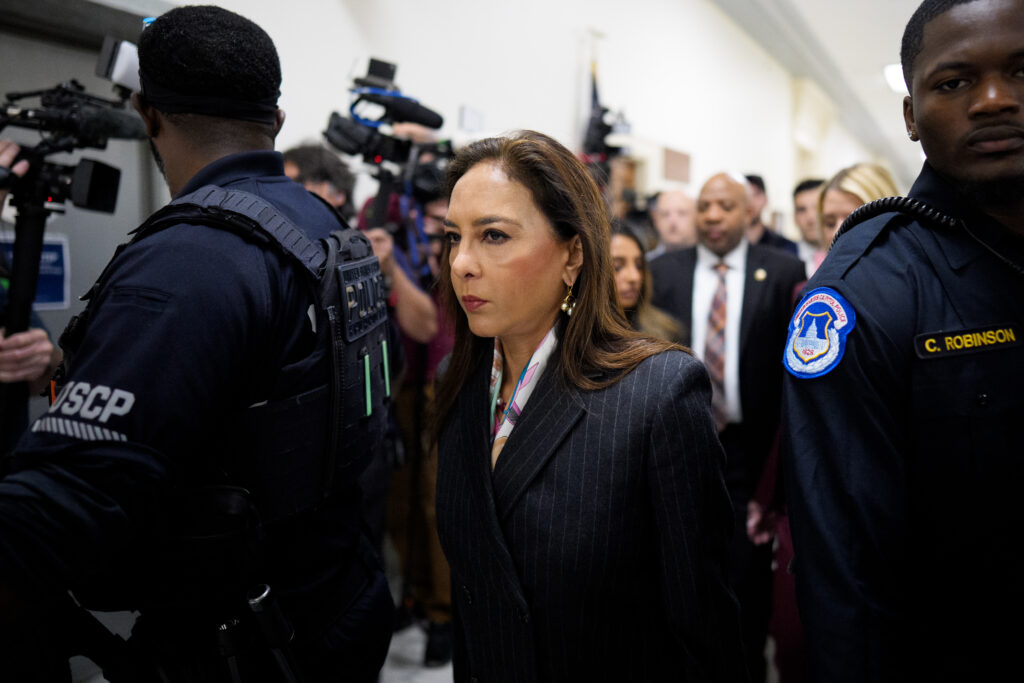
After the Department of Justice’s (DOJ) civil rights chief Harmeet Dhillon said she was sending federal officials to monitor upcoming primaries in multiple Democratic strongholds, the MAGA movement hailed her effort to root out supposedly rampant illegal voting.
Dhillon’s announcements gave many the impression that she was sending election observers to ensure only people allowed to vote cast ballots. Such observers would then, the logic goes, intimately oversee the counting and processing of those ballots.
In a video on social media, she said it’s “important to make sure that our voting is accurate so that every citizen who votes has their vote counted equally, without being canceled out by somebody who shouldn’t be voting.”
But that isn’t even remotely what the monitors will be doing.
Get updates straight to your inbox — for free
Join 350,000 readers who rely on our daily and weekly newsletters for the latest in voting, elections and democracy.
In reality, they will, at most, be able to watch election procedures from afar. The reason is deeply ironic: Through legal action in recent years, conservatives have attempted to curtail the federal government’s ability to monitor elections.
Republicans’ sudden about-face under President Donald Trump — from opponents of federal involvement in elections to its biggest fans — has raised eyebrows among voting experts.
David Becker, executive director of the Center for Election Innovation & Research and a former DOJ Voting Rights attorney, told Democracy Docket that he has found it “remarkable to see people take different positions based on the party identification of the person sitting behind the Resolute Desk.”
“If your view of election policy changes based on the party identification of the person in the Oval Office, you’re doing it wrong,” he added.
Observer vs. monitor
Legally, two types of federal officials can oversee elections in some capacity: federal observers and federal monitors.
Established by the Voting Rights Act, election observers are federal agents from the Office of Personnel Management who work with the DOJ’s Civil Rights Division to directly monitor elections.
They can go inside polling places at all stages of the voting process, from polls opening through ballot counting, all while closely watching poll workers, voters and election machines.
Federal election monitors, on the other hand, are Civil Rights Division attorneys deployed to ensure that states and localities are complying with federal voting and accessibility laws, such as the Help America Vote Act and the Americans with Disabilities Act.
In general, the Civil Rights Division can deploy monitors to any jurisdiction, for any election — though, unlike observers, they are severely limited in their ability to oversee election processes.
While monitors are meant to ensure compliance with federal law, they can only do so through limited observations. They have no law enforcement authority while monitoring. As such, it’s generally believed that they cannot enter polling places without a state’s consent, are subject to state election laws and have to openly identify themselves as monitors.
Becker likened monitors to “flies on the wall.”
“There’s not much they can do, legally, in any of the states,” Becker said. “They can’t interfere in the election process, they won’t interfere with the election process and 99.999% of all voters aren’t going to see any of them.”
GOP legal battle
For decades, prior administrations used both observers and monitors to ensure Americans have equal access to the ballot.
Then, a major victory in the conservative movement’s decades-long campaign against the federal election monitoring system changed all that: In 2013, the Supreme Court issued a landmark decision in Shelby County v. Holder and gutted portions of the Voting Rights Act (VRA). It also heavily limited the federal government’s use of election observers.
Before Shelby, the attorney general could unilaterally deploy OPM observers to specific jurisdictions for any elections, including primaries. After Shelby, which was widely praised by Republicans, the DOJ could only deploy observers pursuant to a court order.
Today, Dhillon can generally only unilaterally dispatch monitors. But conservatives have also kneecapped the federal government’s use of them.
In 2024, Texas Attorney General Ken Paxton sued the DOJ over its plan to send monitors to eight counties in the state to protect the right to vote and ensure compliance with federal voting and accessibility statutes.
Paxton — who currently is running for the U.S. Senate with Trump’s endorsement — claimed the department had no authority to send monitors. He said that the federal government was attempting to send personnel into polling places and counting stations in violation of Texas laws governing who can enter election sites.
“The Biden-Harris Administration’s lawless intimidation campaign infringes on States’ constitutional authority to run free and fair elections,” Paxton said in a press release at the time. “Texas will not be intimidated and I will make every effort to prevent weaponized federal agencies from interfering in our elections.”
The thrust of his suit was that the DOJ’s notice announcing election monitors didn’t specify where it was sending monitors and where it was sending observers. Paxton’s lawsuit was largely frivolous, as the department would have only been able to send monitors, who presumably would have been subject to state election law.
Likely because of this, the department almost immediately settled and agreed to comply with all state laws, including Texas’ statute against “electioneering” near polling sites. Texas agreed that DOJ personnel could monitor elections and field questions from voters, though 100 feet away from polling sites.
Missouri also sued the DOJ that year, claiming the department was sending federal agents to polling places in St. Louis in violation of state law. In that case, the DOJ pushed back, as it was permitted to monitor elections as part of a settlement with the city over accessibility issues at voting sites in prior elections. (The suit was dismissed in 2025 following Trump’s victory.)
Before both the 2024 and 2022 elections, Florida challenged federal monitors as well. During those years, the state sent letters warning that DOJ personnel were not allowed in the election. Florida also said it would send its own monitors to the localities “targeted” by the DOJ to “ensure that there is no interference with the voting process.”
While none of these challenges were resolved through court orders — Florida didn’t even muster a lawsuit either year — they reasserted the fact that federal monitors are currently severely limited in how they can supervise elections.
Eileen O’Connor, a senior attorney with the Brennan Center for Justice and a former Civil Rights Division trial attorney, told Democracy Docket that since previous legal efforts were resolved absent a court order, exactly how much authority federal monitors have remains unsettled.
“It’s an open question because election monitoring was always done in a cooperative manner and was unobtrusive,” O’Connor, who previously served as an election monitor, said. “It is hard to know how to interpret things these days, because everything is upside down and different from anything we’ve experienced before.”
As an example, O’Connor said she couldn’t see how monitors could carry out their duties to ensure compliance with the VRA’s language requirements without being able to go into a polling place and see a ballot.
‘Radical and anti-conservative position’
Now that a Republican is back in the Oval Office — particularly a Republican seeking to unilaterally expand the executive branch’s control over elections — many conservatives see election monitors not as an assault on states’ constitutional rights to run elections, but as a means to crack down on voting.
Allison Mitchell, a professor of civil rights studies at the University of Notre Dame, told Democracy Docket that the switch among many conservatives, while ironic, is “intentional.”
With the VRA’s anti-discrimination and pro-voting observation system almost wholly gutted, Republicans may be refashioning federal election monitoring into an intimidation and surveillance tool to be used against Democratic localities and states, she said.
“Basically, this is a construction of federal monitoring that works for them,” Mitchell said. “It’s less about fairness for individual voters’ rights and more about stopping X, Y and Z, stopping these people from voting and manipulating the vote.”
Indicative of the GOP’s campaign to undermine federal election monitoring, earlier this year Trump was actively contemplating defunding the use of observers under the VRA, according to a CBS News report in March.
It’s unclear whether the Trump administration’s consideration has shifted in light of DOJ’s new push for monitors.
It’s also not certain what prompted Dhillon’s monitoring effort. But her announcements this week came after conservative think tanks with close ties to the Trump administration recommended the department increase its use of monitors in the midterms — particularly for primary elections.
“With the 2026 primary season well underway, the DOJ should move now to deploy staff monitors across the remaining primary calendar,” Thomas Lane, a policy director at the Trump-aligned America First Policy Institute, recommended in a public memo in April 2026.
Lane, a former Trump campaign staffer, is a prominent voice within the election denial movement. In addition to being subpoenaed by the FBI over his role in the attempt to steal the 2020 election, he also helped write the SAVE America Act, Trump’s massive voter suppression bill.
Becker noted that conservatives’ flip from protecting state control over elections to accentuating Trump’s power grab hasn’t been limited to election monitoring. He pointed to the 12 Republican-led states that are defending Trump’s executive order attacking mail voting.
“They argued before a federal court that not only did they like what the federal government was doing, but that the president of the United States should also be able to dictate election policy for their states,” Becker said.
“That is a radical and anti-conservative position,” he added. “I don’t know how they’re going to feel about that when these papers come up again during the administration of a president they might not agree with.”
In fact, Trump’s crusade to intervene in elections may at times be too much for even some figures within the anti-voting movement.
“President Trump, on occasion, will come out and say things and do things — even in the election space — that we go, ‘Oof, slippery slope! You don’t want to overreach too much federally!’” Catherine Engelbrecht, the co-founder of the anti-voting advocacy group True the Vote, said in a live broadcast this week. “It’s tough.”