‘It’s threats, it’s intimidation’: Nevada secretary of state slams Trump DOJ letters targeting election officials over noncitizen voting
 Prefer us on Google
to see more of our voting rights news coverage when you search.
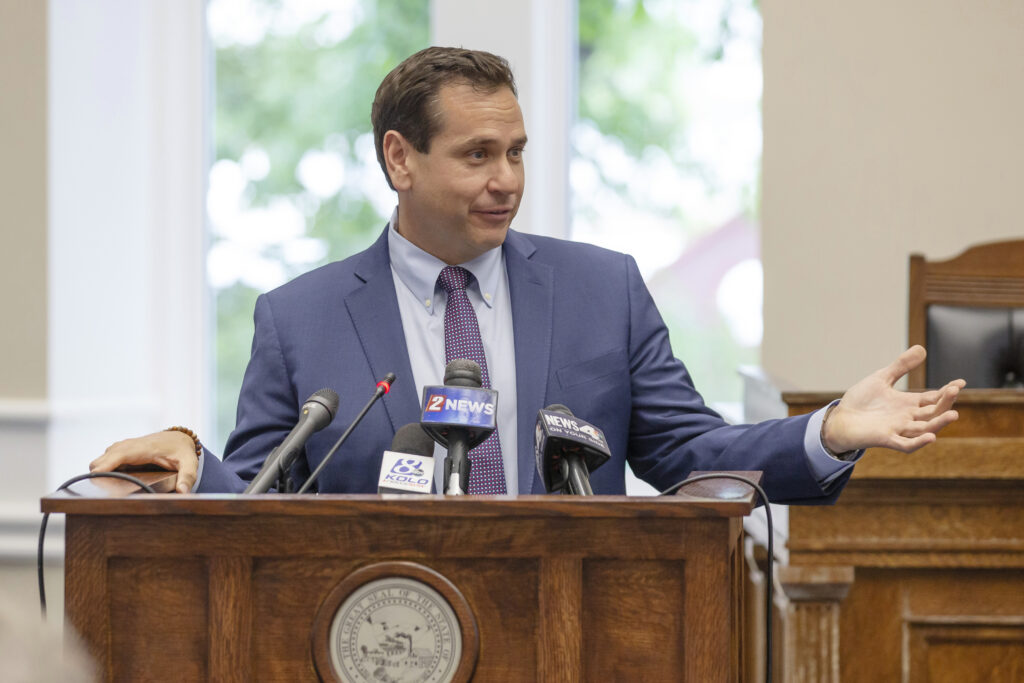
Nevada Secretary of State Francisco Aguilar (D), the state’s top election official and chair of the Democratic Association of Secretaries of State, told Democracy Docket the DOJ’s latest letters are not about election integrity — they are about intimidation.
This week, President Donald Trump’s Department of Justice sent letters to all 50 states and Washington, D.C., warning that election officials could face criminal prosecution over possible noncitizen voting.
The letters, sent by DOJ Civil Rights Division chief Harmeet Dhillon, demand that states explain, within 5 days, how they are complying with federal voter eligibility laws and threaten potential legal consequences if noncitizens remain on voter rolls or receive and cast ballots.
In an interview with Democracy Docket, Aguilar said the DOJ letter was one of several “threats” Nevada has received from the department and argued that the Trump administration is trying to inject chaos into the 2026 midterms after repeatedly losing in court over its separate effort to obtain unredacted statewide voter rolls.
“It’s threats, it’s intimidation, it’s their opportunity to create chaos with the midterm election coming up,” Aguilar said. “This is the administration’s goal.”
Aguilar’s comments reflect a consistent Democratic resistance to Trump DOJ’s election agenda, as secretaries of state push back against federal threats they say could intimidate election workers, chill voter participation and undermine state authority over elections.
Get updates straight to your inbox — for free
Join 350,000 readers who rely on our daily and weekly newsletters for the latest in voting, elections and democracy.
DOJ’s threats put election workers at risk
Aguilar stressed the DOJ threats could have a direct chilling effect on the election workers and local administrators who are primarily tasked with running elections. He warned that federal threats of criminal prosecution could make people think twice about staying in the field.
“You want to ensure election officials are confident to do the job they need to do. Election officials, poll workers are unsung heroes of our democracy,” Aguilar said. “They make sure we have the access we need to have the elections that we have and if they start to feel threatened or intimidated, they’re not going to engage in the process.”
Election workers across the country have faced years of threats, harassment and conspiracy-fueled attacks since the 2020 election. Aguilar said DOJ’s letters add another layer of pressure by suggesting ordinary election administration decisions could carry criminal consequences.
Aguilar also emphasized that elections do not happen on Election Day alone. They require months of preparation, trained staff and experienced local officials who know their voters and communities.
“The next election starts the day after the previous elections. These elections just don’t happen at a moment’s notice. There’s a lot of preparation. There’s a lot of work,” Aguilar said. “When you start to make major threats like this, that makes somebody determine or think about why they would work in an elections office. And that’s not helpful to anybody.”
According to Aguilar, DOJ’s threats risk weakening the very infrastructure needed to administer safe and secure elections.
DOJ’s threats could lead to wrongful removal of eligible voters
Aguilar also pushed back on DOJ’s premise that states need federal intervention to prevent noncitizen voting, saying Nevada and other Democratic-leaning states already have laws and safeguards in place to verify voter eligibility and maintain accurate rolls.
“The fact is that in Nevada, like many other states, it’s illegal for noncitizens to vote. It’s already state law,” Aguilar said. “And again, it’s finding when that opportunity, when somebody does violate state law, you hold them accountable.”
He said Nevada voters must affirm they are eligible to vote, including that they are U.S. citizens, when registering. Voters must also prove their identity, and registrations are sent to county officials for verification.
“Once they file that registration, it goes to the county clerk for verification of that voter and to ensure that voter is eligible,” Aguilar said. “We also do voter roll maintenance to make sure that only eligible voters remain on our voter rolls.”
But Aguilar warned that the Trump administration’s push for federal database checks could introduce new risks, especially if eligible voters are wrongly flagged as potential noncitizens.
“The goal here is not to cut anybody off,” Aguilar said. “The verification systems that the federal government is trying to build or have in place that they want us to use have such a high false positive rate that it’s actually dangerous to the overall fundamental right to vote.”
He said states cannot accept sloppy federal matching systems when the consequence could be stripping eligible voters from the rolls.
“We do not and cannot accept high rates of error,” Aguilar said. “If we are going to check eligibility of voters through a database system, they better make sure that it is completely accurate because when you violate somebody’s fundamental right, that’s a big violation.”
For Aguilar, the dispute is not just technical. It goes to who controls elections — states that know their voters or a federal administration pushing sweeping claims about fraud.
“The constitution is very clear that it’s states who have the responsibility to run their elections,” Aguilar said. “States know their voters. The local county officials know their voters.”
DOJ’s threats are meant to intimate Latino voters
Aguilar stressed the DOJ letters ultimately fit into a broader, conspiracy-fueled effort by Trump and his allies to use baseless claims about widespread noncitizen voting to scare voters — especially Latino voters in battleground states — away from the ballot box.
“What this is, is it’s really hurting the voters,” Aguilar said. “This is an intimidation factor of the administration intimidating Latino voters.”
He pointed specifically to Nevada and Arizona, two presidential battlegrounds with large Latino populations and Latino Democratic secretaries of state, as states where the political stakes are unmistakable.
“Those Latino voters have power in the message that they send when they go to the ballot box,” Aguilar said.
Aguilar drew the line directly to the next presidential election.
“The White House, the road to the White House runs through Nevada. It runs through Arizona,” Aguilar said. “And when you have two Latino secretaries of state in those two states, you better believe we’re going to stand up and push back against this bullshit.”
Aguilar, Nevada’s first Latino secretary of state, said he feels an added responsibility to make clear that Latino voters have every right to participate.
“It’s even more of my obligation to ensure every Latino voter in this state, which it’s 30% of our voter base, knows that they have access to the ballot box and they deserve to be there,” Aguilar said. “No single individual gets to tell them whether or not they have that access.”
He underscored that the Trump administration’s rhetoric can have real consequences if voters believe participation could somehow put them at risk.
“If somebody chooses not to vote because of the bad information this administration is putting out there, we are going to suffer,” Aguilar said. “And that is unfortunate because that person deserves to have a voice no matter who they are, where they live, or how much money they have in their bank account.”
For Aguilar, the fight over DOJ’s letters is also a warning about 2026 secretary of state races and the next presidential election.
“If we do not elect strong secretaries of state in 2026, we’re putting the 2028 presidential election in jeopardy,” Aguilar said. “2026 is about 2028.”