New Hampshire students face disenfranchisement after Supreme Court greenlights ban on their IDs
 Prefer us on Google
to see more of our voting rights news coverage when you search.
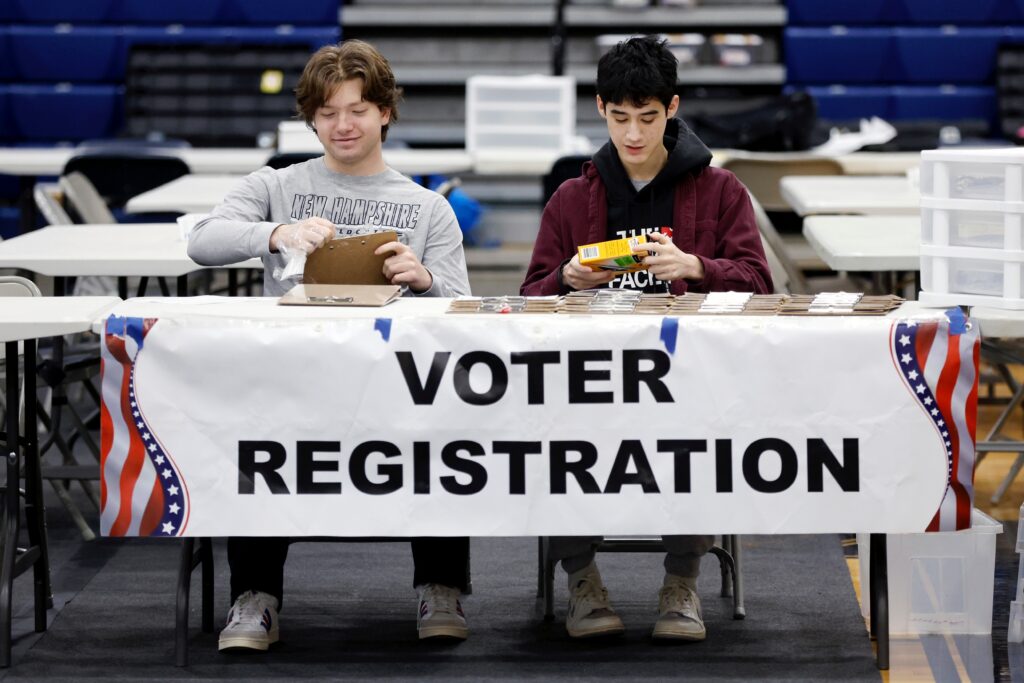
Large numbers of New Hampshire college students could face disenfranchisement after the U.S. Supreme Court granted the state’s request late Thursday to fully block the use of student IDs for midterm voting.
The court’s order could potentially have a major impact on the state’s elections — including its closely watched U.S. Senate race.
The pro-voting group the Coalition for Open Democracy (COD), which sued the state over its student ID ban said the court’s decision “will deprive young voters of their right to vote.”
The ruling, COD added, “potentially leaves young and often first-time voters without government-issued forms of ID to get through DMV appointments, fees or vouchers, and trips to multiple offices before election day.”
New Hampshire is home to 66,000 university students. As of 2017, it was the state with the highest number of students per capita, according to the National Student Clearinghouse Research Center. More recent figures weren’t immediately available.
And college students overwhelmingly vote Democratic — 64% to 25% Republican, according to a Harvard youth poll conducted earlier this month.
In other words: A lot of New Hampshire students might be shut out of voting on Election Day, if they show up to their polling site with only their student ID.
The Supreme Court’s Thursday order was the culmination of a prolonged legal challenge against the state’s student ID ban.
Get updates straight to your inbox — for free
Join 350,000 readers who rely on our daily and weekly newsletters for the latest in voting, elections and democracy.
In April, Gov. Kelly Ayotte (R) signed into law HB 323, which eliminated student IDs as an acceptable form of identification for obtaining a ballot.
New Hampshire Secretary of State David Scanlan (R) then sent a directive to local election officials that went further. It said they could no longer accept student IDs as part of the process of proving their identity, including under the state’s safety-valve provision, which lets voters present other evidence to prove their identity when voting.
COD sued the state in August to block the ban for the Sept. 8 primary election. But U.S. District Judge Joseph Laplante denied the motion for a preliminary injunction, citing the Purcell principle — a legal doctrine stating that courts should not change voting rules too close to an election because it could confuse voters and officials.
Then, on October 2, Laplante ruled that, while the student ID ban could stand, Scanlan had exceeded his authority in issuing guidance to election officials fully banning them from accepting student IDs for voting.
The 1st Circuit later upheld that ruling.
New Hampshire asked the Supreme Court to issue a stay on Laplante’s ruling before Election Day. In response, COD told the Court that “a stay would protect no one.”