‘The sky is the limit’: Blue Texas hands Democrats an opportunity to champion voting rights
 Prefer us on Google
to see more of our voting rights news coverage when you search.
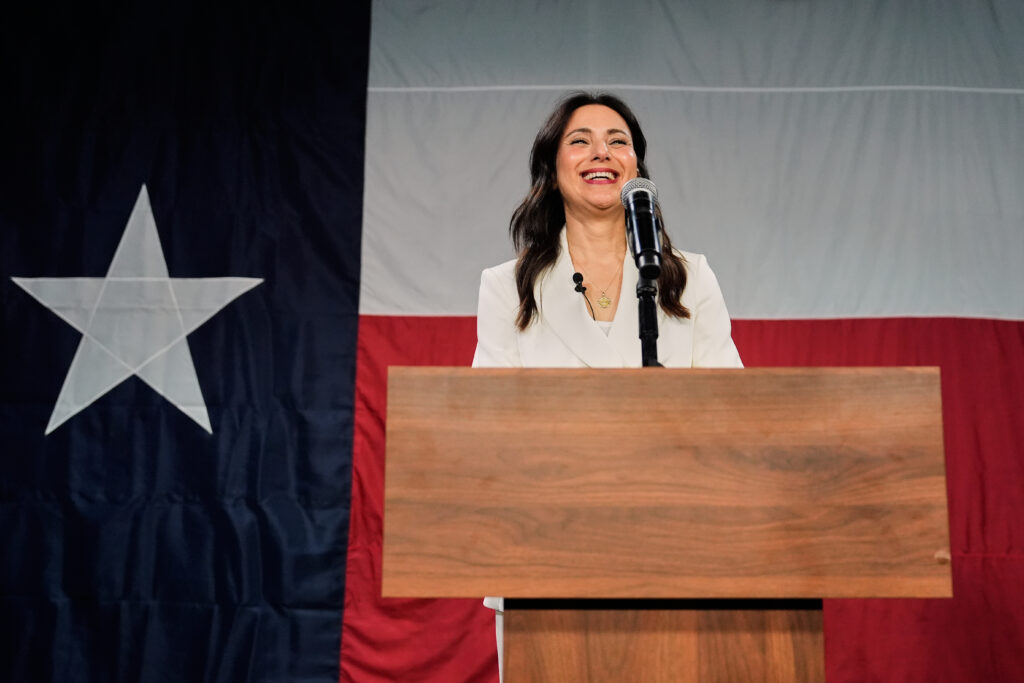
Republicans getting routed all across Texas in the midterms opens the door for Democrats to realistically push pro-voting legislation that had no chance under GOP rule.
Democrats’ ascendance means pro-voting advocates can pivot from fighting off Republican attacks on voting to championing expanded ballot access in the Lone Star State.
“The sky is the limit,” Emily Eby French, policy director at Common Cause Texas, told Democracy Docket. “Especially on some of these more administrative, behind-the-scenes things that we haven’t been able to think about in the past because we’ve been trying to prevent proof-of-citizenship bills.”
In January, Democrats will hold the three most powerful offices in Texas. Gov.-elect Gina Hinojosa will have the authority to appoint a secretary of state, the top election official. State Rep. Senfronia Thompson, who announced last week she has enough support to become House Speaker, will be able to pass legislation backed by a solid Democratic majority. Lt. Gov.-elect Vikki Goodwin, who will lead the state Senate, faces a tougher battle. Republicans will still hold a 19-12 Senate majority, presenting a substantial roadblock to Democrats’ voting agenda.
Get updates straight to your inbox — for free
Join 350,000 readers who rely on our daily and weekly newsletters for the latest in voting, elections and democracy.
For years, Texas Democrats have fought for legislation that would open online voter registration to all eligible voters — only for Republicans to rarely even grant their proposals a hearing. Currently, online voter registration is only available in Texas for voters renewing or updating their driver’s licenses — an option the state begrudgingly created only after it was deemed in violation of the federal “motor voter” law.
State Rep. John Bucy (D-Austin), the top Democrat on the House Elections Committee, said that’s likely to change now.
“It’s something that almost every state has done,” Bucy said. “We’ve had failed Republican leadership that hasn’t gotten this done, but I think we can do it this time. We already saw Republican advocates in the elections space starting to support this idea. I’ve been having meetings with Republican leadership in both chambers over the last few months about this idea. I think the voters spoke loud and clear that they’re ready for some common sense change in the state and online voter registration is right at the forefront of that because people need to have fair, easy access to the ballot box – anyone that’s eligible.”
Texas Democrats will still need to work with Republicans, particularly in the Senate, where the GOP still holds a majority.
“So we’re practical about that,” Bucy said.
Bucy was one of three Democrats to file an online voter registration bill Monday before the legislature resumes in January. He also filed an ambitious, 97-page omnibus voting measure he’s named the VOTER Protection Act.
“It’s something we’ve been working on for multiple sessions,” Bucy said. “But I think at the heart of what it is, it’s going to make it easier for eligible Texans to register and make their voices heard. It will modernize Texas elections and support innovation. And it’s going to repeal 30 years of Republican voter suppression — they have been eating away every session to make it harder for Texans to access the ballot box.”
The bill goes much further than online voter registration, he said. It would add universal mail voting and repeal portions of Texas’ voter suppression laws and establish an independent citizens’ redistricting commission. Texas was central to the redistricting wars after President Donald Trump demanded red states redraw their congressional maps early in a failed attempt to help Republicans maintain control of the U.S. House.
Some of the proposed changes in the VOTER Protection Act would be a much heavier lift, Bucy acknowledged. But he believes big changes could be on the table this year.
“There’s no reason that every Texan shouldn’t be able to make their voice heard through ballot by mail,” Bucy said. “So I think that’s a possibility.”
“I think the people of Texas spoke loud and clear that if we focus on common sense issues that are change for the better, then we’re going to be successful. And we’ve got to go get that done,” Bucy said. “I think Republican senators had to see that message, too. And I think there’s going to be a lot of common ground where we can work.”
Eby French, a longtime voting rights advocate at the Texas Capitol, said she’s been preparing for this moment for years. She has a spreadsheet ready to go with more than 100 ideas for improving voting in Texas — including expanding voter outreach to high school seniors, making it easier to return a mail ballot, adding more types of acceptable voter ID, requiring polling places on college campuses, making more Texans eligible for mail voting and creating a permanent mail voting list so voters won’t need to reapply. She would also like to bring back “mobile voting,” a program that allows smaller counties to move mobile polling places to multiple locations to reach voters in different areas.
“It was kind of strange that it got outlawed, and I think mobile voting is something counties would love to see again and something we can sell to even Senate Republicans,” she said.
She knows exactly which problems she’d like to tackle — because she’s answered Texans’ calls when they phone into the Election Protection Hotline with voting problems.
“I often have to tell voters, ‘I’m so sorry. The way the law is, there’s no way for you to cast a ballot,’” she said.
After this upcoming legislative session, she thinks she’ll be able to give voters good news instead. Even if Senate Republicans prove difficult, Democrats will still be able to make meaningful positive changes.
The Secretary of State’s office has plenty of options to improve voting without Democrats passing any legislation, such as growing its high school voter registration program, centralizing information for voters in a more user-friendly way, making voter roll administration more transparent, improving cooperation with counties to solve problems, and sharing more data with the public to help identify and solve voting issues, Eby French said.
She agreed that online voter registration is now just the start of what the Texas legislature can pass in 2027.
“I think that, either way, we would have been able to pass online voter registration this session,” Eby French said. “Now, it’s the floor.”