Missouri Republicans ask Supreme Court to restore gerrymander for midterms
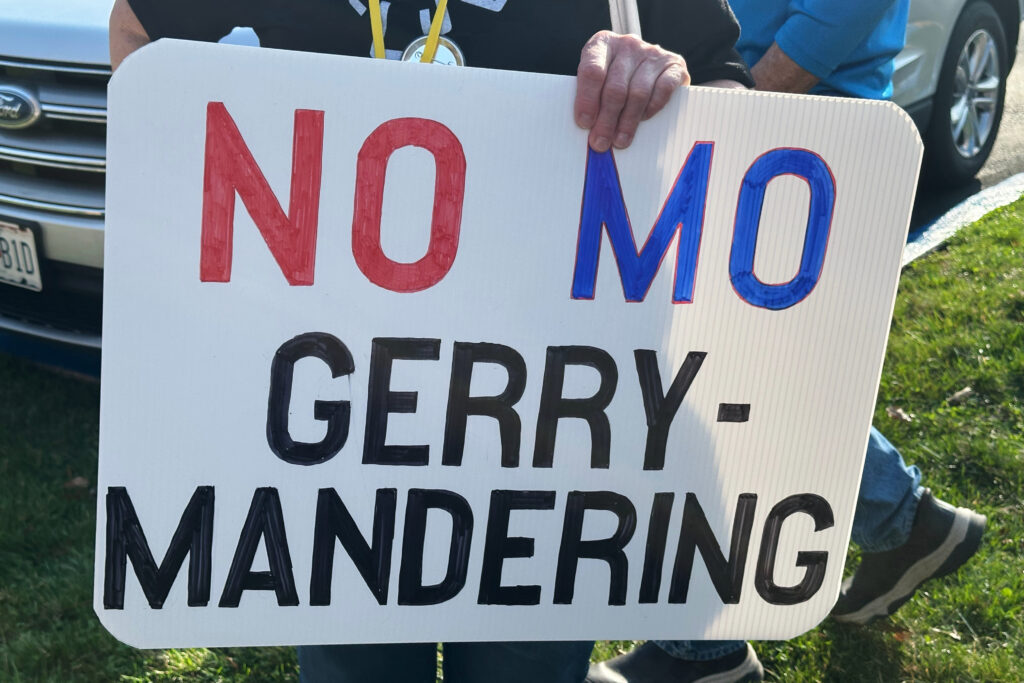
Missouri Republicans asked the U.S. Supreme Court (SCOTUS) Friday night to deny voters a voice and restore the GOP’s congressional gerrymander for the midterms.
The request comes after the Missouri Supreme Court on Thursday blocked the gerrymander from going into effect, ruling that voters first have the right to weigh in.
Missouri Solicitor General Louis J. Capozzi argued to SCOTUS that changing the state’s congressional map – in this case, reverting to the map that’s been used since 2022 – close to an election violates the Purcell principle, a legal doctrine meant to prevent confusion among voters.
Get updates straight to your inbox — for free
Join 350,000 readers who rely on our daily and weekly newsletters for the latest in voting, elections and democracy.
The state also argued that the Missouri Supreme Court’s order is unconstitutional because the Elections Clause of the U.S. Constitution empowers state legislatures, not voters, to make election changes.
Secretary of State Denny Hoskins (R) waited months before rejecting a ballot measure aimed at letting voters decide if they wanted to accept the gerrymandered map.
Hoskins claimed that congressional maps aren’t subject to the state’s “citizen veto” provision, which gives voters the chance to approve legislation before it goes into effect, as long as enough signatures are gathered. Gerrymander opponents had collected more than 300,000 signatures in support of the referendum.
On Thursday, the Missouri Supreme Court ruled unanimously against Hoskins, allowing the ballot measure to go before voters and ruling that the new map can’t go into effect until voters approve it.
Missouri Republicans drew a new map last fall that diluted Black voting strength in Kansas City and put the state’s lone Democratic seat, and African-American congressional representative, Rep. Emanuel Cleaver (D-Mo.), in peril. It came in response to President Donald Trump’s call for red states to redraw their congressional maps to give Republicans an advantage in this year’s midterms.
In a separate lawsuit filed Friday in a federal district court, Missouri Republicans also sued to revive the state’s gerrymandered map for November.
Capozzi’s brief to the Supreme Court relies heavily on Purcell — invoking the 2006 case 18 times.
“This Court’s Purcell precedents demonstrate that Missouri’s harms are overwhelming and warrant equitable relief,” Capozzi wrote. “As this Court has recognized many times, ‘[w]hen an election is close at hand, the rules of the road must be clear and settled.’ And this Court has recognized that changing a federal congressional map is one of the most disruptive changes a court can make.”
But Capozzi acknowledged that Purcell has generally been used to overturn federal court rulings when close to an election — not state ones.
“Admittedly, this Court has not addressed whether the Purcell principle can ever independently justify a state court’s last-minute alteration to federal election rules,” he wrote. “However, the primary rationale underlying Purcell v. Gonalez (sic) — preventing chaos in a federal election — squarely fits this case.”
Earlier this year, SCOTUS was unwilling to intervene in a similar redistricting case in Virginia. There, the state Supreme Court overturned a referendum in which voters approved the state’s Democratic-led congressional redistricting.
Supreme Court Justice Brett Kavanaugh has given the organization behind the ballot petition, People Not Politicians, until Monday noon, Labor Day, to respond to Capozzi’s emergency brief.