Minnesota Supreme Court backs city’s conspiracy-fueled rejection of electronic voter rosters
 Prefer us on Google
to see more of our voting rights news coverage when you search.
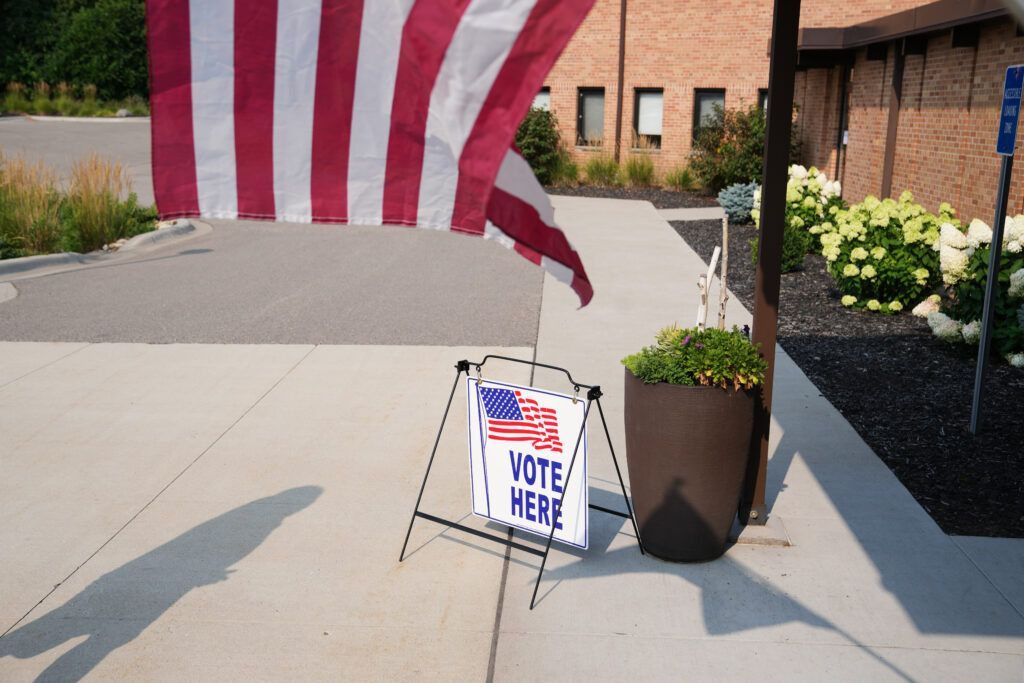
Early voting in one Minnesota city could be more challenging this year. Oak Grove, a town of over 9,000 people, will use pen and paper to manually check in all its voters.
It’s one of several recent moves by Minnesota Republicans that could make early voting harder in this year’s elections.
The Minnesota State Supreme Court ruled Friday in favor of Oak Grove’s request to locally overhaul part of Minnesota’s election system and use paper poll books instead of the electronic ones most poll sites across the state use. The city now has 32 days before early voting begins to prepare for the new system to track voter data that the League of Women Voters has called “uniquely vulnerable to risks.”
The decision follows a years-long “election integrity” campaign to enact measures, including paper rosters, that are fueled by baseless fraud claims and align with national conservative rhetoric that electronic voting systems are rigged.
Despite skepticism from some justices in oral argument, the court decided that Minnesota state statute is not clear enough to explicitly limit the city from deciding to use paper rosters, greenlighting its use for the 2026 general election.
Get updates straight to your inbox — for free
Join 350,000 readers who rely on our daily and weekly newsletters for the latest in voting, elections and democracy.
Oak Grove attorney Nicholas Nelson argued the city has a “central, core use” for rosters even if it does not officially administer elections. Chief Justice Natalie Hudson questioned this “narrow use of the word use,” pointing to countywide authority over elections.
“What is your response to respondents’ position that county auditors are the ones who are actually administering elections?” Hudson asked Nelson on Sept 8. “If ‘using’ is the word we’re using, aren’t county auditors using the rosters more than city officials?”
But the court walked back this doubt in its order. It said the law does not clearly prevent cities from choosing which type of roster to use, noting that lawmakers created a specific exception for school districts in a different election-related circumstance, but did not create one for cities.
In other words, because the law does not explicitly prohibit cities from making this decision, the court refused to step in to block the city’s decision to use only paper rosters.
“Respondents’ position that the Legislature implicitly intended to so limit municipalities is contrary to the Legislature’s clear understanding of how to state that limitation, as it expressly did for school districts,” the court wrote.
While addressed in oral argument, the court did not rule on the policy arguments brought by the League of Women Voters, which submitted an amicus brief to argue against paper rosters as a potential voting access risk.
The voting rights organization warned chaos would ensue for voters if the city were to adopt paper rosters — which it now will — because the system can reduce efficiency, increase errors, increase voter wait time and ultimately decrease voter participation.
“Under a paper-roster system, voters typically wait in lines organized by last name while election judges manually search lengthy, unwieldy paper rosters to locate each voter’s registration record,” the brief reads. “League members who have served as election judges in Anoka County before the transition to electronic voter rosters experienced these delays firsthand.”
Anoka County Attorney Jason Stover warned a last-minute switch to paper rosters would have a profound impact on mail voting, pointing to the around 85,000 absentee ballots he said came into the county for the 2024 general election.
Friday’s decision marks the latest in a string of decisions from the state Supreme Court in favor of policies shaped by election conspiracists and Republicans that could restrict voting access in Minnesota.
The Upper Midwest Law Center, which represented the right-wing Minnesota Voters Alliance in Oak Grove’s case, also won a suit in August that forced Minneapolis to employ bipartisan election judges for early voting. The city said in the past, it has struggled to find enough Republican election judges for just the 24 hours of Election Day.
These two decisions are significant steps in advancing Republican control over early voting in a state with one of the highest early voting rates in the nation. The court also ruled in August to uphold Minnesota’s mail voting witness signature requirement, which voting rights groups maintain can make voting harder.
Early voting in Minnesota’s primary election reached a record high this year, with 250,000 votes cast in August. Absentee balloting for the general election will begin this Friday, and in-person early voting will start Friday, Oct. 16.
Correction: This story has been corrected to reflect that the pen-and-paper check-in rule only applies to the city of Oak Grove.