Minnesota Supreme Court upholds witness signatures for absentee ballots, which can make voting harder
 Prefer us on Google
to see more of our voting rights news coverage when you search.
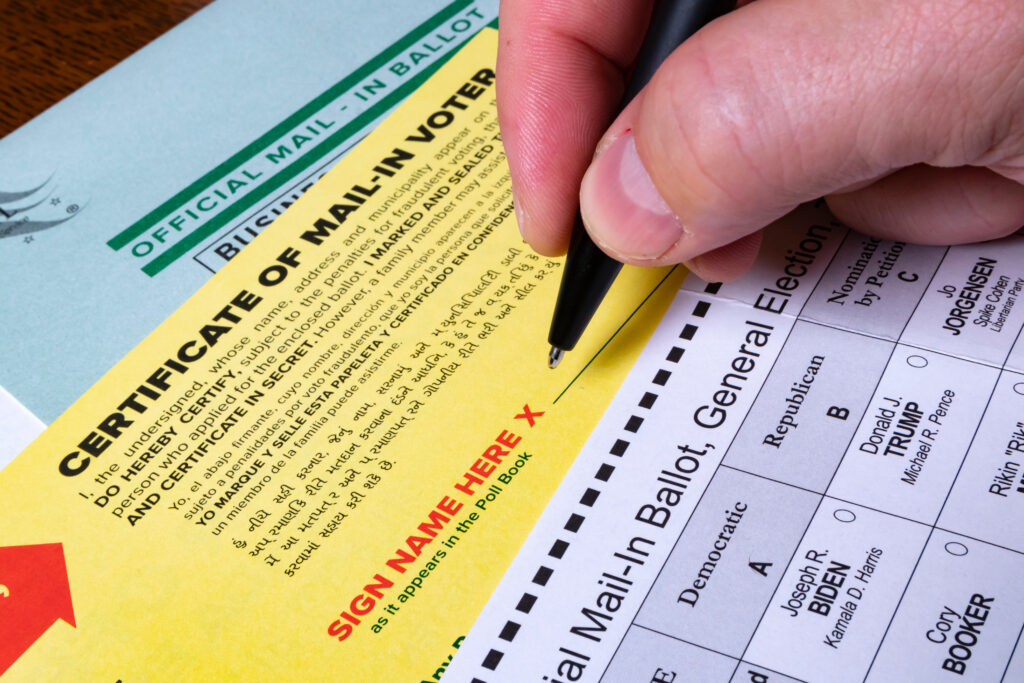
Minnesota’s Supreme Court upheld a state requirement that mail voters have a witness sign their ballot, an additional step pro-voting groups argued could disenfranchise some voters.
The decision means Minnesota remains one of only eight states with the restrictive condition, according to data from the U.S. Vote Foundation. Nearby Wisconsin upheld a similar law in 2024. Missing witness signatures were one of the reasons the state rejected around 6,000 ballots in the 2022 election.
The Minnesota Supreme Court Wednesday agreed with a lower court that the witness signature requirement does not violate the Voting Rights Act (VRA) or the Civil Rights Act of 1964.
Get updates straight to your inbox — for free
Join 350,000 readers who rely on our daily and weekly newsletters for the latest in voting, elections and democracy.
The Minnesota Alliance for Retired Americans Educational Fund and individual voters* had argued that the witness signature requirement violates the Voting Rights Act, which forbids restricting anyone’s right to vote based on a variety of tests such as forcing a voter to “prove his qualification by the voucher of registered voters or members of any other class.”
Writing for the Supreme Court, Chief Justice Natalie Hudson said the Voting Rights Act’s voucher prohibition was intended to prevent situations where one voter might be required to personally attest for someone else. Witness signatures do not violate that provision, she wrote.
“This means that ‘voucher,’ as it is used in the Voting Rights Act, does not prohibit another person verifying some facet of a voter’s registration, as opposed to another person providing a personal assurance or guarantee,” Hudson wrote.
The plaintiffs had argued the requirement would risk disenfranchising voters because of paperwork errors from the signature requirement. Minnesota, like most states, already has a process in place to make sure absentee voters are eligible without a third-party signature, the plaintiffs noted.
“Indeed, that is precisely what Minnesota does: it double and triple-checks an absentee voter’s eligibility multiple times after they are already registered,” plaintiffs wrote. “Allowing states to disenfranchise voters based on paperwork errors, so long as the voter is already registered, would eviscerate the purpose of the materiality provision.”
*Plaintiffs Minnesota Alliance for Retired Americans Educational Fund and individual voters in this case are represented by Elias Law Group (ELG). ELG firm chair Marc Elias is the founder of Democracy Docket.