Minneapolis must employ bipartisan election judges in time for midterms, state supreme court rules
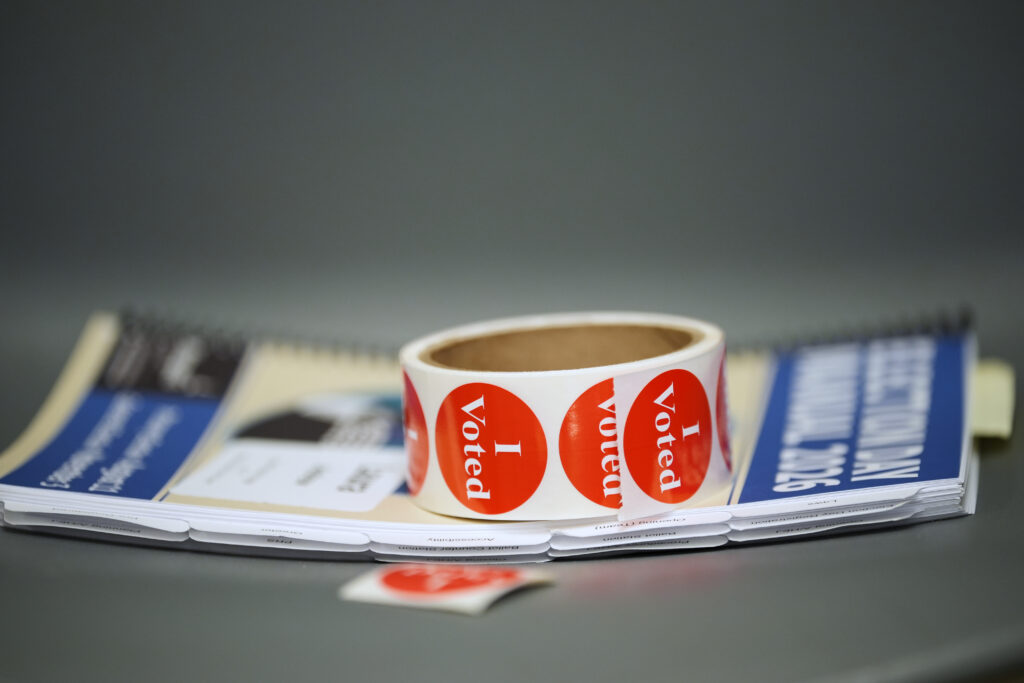
Minneapolis must find hundreds of Republican election judges before early voting for the midterms opens in October or possibly close some early polling sites altogether following a state Supreme Court decision.
In a Friday decision, the court sided with the conservative Minnesota Voters Alliance, which demanded Minneapolis appoint temporary election judges of both parties during the 18 days of early voting. City and state officials had argued that finding the necessary number of Republicans to staff voting has been difficult historically.
Bipartisan election judges are paid staffers who help with election duties during the voting process. Minnesota requires election judges for the general voting period, but previously did not require them for early voting.
Get updates straight to your inbox — for free
Join 350,000 readers who rely on our daily and weekly newsletters for the latest in voting, elections and democracy.
In the past, early voting officials — including county auditors, city clerks and election judges — could help voters with issues such as same-day registration and ballot-marking assistance at the city’s 137 early voting locations.
Friday’s decision established that only election judges may assist in these duties and requires Minneapolis to hire at least two at each early voting polling place. It’s a task the city has said it’s not equipped for and could disproportionately affect voters who cast ballots early, a popular method in the state with one of the highest voter turnout rates.
City election officials had argued Minnesota legislators had not intended for its 2023 early voting rules to restrict voting, even if the statute’s language could have different interpretations. They had urged the court to err on the side of caution and not make restrictive changes.
However, the court ruled the law’s text was not ambiguous in its requirements.
“We conclude the plain, unambiguous language of section 203B.30 requires election judges during early voting to resolve challenges to a voter’s status and to administer the vouching process for voter registration,” the court wrote.
While a conservative group pushed this change, Minneapolis noted it’s historically had trouble finding Republican election staff. City officials noted the endeavor has been impossible just for the 24 hours of Election Day.
The city said it would take an “unprecedented surge in interest” for Republicans to fulfill the election judge requirement.
“Never in the current Election Director’s memory has Minneapolis Elections found enough registered Republican election judges from those lists to staff all its precincts,” the city’s response brief reads.
The Secretary of State, in his response, also questioned what would come next if Minneapolis could not reach the now-required election judge quota for every jurisdiction.
“And smaller jurisdictions who would also be impacted by the Court’s decision would certainly struggle to implement early voting if the Court adopted the Alliance’s position,” Secretary of State Steve Simon wrote.
The Minnesota Voters Alliance was represented by the Upper Midwest Law Center, a right-wing legal group involved in various election litigation across the state that could restrict voting access. It’s the same group that sued the state to nix electronic poll books because of a conspiracy that the voter check-in method breeds fraud.
Early voting in Minnesota begins Friday, Oct. 16.