Minnesota justice warns electronic poll book conspiracy theory could threaten voters’ ability to cast ballots
 Prefer us on Google
to see more of our voting rights news coverage when you search.
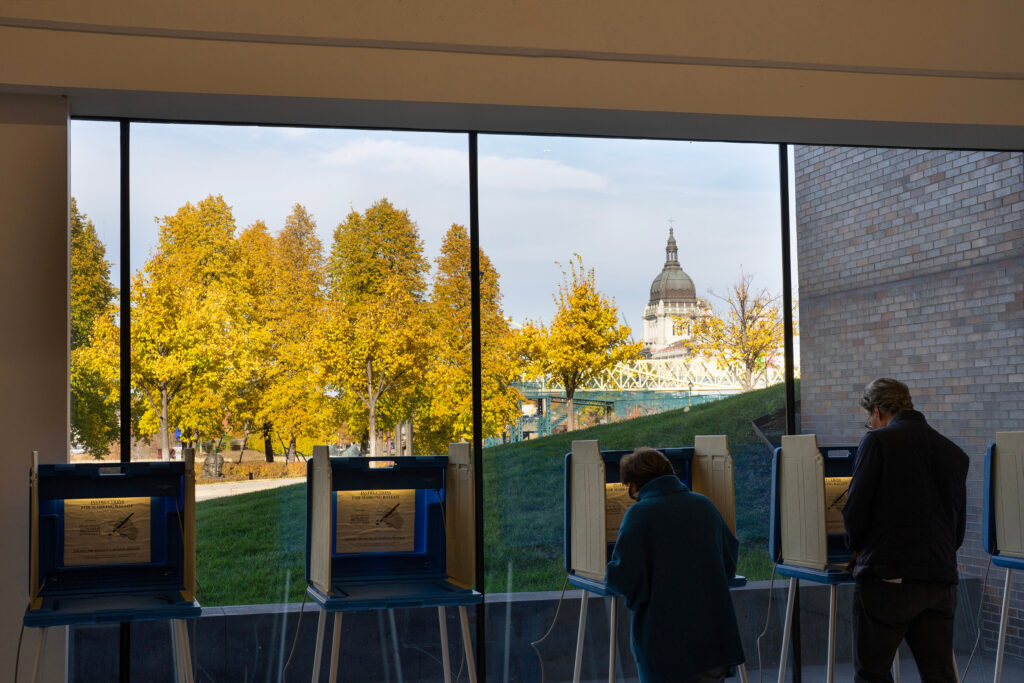
A Minnesota Supreme Court justice raised concerns during oral argument Tuesday that one city’s request to use paper poll books rather than electronic records could disenfranchise thousands of voters.
The City of Oak Grove wants to overhaul part of the election system less than two months before balloting, in part because of a conspiracy theory about the iPads poll workers use to verify voter records. Oak Grove wants to defy state and county election administrators and return to paper records instead.
At least one of the justices was concerned that switching to paper ballots would actually disenfranchise voters rather than make the system more secure.
“Do you agree that this is a legitimate concern, especially in light of, for example, the American Bar Association’s note that it’s axiomatic that voter participation in our democratic processes is one of the keys to the health of our democracy?” Associate Justice Sarah E. Hennesy asked Nicholas Nelson, the attorney from the right-wing Upper Midwest Legal Group who is representing Oak Grove.
Get updates straight to your inbox — for free
Join 350,000 readers who rely on our daily and weekly newsletters for the latest in voting, elections and democracy.
Nelson agreed, but argued disenfranchisement would be more likely to result from the routine use of electronic rosters.
“I actually think that probably the maximal disruption to a voting day experience that you could imagine likely would come from electronic rosters that would crash,” Nelson said. “That doesn’t happen usually, but it could.”
Oak Grove argued Anoka County and Minnesota are distorting state law by preventing the city from using paper poll books, or paper rosters, which help check eligible voters in before they vote. The change was promoted by a conspiracy theory driven by the Anoka County Election Integrity Team (ACEIT), claiming the iPads poll workers use are nefarious “black boxes” that collect private data and have the potential to crash at any moment.
Only three counties in Minnesota use paper poll books, and Anoka County has used electronic poll books since 2018, per its signed contract submitted as evidence to the court.
Hennesy cited the example of Shasta County, California’s hotbed for election conspiracy, which attempted to revert to paper rosters in 2024, ultimately resulting in longer wait times and lower voter participation.
Hennesy pointed to the League of Women Voters’ amicus brief that illustrates these problems, signaling her concern over the city’s ability to successfully enact a similar measure.
Anoka County Chief Communications Officer Erik Thorson in August told Democracy Docket that he is not aware of “any instances or issues (security-related or otherwise) using electronic pollbooks.”
Jason Stover, the attorney representing the county at oral arguments, said a last-minute switch to paper poll books would especially impact mail voting.
“If you don’t have an electronic roster, county staff then has to manually mark on the paper roster all 49,000 of those absentee ballots that have come in before the rosters ever go to the polling place,” Stover said.
Hennesy later asked Minnesota Assistant Attorney General Allen Cook Barr whether it’s cities or counties who pay for the rosters.
“Statute requires county auditors to be the ones to provide rosters so in practice, it’s my understanding that counties are generally the ones paying for them,” Barr responded.
Chief Justice Natalie Hudson said the court will rule “shortly” due to the timeliness of the case.