Trump praised the speed of Brazil’s elections. They’re actually his nightmare
 Prefer us on Google
to see more of our voting rights news coverage when you search.
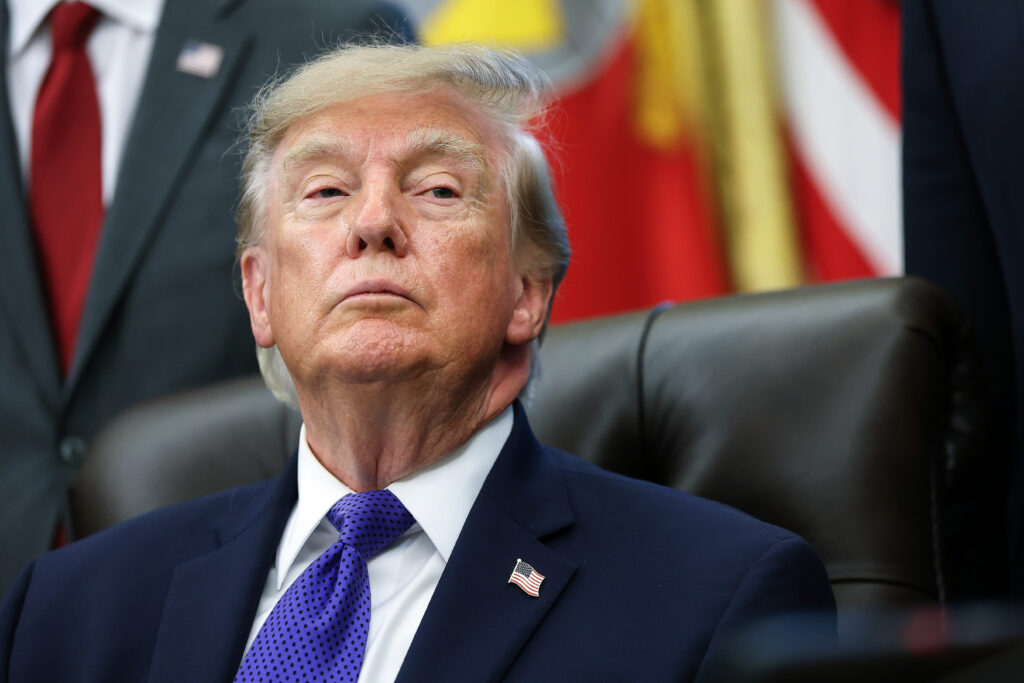
President Donald Trump wants to know why Democratic-led states can’t run elections like the Brazilians.
In a Truth Social post late Sunday, he said he was impressed by the speed of the country’s election results. There’s just one problem: Brazil uses electronic voting machines and no paper ballots.
If America conducted elections that way, Trump would be calling the results fraudulent.
In fact, he’s already falsely accused voting machines used in U.S. elections of changing votes, despite almost all American votes being cast on paper.
Get updates straight to your inbox — for free
Join 350,000 readers who rely on our daily and weekly newsletters for the latest in voting, elections and democracy.
“125 Million People voted today in the first round of Brazil’s Presidential Election. The results came out shortly after the vote closed, on the SAME DAY!” Trump wrote. “In Detroit, Philadelphia, California, and numerous other U.S. Cities and States, the results, with much smaller numbers, will often take weeks to Rig, I mean, calculate. Voting in America is CORRUPT!!!”
But Brazil is actually more Trump’s election nightmare than dream.
Since 2000, the country has conducted elections entirely through electronic voting machines without paper ballots. It’s currently the only country in the world to hold elections this way.
On Election Day, Brazilians cast their votes on standalone electronic machines that are not connected to the internet. Because everything is electronic, the system typically reports results within hours.
Contrast that with the United States, where 98% of voters either fill out a paper ballot or make their choices using a machine that then prints out a paper record.
In fact, the reason why some U.S. jurisdictions take so long to count ballots is usually a mixture of pro-voter policies and protections meant to ensure the results are accurate.
For example, California — the poster child for late results — sends mail ballots to all registered voters and counts all ballots that were mailed on time, even if they arrive significantly later. Election officials must also verify each ballot before it is counted. That all takes time.
Of course, there’s nothing inherently fraudulent about using electronic voting machines like Brazil does — though there are significant risks to not having a paper trail. But Trump and other Republicans have repeatedly claimed the United States’ more limited and broadly paper-based use of machines leaves our elections open to fraud and foreign interference.
In a primetime speech in July, Trump suggested that electronic voting systems had previously been compromised.
Opposition to voting machines also remains a central focus of anti-voting activists, both inside and outside of government.
Last week, Georgia’s Republican-controlled election board wrote a letter to the Department of Justice, inviting it to declare the state’s voting system unlawful before the midterms and prohibit its use of voting machines.
Trump’s Brazil comments are also yet another example of his hypocrisy as he attempts to cast doubt on American elections before this year’s midterms.
Despite claiming that mail voting puts elections at risk, Trump is a serial mail voter. He also appeared to change his mind about mail voting this weekend, encouraging Republicans to vote using “every appropriate tool.”
“Whether you vote early, absentee, by mail, or in-person, we must ‘swamp’ the Radical Left Dumocrats with massive turnout!” Trump wrote in another Truth Social post.
This story has been updated with additional information.