Florida lawmakers set to take up DeSantis’ GOP gerrymander
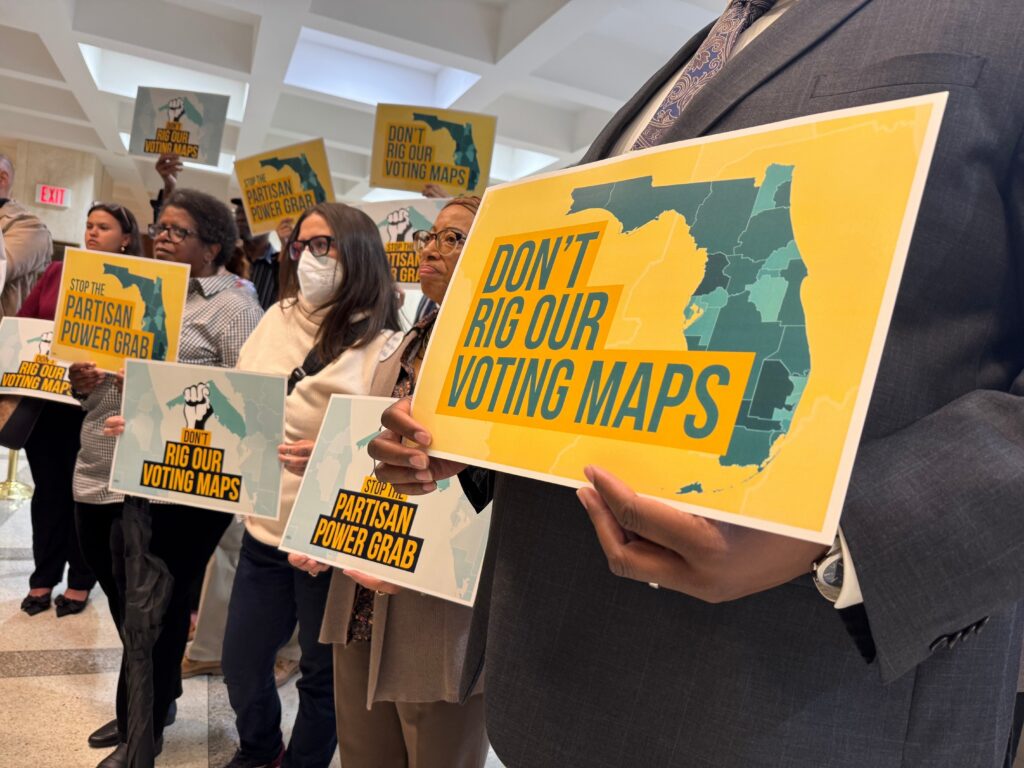
Florida lawmakers will meet Tuesday for a four-day special session called by Gov. Ron DeSantis (R) to approve a more GOP-friendly congressional map for the 2026 midterm elections.
DeSantis has pushed for Florida to redistrict despite growing concern from members of his own party after Democrats in Virginia won support for their own redistricting plan during a special election last week.
With the 2026 midterms well underway, Florida will likely be the final state to redraw its map this cycle, nearly one year after President Donald Trump ignited an unprecedented, nationwide arms race of mid-decade redistricting by insisting Republicans were “entitled” to five more congressional seats in Texas.
DeSantis released the proposed map Monday, giving the public less than a day to review the changes before lawmakers take up the measure, a move that follows the same playbook used by other GOP-controlled states that have redistricted at Trump’s demand. The Florida governor reportedly shared the plan with Fox News before showing it to the legislature.
Get updates straight to your inbox — for free
Join 350,000 readers who rely on our daily and weekly newsletters for the latest in voting, elections and democracy.
John Bisognano, president of the National Democratic Redistricting Committee, blasted DeSantis for the lack of transparency.
“Well, its 24 hours out from a Senate vote in Florida and the legislators nor the general public have seen any mapping files yet… BUT Ron DeSantis gave a screenshot of his map to Fox News,” Bisognano said in a social media post.
The map is designed to help Republicans flip up to four seats currently held by Democrats. But the reality is, Florida Democrats have been the ones flipping seats lately — the state House district that includes Trump’s Mar-a-Lago resort elected a Democrat last month, and in December a Democrat won the Miami mayor’s race for the first time in almost 30 years.
Florida’s congressional delegation is currently made up of 20 Republicans and eight Democrats. Trump won 56% of the statewide vote in the 2024 presidential election.
Rep. Darren Soto (D-Fl.), whose district is one of the GOP’s four targets, said on social media shortly after the map was released that the plan could spread Republican support too thin and backfire on them, an overly ambitious mistake known in the redistricting world as a “dummymander.”
“Gerrymander or Dummymander?” Soto said. “This map is an absolutely unlawful violation of the Florida Constitution. The Legislature should reject it. The courts should strike it down. That being said, there are 12+ seats that Democrats could still win under this map in this cycle.”
House Minority Leader Hakeem Jeffries (D-N.Y.) reiterated his previous warning to DeSantis, vowing to fight a new gerrymander in court, as well as at the ballot box.
“The DeSantis Dummymander blatantly violates Florida’s Fair Districts Amendment banning partisan gerrymandering,” Jeffries said in a social media post on Monday. “It also violates the 14th Amendment to the U.S. Constitution by nakedly targeting communities of color. See you in Court.”
In theory, Jeffries isn’t wrong. Even if the map can deliver four more seats for Republicans, the proposal likely violates a state ban on partisan and racial gerrymandering that Florida voters passed in 2010.
In practice, it’s a different matter. Florida Supreme Court justices — most of whom were appointed by DeSantis — have indicated that they don’t consider the prohibition to be a barrier to gerrymandering, as DeSantis himself boasted earlier this month.
“When I got elected, we had probably the most liberal supreme court in the country,” DeSantis told reporters while signing the state’s latest voter suppression bill into law. “Now I’ve put six [justices] on and we have the most conservative supreme court in the country.”
In a memo circulated Monday, Florida Senate President Ben Albritton (R) instructed members of the Senate to be prepared for a floor debate on the measure Wednesday. He also forwarded a letter from the governor’s office explaining the purported reasons for the map redraw. It argued that Florida’s representation has been “shortchanged” by a census undercount and “distorted by considerations of race.” Notably, since no new census data is available, the new map will not remedy the governor’s complaint.
But the majority of the governor’s office’s argument related to race, as DeSantis made the case that redistricting would comply with the Supreme Court’s ruling in Callais v. Louisiana — which has not yet been issued. The ruling is expected to badly weaken the racial representation protections of the landmark Voting Rights Act, but any conclusions about it at this point are merely speculative.
DeSantis delayed the redistricting special session in hopes of giving the court more time to issue its ruling, but so far no guidance has come.