New filing: DOJ said it wouldn’t give state voter data to DHS — then admitted it would
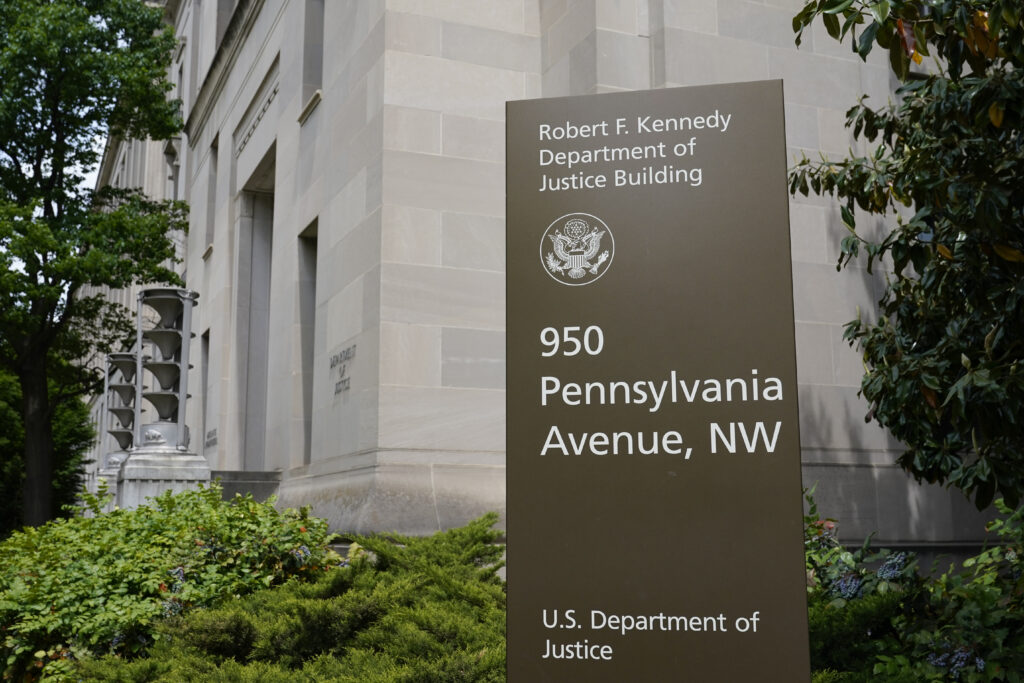
It would be difficult enough for the Department of Justice (DOJ) to simultaneously litigate 30 lawsuits demanding states turn over their unredacted voter registration records, but the government’s attorneys nonetheless seem to insist on making things harder still by repeatedly contradicting themselves.
Minnesota filed a notice to supplement the record Tuesday in the lawsuit brought by DOJ seeking its voter rolls. The state noted that recent DOJ statements in Rhode Island and President Donald Trump’s new executive order completely contradict what the government previously told the federal court.*
The DOJ has sought unfettered access to almost every state’s voter registration rolls. While 17 GOP-led states have complied — possibly violating state and federal privacy laws — the remainder have so far refused, leading to ongoing litigation against 29 states and Washington D.C.
During a March 3 motion hearing in Minneapolis, DOJ attorneys were repeatedly asked whether the information in the sought-after voter files would be used for immigration enforcement.
“DOJ’s counsel assured the Court that, ‘to [his] knowledge,’ it would not,” the Minnesota defendants wrote in their new filing. “But at a March 26 hearing in DOJ’s lawsuit seeking Rhode Island’s voter list, when asked whether DOJ could take the voter list and send it to the U.S. Department of Homeland Security (“DHS”) to check if any of the people on it were not citizens, DOJ’s counsel confirmed that DOJ will in fact provide the list to DHS.”
In Rhode Island, the DOJ’s acting Voting Section chief Eric Neff admitted that state registration data would be shared with DHS to find noncitizens — the same day a different DOJ attorney told a judge in Maine the opposite, as Democracy Docket previously reported. The new Minnesota filing also highlights other reports that DOJ and DHS are working to finalize a data-sharing agreement.
Get updates straight to your inbox — for free
Join 350,000 readers who rely on our daily and weekly newsletters for the latest in voting, elections and democracy.
Trump’s new executive order further belies the DOJ’s earlier courtroom claims about the federal government’s aims for state voter rolls, the Minnesota filing notes. “At the March 3 hearing and in its briefing, DOJ repeatedly denied that it intends to create a ‘national database’ or a national voter list,” the defendants wrote.
But, as Democracy Docket reported last week, that’s precisely what the new executive order does.
“The Executive Order directs the Secretary of Homeland Security to compile what it calls ‘State Citizenship Lists’ of ‘confirmed’ U.S. citizens who are eligible voters in each state. It further directs the U.S. Postal Service not to transmit mail ballots from any person who is not on a state-specific list to be developed,” the defendants wrote. “These provisions—which purport to require the creation of lists of supposedly eligible voters in every state—cast serious doubt on DOJ’s representations that it does not intend to create a national database or a national voter list.”
*Intervenor-defendants in this case are represented by the Elias Law Group (ELG). ELG Chair Marc Elias is the founder of Democracy Docket.