With latest delay, Missouri court lets GOP run out clock on redistricting fight
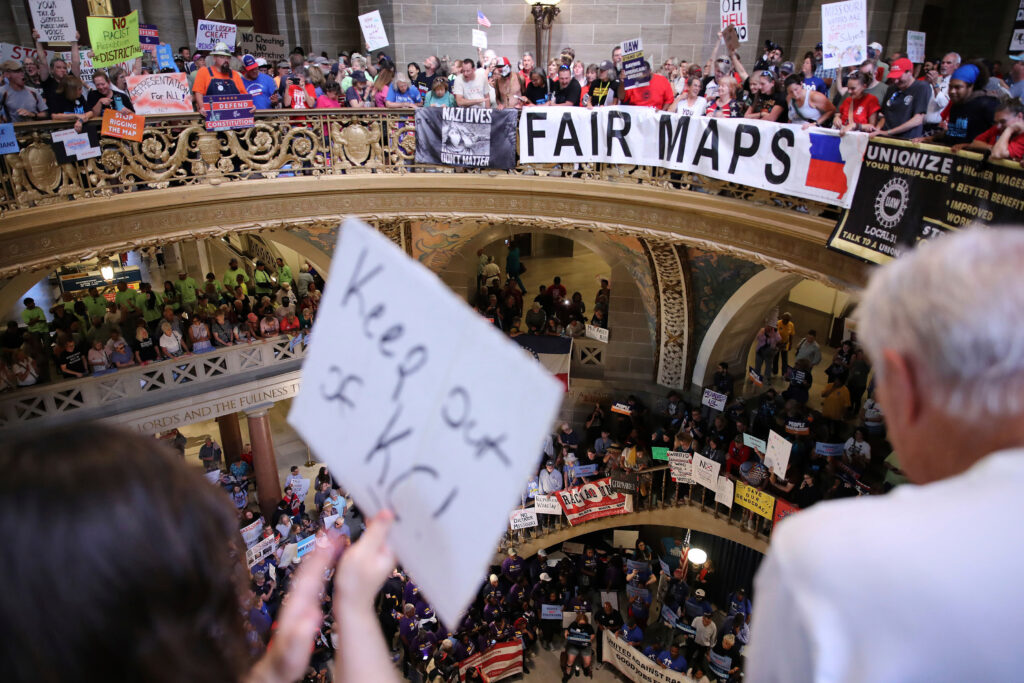
A Missouri state judge has handed Republicans yet another delay in a months-long battle challenging a partisan gerrymander that the GOP passed last year. The postponement in this case increases the likelihood that the GOP will defeat opponents of the new map by simply running out the clock.
On Wednesday, Missouri Circuit Court Judge Daniel Green delayed proceedings by more than a full month to July 15 — leaving just three weeks before the state will hold its primary election on Aug. 4. His decision comes as county clerks say they urgently need a straight answer on which map is in effect for the upcoming election — not another ambiguous signal from the courts.
Get updates straight to your inbox — for free
Join 350,000 readers who rely on our daily and weekly newsletters for the latest in voting, elections and democracy.
Since Missouri Republicans passed the gerrymander last year, state leaders have fought to prevent opponents from putting it to a statewide referendum vote. Most recently, that has meant attempting to slow-walk the certification of petition signatures in support of the referendum until it’s too late.
The most recent delay likely signals the end of the pitched battle to stop the map from being used in the 2026 midterms.
Last year, Missouri Republicans heeded President Donald Trump’s call for GOP-controlled states to redistrict mid-decade and passed a congressional gerrymander designed to dismantle Kansas City’s 5th District, one of two seats held by Missouri Democrats.
Since then, voters have fought tooth and nail to pause the map until they have the opportunity to put it to a statewide referendum vote. But Republican state officials have remained hellbent on thwarting them by dragging out the referendum certification process, even as local election officials say they need final guidance on which map is in effect.
Missouri Secretary of State Denny Hoskins, an elected Republican, has until the statutory deadline of Aug. 4 to certify or reject the referendum effort — the same day as the primary election. Hoskins has said he won’t complete the certification process until the deadline, even though election officials have already verified enough signatures to qualify the referendum for the ballot.
For eight months, Hoskins and the Missouri GOP have forced referendum organizers to navigate a gauntlet of administrative hurdles and legal battles as time runs out until the primary election.
Hoskins initially rejected the referendum petition, then allowed it to move forward while claiming that one-third of the signatures were invalid. Missouri Republicans then challenged the referendum in court as unconstitutional, spent $2.9 million to stop signature gatherers and launched an investigation into a firm working with the organizers. They also wrote a misleading summary of the referendum to appear on the ballot, which Hoskins’ office later admitted was likely to prejudice voters against the measure. Most significantly, Hoskins broke with Missouri tradition and, once the petition signatures were turned in, refused to pause the map until the referendum vote could be held.
Opponents of the gerrymander filed a lawsuit last month asking the court to stop state officials from using more delay tactics to put the new gerrymander in place for this year’s midterms.
In the complaint, People Not Politicians, the group organizing the referendum effort, argued that, if state officials bully local officials into running elections using a map that is later conclusively suspended, it will result in an “invalid election.”
Local election officials have told the courts they need a final answer as soon as possible on which map is in place for the 2026 elections. Among them was Boone County Clerk Brianna Lennon, who filed an amicus brief with the Missouri Supreme Court in April.
“Allowing the August primary to be conducted using districts that are likely to be stayed upon the referendum’s certification — which could occur a matter of weeks before the August primary — will result in chaos, confusion, and unnecessary expense,” she wrote.
Courts have been no more willing than GOP officials to provide a final answer.
Referendum organizers turned in the petition signatures six months ago. Finally, in May, the Missouri Supreme Court weighed in, offering an ambiguous ruling. It found that filing the petition signatures did not automatically suspend the map, but it also concluded that, because the secretary’s certification process is still ongoing, “it is impossible to say as of this opinion” whether the gerrymandered map is in effect.