Trump DOJ gives new assurance it won’t use voter data for immigration enforcement. Reports suggest that’s false
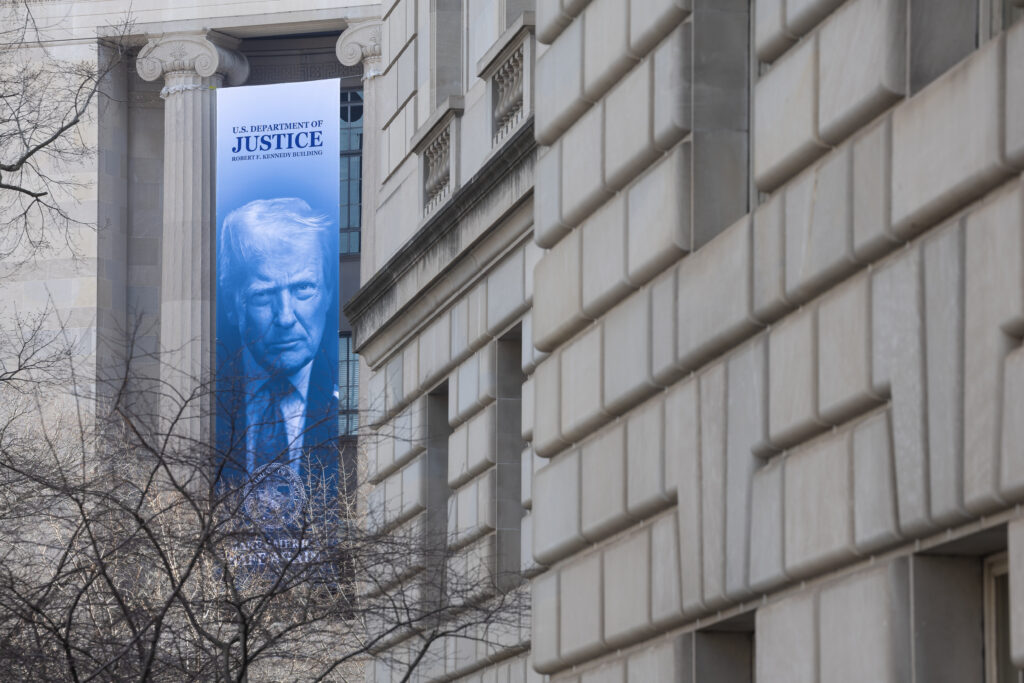
The Department of Justice last week gave its most definitive assurances yet about how it intends to use sensitive voter data it manages to grab — insisting it will only be used for election-related purposes and nothing else.
But those declarations, made during a federal court hearing seeking Maine’s voter rolls, sharply contradict a recent report that the department is preparing to share that same data with the Department of Homeland Security (DHS) for purposes beyond election law.
Get updates straight to your inbox — for free
Join 350,000 readers who rely on our daily and weekly newsletters for the latest in voting, elections and democracy.
The diverging signals emphasize both the difficulty of pinning down the DOJ’s plans for voter data and its potentially broad interpretation of “election-related” uses.
During a March 26 hearing, DOJ attorney James Tucker sought to put to rest growing concerns about how the government plans to use the voter registration data it is demanding from states across the country.
“The purpose has to be something related to the governance of federal elections,” Tucker said. “So we can’t use it to – for like tax enforcement I think was the example that was given. Clearly that’s not what was intended nor has the United States at any time said this was a purpose the United States would use it for.”
He also directly rejected the idea that the DOJ is building a nationwide voter database — a concern raised by election officials and voting rights advocates.
“I need to say definitively for the record, I thought it was pretty unequivocal that there is not going to be a national voter registration database,” Tucker said. “The Department’s position is it is not creating a nationwide voter registration database. These are particularized states, the data is going to be kept separate from other states. It’s being used solely for the purposes that we’ve stated in the letters, to assess compliance with both HAVA and the NVRA.”
Tucker went further still, promising that the department would not share the data with other federal agencies if not allowed by a court.
“As I stand here today, putting my neck on the line, I will tell you the United States respectfully will abide by any order that Your Honor issues,” he said. “In the event that the United States gets a request for any other federal agency for use of any of the data that would be produced pursuant to the order compelling production, the United States would not respond to that other than to say we have a court order in place.”
Those assurances are perhaps the strongest the Trump DOJ has offered in any of the ongoing cases over voter data. Notably, the Maine statements also mark a shift from the department’s earlier, more cautious tone.
In a Connecticut case just one week earlier, Tucker declined to make similar guarantees when pressed by the court, saying he could not rule out how the data might be used in the future.
But do Tucker’s statements really mean that the DOJ has limited its plans for voters’ unredacted person data? A CBS News report published the same day as the Maine hearing stated that the DOJ was working to provide voter registration data to DHS, potentially for immigration enforcement purposes.
If that plan were to move forward, it would be difficult to square with Tucker’s broad assurances that the data would only be used for election-related purposes.
And during a separate hearing over Rhode Island’s voter rolls on the same day that Tucker made his statements, another DOJ attorney, Acting Voting Section Chief Eric Neff, admitted that voter data obtained from the state would be shared with DHS to find non-citizens.
“Yes, and we intend to do so,” Neff told the court.
To complicate matters further, that statement may still fit within the DOJ’s broader claim that the data is being used to enforce election laws, since voter eligibility is tied to citizenship status.
But it also highlights how expansive the department definition of “election-related” may be.
Taken together, the recent hearings show the DOJ offering its most forceful assurances yet about how voter data will be used — even as those assurances sit uneasily alongside other, conflicting reports.
As judges continue to press for clarity, the central question remains: Is the DOJ seeking voter data for the reason it says it is — and will its latest assurances hold true?