DOJ asks Supreme Court to lift second order against Trump’s mail voting restrictions
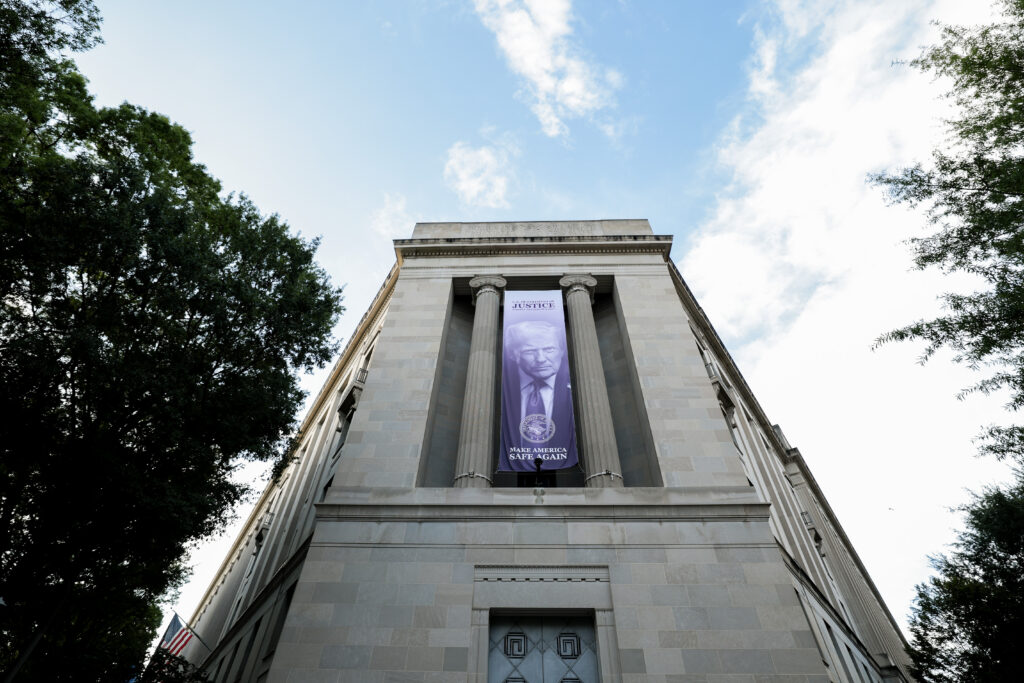
The Department of Justice (DOJ) asked the Supreme Court in a filing Monday to lift a new lower court order completely blocking the U.S. Postal Service from implementing mail voting restrictions that stem from President Donald Trump’s March executive order attacking voting.
In a ruling Sunday, U.S. District Judge Carl Nichols in Washington, D.C., fully barred USPS from executing any part of its mail voting rule — including allowing states to voluntarily comply with the restrictions.
The judge sided with Democrats*, the League of United Latin American Citizens and the NAACP in finding that the agency likely overstepped its authority in adopting the restrictions last month.
Get updates straight to your inbox — for free
Join 350,000 readers who rely on our daily and weekly newsletters for the latest in voting, elections and democracy.
Now, the DOJ wants that decision stayed alongside U.S. District Judge Indira Talwani’s Sept. 4 order against USPS’s rule. The department previously asked the Supreme Court to pause Talwani’s block.
The Court could rule on that request at any time.
Nichols’ ruling went further than Talwani’s. While her order barred USPS from compelling states to comply with the new postal rule, Nichols — whom Trump nominated in 2018 — said states complying with the mail voting order, even voluntarily, would “create even more confusion and misunderstanding.”
Under USPS’s new rule, states would be forced to give the federal government lists of people who requested mail ballots for the upcoming election. States would also have to comply with design requirements for the envelopes they use to send voters mail ballots.
USPS has said it will not deliver ballots to voters in states that do not comply, though it’s currently barred from doing that by Nichols’ and Talwani’s orders.
In his filing Monday, U.S. Solicitor General D. John Sauer told the Supreme Court that if it grants the DOJ’s request to stay Talwani’s order, it should “immediately grant a parallel stay” against Nichols’ order.
Sauer continued to press for USPS’s new rule to go into effect even though the agency has yet to launch an online portal that would be crucial to enforcing and complying with the regulations.
USPS has said it would use this online tool — dubbed the “U.S. Federal Ballot Mail Portal” — to verify states’ ballot envelope designs and collect their absentee voter lists.
The agency claimed it expected to release the portal last week but never did. However, now that it’s subject to Nichols’ order, USPS is currently barred from launching it.
If the Supreme Court were to grant Sauer’s request, USPS would likely refuse to deliver hundreds of thousands of mail ballots. That’s because states and counties have already mailed or printed out many ballot envelopes that cannot possibly comply with USPS’s new rule because of the missing portal.
Sauer has also told the Supreme Court that it should allow USPS’s rule to go into effect even if voters are disenfranchised.
*The Elias Law Group (ELG) represents the Democratic plaintiffs in this case. ELG Firm Chair Marc Elias is the founder of Democracy Docket.