Judge to rule on Trump’s bid to create voter eligibility lists before midterms
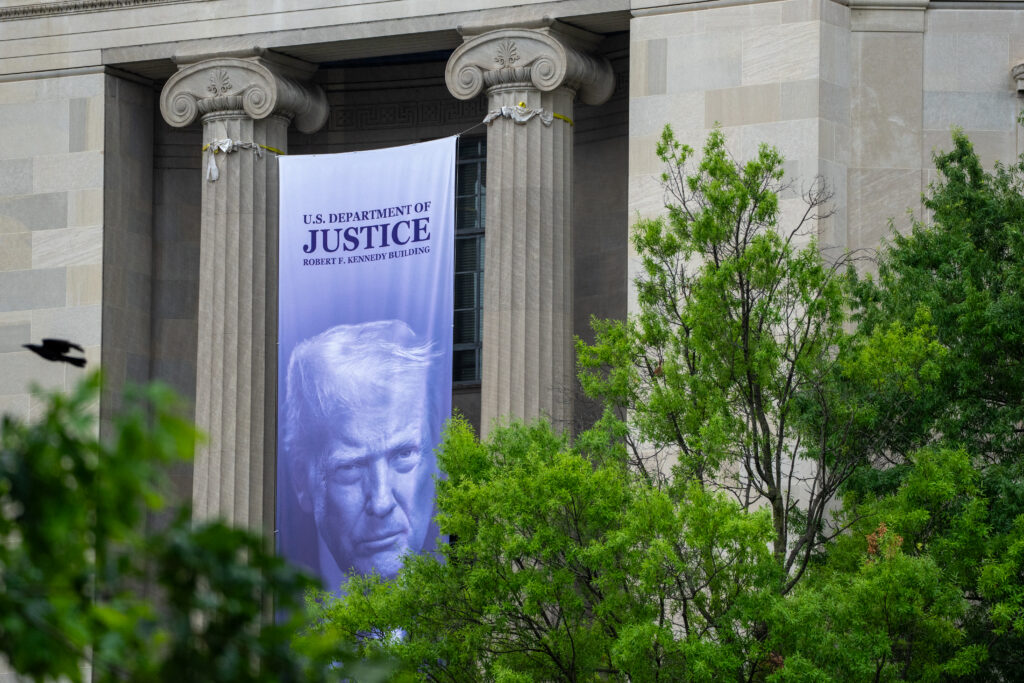
A federal judge in Maryland is set to rule on President Donald Trump’s effort to use vast amounts of Americans’ personal data to create state-by-state lists of people eligible to vote in federal elections, including the upcoming midterms.
U.S. District Judge Paula Xinis is now fully briefed on the legal arguments for and against Trump’s “State Citizenship Lists,” which stem from his March 2026 anti-voting executive order that also sought to restrict mail voting.
Voting rights and privacy organizations have warned that the Trump administration or private anti-voting groups could use the lists to disenfranchise eligible voters before elections or challenge cast ballots after Election Day.
At any moment, the judge could issue a decision on the Electronic Privacy Information Center’s (EPIC) request that she declare the Department of Homeland Security (DHS) and the Social Security Administration’s (SSA) creation of the lists illegal.
In his March executive order, Trump instructed DHS and SSA to compile the lists using vast amounts of personal data held by agencies across the federal government, including passport records from the Department of State.
Currently, no federal court has barred DHS and SSA from assembling the lists, although multiple courts have blocked Trump’s efforts specifically to restrict mail voting.
Get updates straight to your inbox — for free
Join 350,000 readers who rely on our daily and weekly newsletters for the latest in voting, elections and democracy.
EPIC is arguing the lists are an unconstitutional attempt to usurp states’ authority to administer elections and determine voter eligibility. It also argues the lists violate the Privacy Act of 1974, which Congress passed to prevent federal agencies from illegally gathering, sharing or misusing Americans’ personal information.
The anti-authoritarianism nonprofit Protect Democracy and the watchdog organization Citizens for Responsibility and Ethics in Washington (CREW) are representing EPIC in its suit against the lists.
In a key hearing last week, Xinis, who was nominated by former President Barack Obama, appeared deeply alarmed by the Department of Justice’s (DOJ) refusal to disclose details about DHS’s creation of the lists.
The judge ordered the DOJ to “immediately” notify her if it plans to release federal eligibility lists or an internet portal through which states will access the lists.
However, she also asked EPIC and the DOJ to file briefs on how a recent Supreme Court ruling authorizing the Trump administration to overhaul a federal immigration database into a flawed voter verification system could affect the case before her.
EPIC and the DOJ filed their responses Friday evening.
In its brief, the DOJ argued that the Supreme Court’s decision on the database — called the Systematic Alien Verification for Entitlements (SAVE) system — should nullify EPIC’s lawsuit against the voter eligibility lists Trump demanded.
SAVE has existed for decades as a tool that lets states check the immigration status of people applying for government benefits. Then, in 2025, Trump directed DHS to transform the database into a sweeping — and highly inaccurate — tool for states to vet their voter rolls for noncitizens.
The DOJ offered little new information about the lists. The only detail it did give was that the lists and the accompanying portal would function similarly to SAVE.
“The future portal would likewise respond to a request from a State and provide information about voters on an individual basis,” the DOJ’s brief read.
However, that description of the lists greatly differed from DHS’s account of them in a June memo, which is the specific action EPIC is challenging in its lawsuit. The memo does not lay out a process through which states “request” information from the federal government. Instead, the lists are transmitted to states whether they requested them or not.
EPIC argued that the lists are unlawful because DHS is creating them unprompted.
Federal law “does not authorize DHS to preemptively disseminate information regarding citizenship unilaterally, without first receiving a qualifying verification request,” EPIC argued in its brief.
In last week’s hearing, Xinis asked a DOJ attorney directly why she shouldn’t declare the lists unlawful over the federal government’s failure to notify the public that their personal data will be used to create them.
Joshua Schopf, the DOJ attorney, responded that he believed she couldn’t issue a ruling on the lists because they didn’t yet exist. However, DHS published a new webpage earlier this year previewing the online portal, claiming that the lists were “coming soon.”
DHS removed the webpage after EPIC filed its lawsuit and Democracy Docket reported on its existence.
Trump’s order and DHS’s June memo did not provide states any guidance on what, if anything, election officials should do with the lists, which will likely contain widespread inaccuracies due to incorrect or incomplete information in federal databases.
However, the existence of the federal lists could result in eligible voters being wrongly flagged or removed from state voter rolls just weeks before elections.
Trump’s order also implicitly attempted to pressure election officials into using the lists to shape state voter rolls by threatening them with investigations and possible criminal charges if they “issue Federal ballots to individuals not eligible to vote.”
Earlier this year, a federal judge in Massachusetts briefly halted DHS and SSA’s creation of the lists. But the Supreme Court later lifted that restriction, claiming it prematurely blocked Trump’s order and not a specific action by a federal agency.